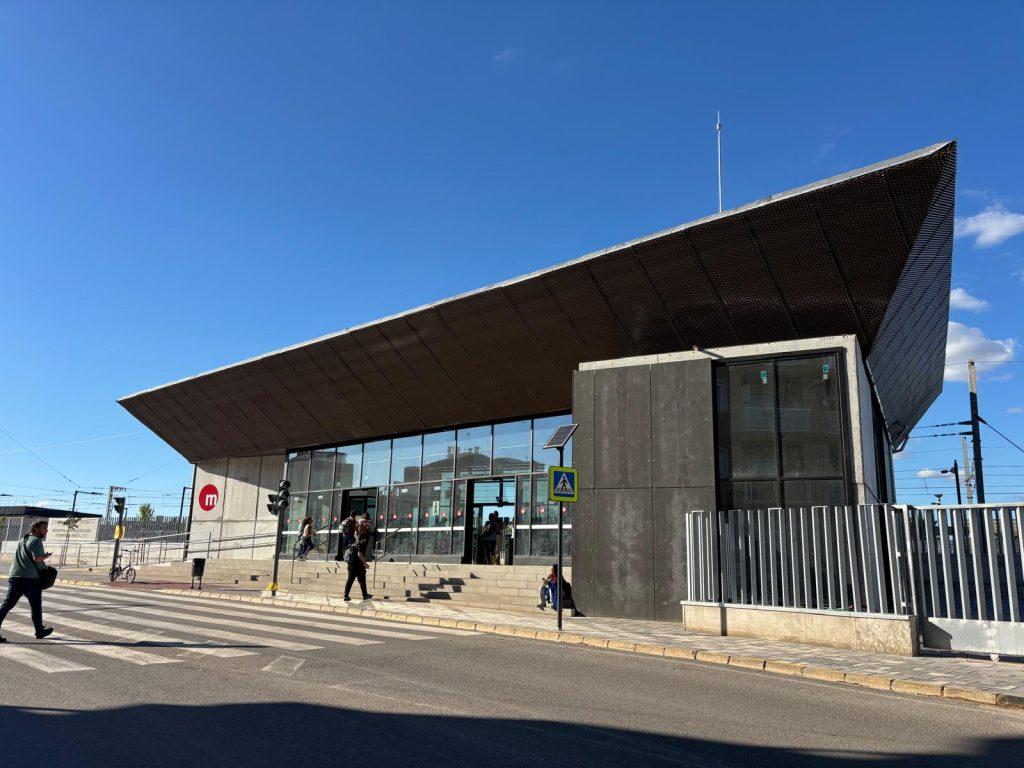
A railway station earns its keep when people can stop thinking about it. In Paiporta, near Valencia, that ordinary privilege disappeared after the floods of October 29, 2024. The station buildings were so badly damaged that they had to come down. VILOR built the replacement for regional railway operator FGV. On June 27, 2025, trains returned through Paiporta as the affected Metrovalencia route reopened. The municipality put the new station investment at €5.5 million.
That is a useful introduction to VILOR: a contractor whose work becomes most visible when something people depend on stops working. Its assignments include stations, tunnels, bridges, roads and public buildings. The company began with building structures in 2003. Today, its public-works business reaches across Spain, with a group that has added asphalt production, installations and environmental activities. The interesting part is how those capabilities fit together.
An airport fence, then a bigger map
VILOR’s early customers were other builders. State-contractor classification in 2007 opened the door to acting as the principal contractor for public administrations. A change in shareholders and management in 2010 brought additional technical expertise. Its first contract beyond the Valencian Community followed in 2012: new fencing at Ibiza Airport. Expansion began with a boundary, which is a pleasingly literal way to cross one.
Barcelona and Balearic offices followed in 2016 and 2019. There was also a German subsidiary, established in 2014, which began residential work near Berlin the following year. The company now describes a business concentrated overwhelmingly on Spanish public contracts. The progression suggests a practical expansion method: carry an existing construction skill into a new location, establish delivery experience, then broaden the work available to that team.
Three numbers, three different jobs
The group’s 2023 financial announcement offers a clear snapshot of that expansion. VILOR itself generated €81.8 million in turnover. Grupo VILOR reported €110.1 million, including €15.5 million from AIP Conservación and €12.8 million from asphalt specialist MAHOCI. Group turnover rose 57% against 2022.
Then comes the larger number: €240 million in contracts in the group’s year-end portfolio. That figure measures work on the books, not sales already delivered. Rail accounted for 40% of the portfolio, and practically all of it was public works. The distinction matters. A large backlog means a substantial workload ahead; it does not establish how profitable those jobs will be or when the cash will arrive.
Future work, separate from turnover
For a public client, the business model is recognizable: commission defined construction work or maintenance, select a contractor, and pay for delivery under the contract. VILOR also participates in temporary joint ventures, known in Spain as UTEs. These allow several contractors to undertake a particular assignment together. A headline contract value can therefore cover a partnership’s work rather than VILOR’s share alone.
The unglamorous parts that keep trains moving
Consider the tunnels beneath and around Andalusia’s cities. In September 2025, VILOR described an approximately €5.5 million Adif investment covering San Bernardo in Seville and tunnel No. 2 at Puerto Real in Cádiz. The work involves waterproofing, drainage and structural lining. San Bernardo is 2,256 meters long; Puerto Real’s tunnel measures 868 meters. These are repairs to infrastructure already carrying passengers.
Further north, VILOR and Rubau were awarded improvements to 20 crossings along the León-La Robla corridor, announced in October 2025 with a €5.9 million investment. The structures carry roads and paths above or below the railway. The benefits are specific: connections between neighborhoods and villages, and more reliable infrastructure around an operating rail line.
The less photogenic service list is equally revealing. VILOR records maintenance of railway buildings and tunnels, municipal schools, public spaces and prison facilities. Its cleaning portfolio even includes airport luggage-trolley management. Adif, FGV, FGC and Aena appear across its work. Someone buying these services needs a contractor able to handle the physical details after a facility opens, as well as the construction that gets it there.

A quarry is a strategy you can stand in
VILOR’s 2021 purchase of MAHOCI and Áridos & Aglomerados Martín gave the group a more substantial position in roads. The Salamanca businesses brought a fixed asphalt plant at Villar de Peralonso, a quarry and aggregate-production plant at Barruecopardo, and machinery. Those are tangible additions to what a contractor can supply and execute. They also expanded its presence in Castilla y León.
The acquisition illustrates an industrial approach to growth: buy facilities and specialist operations that support a chosen line of work. The advantage depends on using them well. Owning production assets brings operating obligations as well as access to materials, so the commercial logic rests on enough suitable work to justify that capacity.
There is a materials experiment here, too. The group’s ASHPHALT research project, listed in the PTEC 2025 yearbook, set out to develop mixes using combustion ash from the paper industry and reclaimed asphalt pavement. Its published budget was €520,801, with a June 2023-December 2025 schedule and CDTI listed as the funding entity. That is a project budget, not a disclosed grant payment. Collaborators included the University of Salamanca and other technical organizations. The intended prize is useful reuse of waste alongside durable pavement; the description does not establish that every road can accept the same mix.
At Pinilla, the foundations stopped the job
A contractor profile needs a project that resisted the plan. At the Pinilla health center in San Andrés del Rabanedo, VILOR took on a renovation awarded for €2.71 million with a 14-month execution period. Work stopped in 2021 after serious problems with the existing foundations were discovered.
According to reporting by iLEÓN, VILOR proposed reinforcement costing €260,000, while the regional administration offered roughly €90,000. They did not agree, and VILOR left the project. Citanias subsequently undertook stabilization, and García de Celis received a later renovation contract. The original VILOR award and those later assignments belong to different stages of a troubled project.
The lesson is contractual as much as structural. A refurbishment price depends on assumptions about what is already there. When those assumptions fail, someone must agree on the revised work and its cost. Buyers can copy a useful discipline from this episode: investigate existing structures early and make the route for handling unforeseen conditions explicit. A competitive tender cannot make weak foundations sound.
Rebuild what the inspection tells you to rebuild
Paiporta presented another encounter with damaged structures, this time after a flood. FGV’s inspections identified problems in foundations, load-bearing walls, pillars and other structural elements. The response was demolition and replacement of the station, substation and cafeteria buildings. VILOR’s account also describes reconstructed platforms, the underpass, lifts and the surrounding public space. The work followed what the inspection revealed about the surviving fabric.
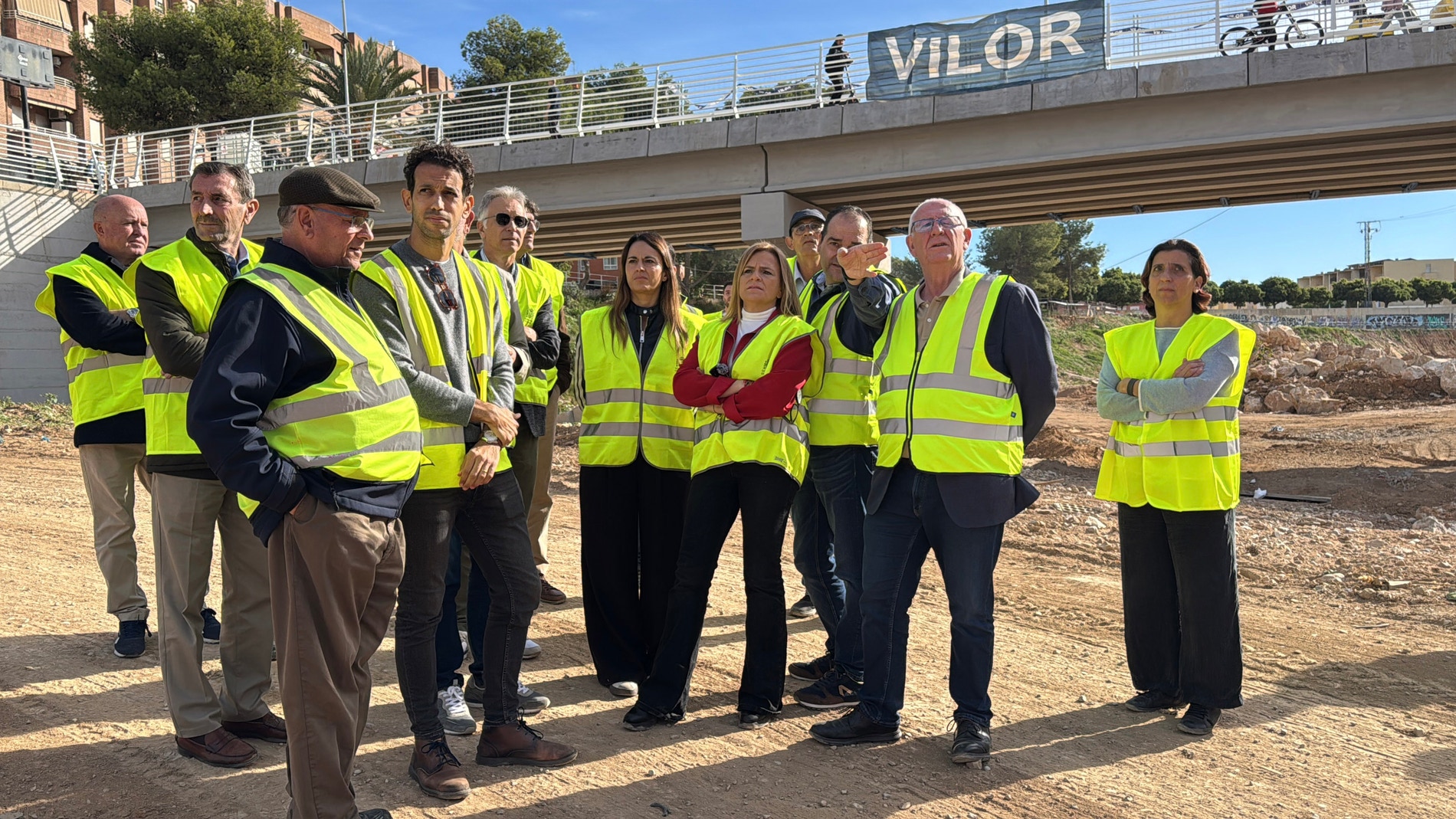
The same town supplies a second, separate example. VILOR executed repairs to the Pont Nou, which reopened to road users and pedestrians on December 23, 2025. The transport ministry reported a €1.6 million investment. A functioning crossing is a small item on a national map and a large one in a resident’s day. These projects show why the firm’s regional roots still matter within a national portfolio.
The building file needs protection, too
Another part of VILOR’s business is less visible than a new station. In March 2026, AENOR announced certifications covering ISO 27001 information security, Spain’s ENS framework at High level, and ISO 19650-1 and 2 for information management in construction. HIBERUS accompanied the process, with INGERTEC providing technical security support.
“Data security is fundamental to our project.”
Ignacio Martínez, digital transformation and BIM lead
Excerpt translated from AENOR’s March 2026 announcement
For clients managing public infrastructure, the drawings, models and project records are part of the job. BIM information management concerns how that material is organized and exchanged across a project’s life. Security concerns who can access it and how it is protected. These credentials give clients something concrete to assess alongside construction experience, although a certificate alone cannot promise a successful project.
More kinds of expertise, under one roof
VILOR’s published technical roster is unusually revealing. Its team page lists 532 workers, including 222 qualified technical personnel, with civil engineers, architects, surveyors, environmental engineers and a fine-arts and restoration graduate. It is a reminder that infrastructure work can involve a historic surface as readily as a new concrete pour. Published equality, safety and compliance policies describe the company’s intended working standards.
A July 2026 Las Provincias supplement describes more than 600 professionals across the group and a new Water and Environment division. Those figures have a different date and scope from the team page. The division brings together activities including water systems, waste treatment and river and port recovery. Current leadership includes CEO Luis Miguel Alonso and president Ángel Hurtado.
VILOR’s position in the market is clearest in the combination: public construction, specialist group assets, continuing maintenance and increasingly formal information controls. A potential client should match that experience to the actual assignment, its geography and its technical constraints. The most persuasive output remains easy to recognize: a tunnel kept usable, a crossing restored, a station where the next train is once again an ordinary expectation.