There is a clock inside a truckload of asphalt. The material leaves the plant hot. By the time it reaches a paving crew, it still needs to be workable. Distance costs money, and temperature limits the journey. An asphalt plant therefore has a peculiar kind of influence: it matters intensely to the roads around it.
That small geographical fact helps explain Construction Partners. The company buys paving businesses, adds production capacity and links local operations to a larger supply network. Its reach stretches across the Sunbelt. Its daily work remains stubbornly close to home.
- Own more of the journey: materials, asphalt production and the paving crew.
- Buy local knowledge: retain operating businesses with established relationships.
- Watch the bid: growing orders cannot rescue a job priced for yesterday’s fuel costs.
01 / A map made of delivery routes
Construction Partners builds and repairs highways, local roads, airport pavement and commercial sites. Public agencies need usable infrastructure; developers need sites ready for buildings and traffic. The company supplies crews, equipment and materials to turn those requirements into finished surfaces, including the less photogenic work underneath: utilities, drainage and site preparation.
Customers span state transportation departments, municipalities, airports and private property owners. Their projects differ in size and purpose, giving CPI several sources of work. The common requirement is coordination: earthwork, drainage, materials and paving have to come together in the right sequence.
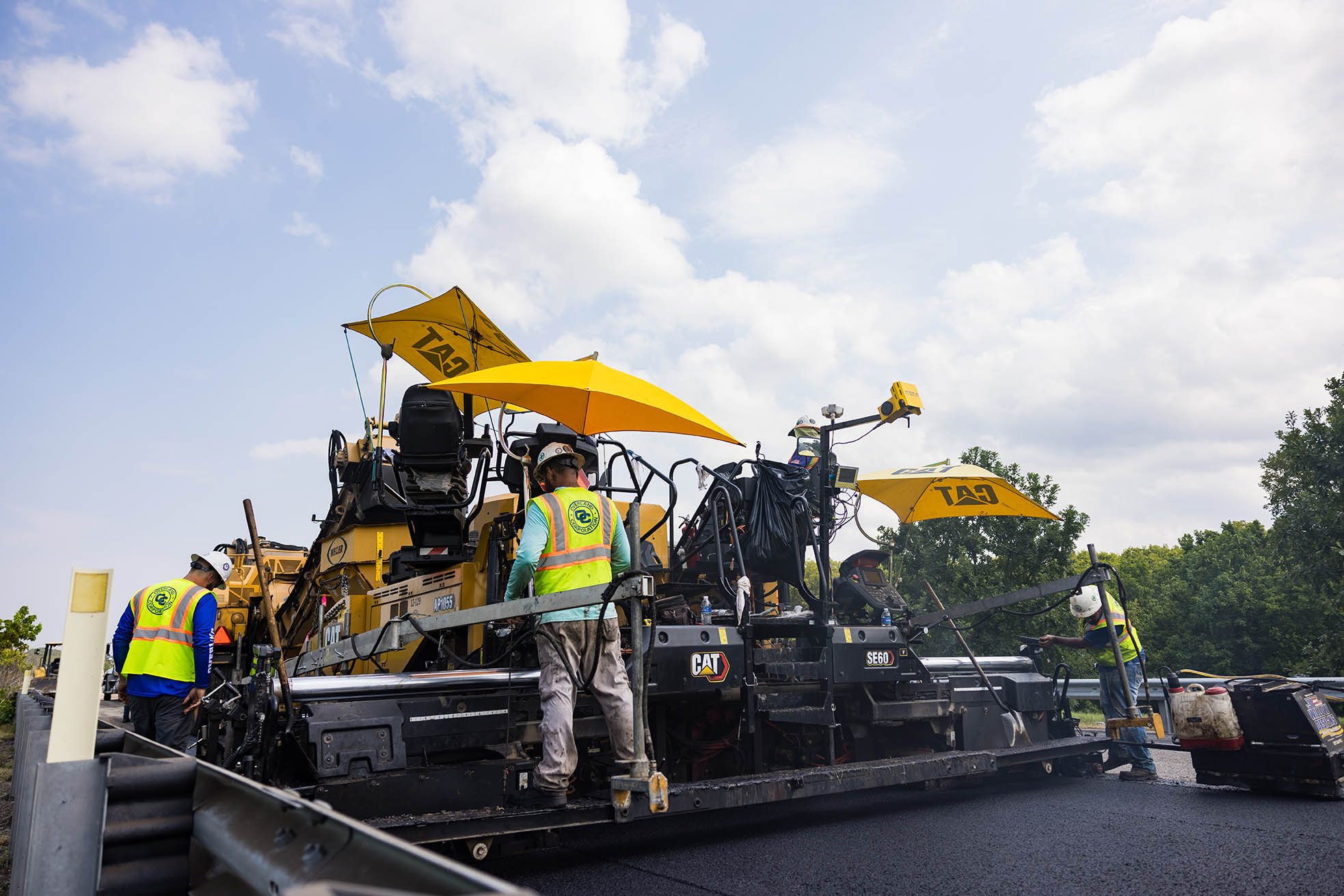
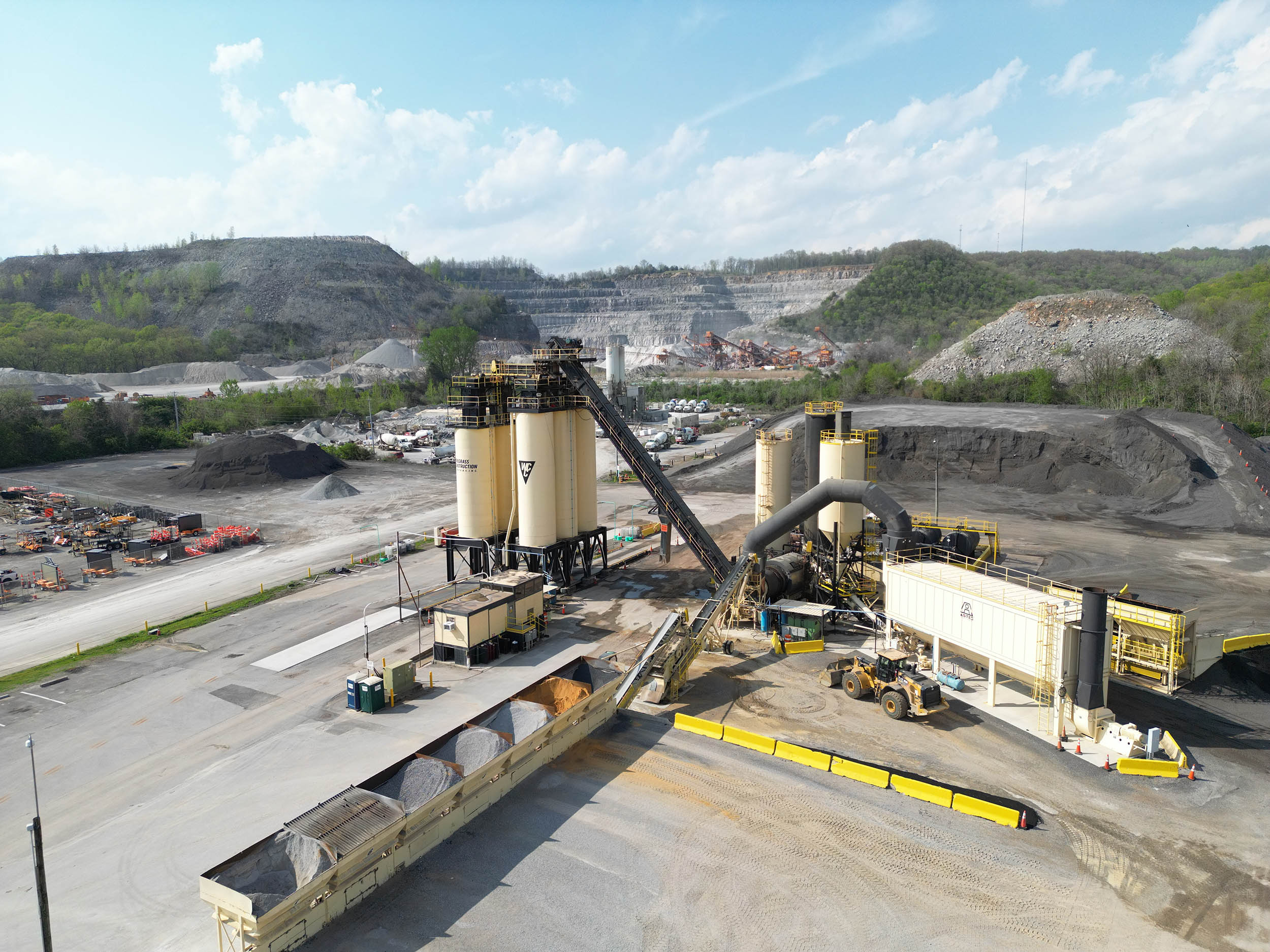
There are two ways to understand that offering. One is as a contractor selling completed work. The other is as a chain of operations whose timing must agree. Aggregate facilities supply stone and sand. Terminals handle liquid asphalt. Plants make the mix. Crews place it. Ownership across that chain gives CPI more control over supply and scheduling, while materials sales also bring in outside customers.
The competitive advantage is conditional. A nearby plant and a capable crew can be useful advantages on a nearby job. They do much less for a distant project. CPI competes market by market, against the contractors and material suppliers able to serve each location. A national map alone tells you surprisingly little.
02 / Buy the company. Keep the memory.
The operating business began in 2001, backed by SunTx Capital Partners. Founding partners included road-building executive Charles Owens, financier Ned Fleming and Alan Palmer. The current holding corporation followed in 2007; the Nasdaq listing arrived in 2018. The stock symbol, with admirable economy, is ROAD.
Acquisitions supply equipment and facilities, but they also bring people who know a market. CPI’s stated approach preserves local leadership while applying shared standards. Its operating names include Wiregrass Construction, CWR Contracting and Fred Smith Company. Those names carry histories that a corporate rename would not automatically replace.
The personnel story makes the point unusually well. In 2011, CPI acquired Fred Smith Company, the North Carolina business belonging to Jule Smith’s family. Smith joined the group through that deal. Ten years later, he became its chief executive. An acquired operator ended up running the acquirer.
“We strive to do ordinary things extraordinarily well.”Construction Partners’ stated core value
For a business owner considering a sale, that is a concrete proposition: access to capital and shared resources, alongside continuity in local operations. For a customer, the relevant question is more practical. Can the team still deliver the job? The model depends on retaining the judgment that made the local business worth buying.
03 / The price of a bigger circle
Texas shows what this approach costs. The Lone Star Paving acquisition closed on November 1, 2024. Its terms included $654.2 million in cash, subject to adjustments, and three million Class A shares. Working-capital payments and a conditional $30 million property-related purchase added further obligations. Calling it a cash deal would leave out quite a lot.
There is a financing side to this geography. CPI used loan proceeds to fund the acquisition. Taking ownership of more operating assets can improve control, but it also creates obligations beyond getting the next job done. The value of the purchase depends on future performance, rather than the announcement-day expansion of the map.
The acquisition established a Texas platform for further expansion. In October 2026, CPI added J.H. Strain & Sons’ asphalt manufacturing and construction assets, including two plants around Abilene. Later that month, it acquired Florida’s S.E. Cline Construction, adding commercial site development and underground utility work along the Interstate 95 corridor.
The financial effect of buying businesses deserves careful reading. Fiscal 2025 revenue reached $2.812 billion, up 54.2%. Acquisitions accounted for $835.2 million of the increase; existing markets added $153.2 million, or 8.4% organic growth. Both helped, but they describe different accomplishments. Buying revenue requires capital. Growing the existing business requires more from the operations already owned.
The June 2026 quarter brought revenue of $999.4 million and net income of $59.6 million. Backlog stood at $3.36 billion. That is substantial work ahead, although backlog measures contracted work awaiting completion, rather than money already earned.
04 / When the order book was not enough
The revealing setback came earlier. In the quarter ended March 2022, revenue rose 35.9%, while gross profit fell 30.9%. Demand was present. Profitability suffered as energy costs jumped. A busy contractor could find itself fulfilling work at prices that no longer covered the economics it had expected.
CPI’s response was specific: raise equipment rates in bids, add contingencies and introduce diesel indexing with customers and suppliers where possible. Shorter projects allowed new pricing to enter the backlog sooner. The useful lesson is that a strong sales pipeline needs a pricing mechanism that can survive changing costs.
That lesson travels beyond construction. Put investment near the constraint that determines delivery. Keep experienced people close to decisions. Check whether new orders carry adequate margins. The conditions matter: weak local demand can leave expensive assets underused; rain can interrupt production; acquisitions can disappoint; financing still has to be paid for.
Construction Partners makes an instructive case because its growth remains attached to those physical realities. Every acquisition expands the map. Every paving day brings the calculation back to a plant, a crew and a truckload arriving while the mix is still ready to work.