Imagine ordering a truckload of crushed stone. The stone itself seems unremarkable. It has no battery, no patent, no annual software update. Yet the bill contains a clue to an unusually durable business: getting the stone to you can cost more than the stone. Somewhere between the quarry gate and the construction site, distance acquires a price.
- Vulcan sells the stone, sand and gravel beneath everyday construction.
- Nearby reserves and reliable delivery make those materials useful.
- The lesson: study what it costs your customer to use your product.
Vulcan Materials Company has organized itself around that inconvenience. Its raw materials become road foundations, concrete ingredients, drainage layers and building pads. The interesting question is how a supplier of such familiar things earns an advantage. The answer begins with a map.
The expensive journey of an inexpensive rock
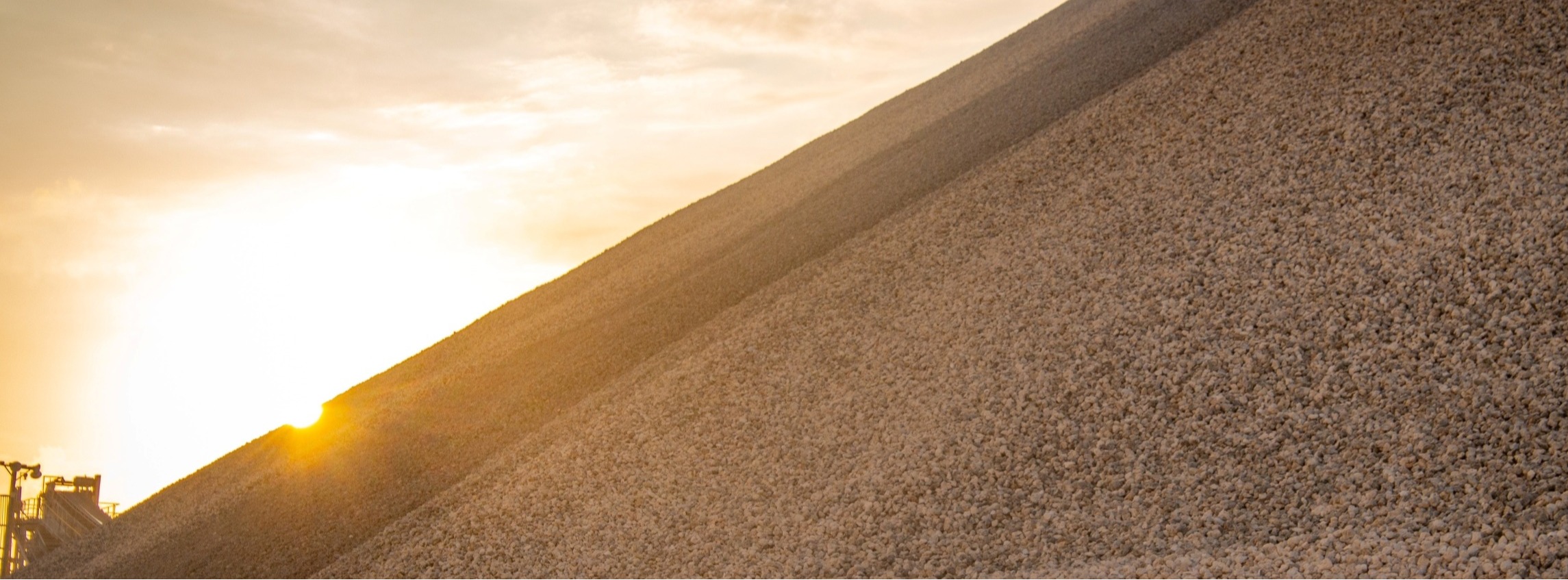
Aggregates have an awkward relationship with travel. They are heavy and relatively inexpensive. A quarry cannot simply offer the same delivery economics to every distant city. Vulcan’s filings explain that trucking long distances can become prohibitive. A deposit close to construction demand has an advantage that no advertising campaign can move across the country.
Rail, barges and ships change the calculation where suitable routes exist. Vulcan also has a marine shipping agreement with CSL Americas linking its British Columbia quarry to California and Hawaii. Its business therefore involves matching deposits, transport routes and customers. The national company competes through a collection of local journeys.
Martin Marietta, CRH, Knife River and independent operators offer alternatives. Vulcan’s case rests on its combination of reserves, operating practices and distribution. Buyers still need to compare local availability and delivered prices. A familiar corporate name cannot shorten a journey by itself.
A slag company meets the interstate
The business began in 1909 as Birmingham Slag Company, founded by Henry Badham and Solon Jacobs. Charles Lincoln Ireland bought it in 1916 and sent his sons to manage it. Even this apparently dependable trade met an economic limit: the company’s history says profitability held until 1932, during the Depression.
The expansion story took a decisive turn in 1951. Birmingham Slag began planning around the opportunity it saw in the federal highway program. Roads would require enormous quantities of aggregates. That made the ability to expand supply worth pursuing before the orders arrived.
In 1956, a merger with Vulcan Detinning gave the business its present name and access to public capital markets. Trading began on January 2, 1957. The useful historical detail is the mechanism: a construction supplier used an existing listing to finance expansion into a coming infrastructure market.
The customer buys a schedule
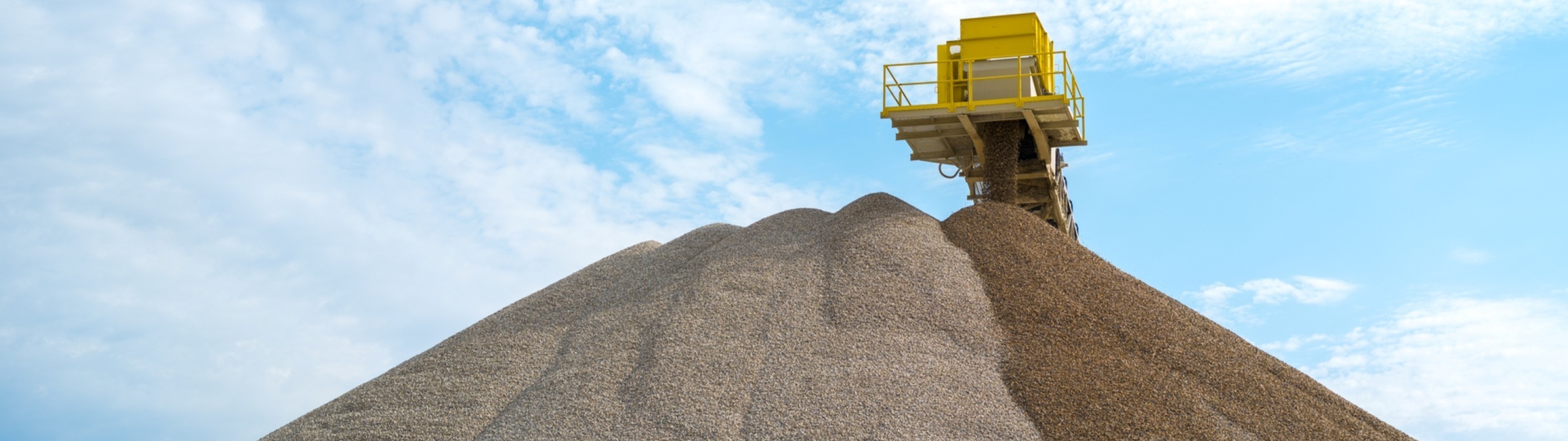
Consider the contractor preparing a building pad. Base stone supplies a compactable foundation. Coarse stone can serve drainage and erosion-control work. Fine aggregates go into concrete and other applications. The sizes and specifications matter because the materials perform different jobs. Ordering “some gravel” leaves quite a lot unresolved.
Vulcan also produces asphalt and ready-mixed concrete in selected markets. Its concrete offering includes mix design and production support; its asphalt business supplies paving mixes. These products place the company at several points in the construction process, with aggregates at the center.
Customers can start with Vulcan’s facility finder and quantity calculators, then discuss specifications, availability and delivery with local sales. These are practical planning tools. A calculator estimates an order; a conversation establishes whether the local operation can actually supply what the job requires.
Follow the money back to the quarry
Vulcan grows through acquisitions as well as existing operations. In 2021, it agreed to buy U.S. Concrete for $74 a share in cash, an announced equity value of $1.294 billion. The acquisition, completed that August, expanded its geographic reach and aggregates position. That figure describes the equity purchase, rather than every cost associated with the transaction.
The company subsequently kept refining its portfolio. In June 2026, it announced its exit from California concrete alongside aggregates expansion in Dallas-Fort Worth and Colorado. The stated direction was a sharper aggregates focus. Selling a downstream business can fit the same strategy as buying a quarry.
Keeping the assets productive also takes money. Vulcan spent $703 million on maintenance and growth capital projects in 2025. It reported $7.941 billion in revenue and shipped 226.8 million tons of aggregates that year. Those numbers describe a business requiring substantial physical investment.
Full year 2025. Capital spending covers the company, not just aggregates.
The things a quarry cannot control
Weather remains an immediate constraint. In its second-quarter 2026 results, Vulcan reported significant rainfall affecting Texas and certain Southeastern markets. Aggregates shipments rose 1 percent, while higher diesel costs contributed to increased unit costs. Demand alone does not guarantee an easy quarter.
Permission matters, too. Mexican authorities shut down Calica’s remaining operations in 2022. Vulcan disputes the government’s actions. Mexico’s environment ministry describes protection of the area as an environmental measure. The disagreement exposes a limit to the location advantage: owning a deposit cannot ensure that extraction will continue.
“Doing the right thing, the right way, at the right time.”
The Vulcan Way
Vulcan places safety, training and community relationships within its operating culture. Those commitments belong beside the commercial story. Quarrying is a physical activity carried out by people, near other people, within environmental and regulatory boundaries.
A lesson you can carry away
For another business, the useful inference is to examine the whole journey from product to customer. Where do freight, uncertainty or coordination make an ordinary purchase expensive? Vulcan’s example suggests measuring those points of friction. Copying the economics still requires demand, capital and permission. Start with the inconvenience. Then work out whether you can afford to remove it.