A spring nut is a small thing to build a business story around. In a Unistrut connection, it slips into a metal channel, turns into position and holds a fitting when the bolt is tightened. The assembly needs no welding. It can be adjusted. For the person putting it together, these are useful properties. For Atkore, the company behind Unistrut, they suggest an answer to a larger question: what, exactly, is an industrial customer buying?
- Atkore makes the pathways and supports around electrical systems.
- Its pitch combines parts, design tools, prefabrication and delivery.
- Prysmian completed its roughly $3.8 billion enterprise-value acquisition on October 19, 2026.
The invoice lists components. The job site measures something else: how much work remains. That gap explains much of Atkore’s appeal. Conduit has to arrive, fit the design and be installed. A support has to hold the specified load. Each handoff creates another opportunity to lose an afternoon. Atkore competes for a place in those handoffs.
A spring nut changes the job
The portfolio covers steel, PVC and fiberglass conduit, armored cable, fittings, cable trays and metal framing. These products protect wiring, organize its route and support the equipment around it. Atkore also supplies safety and infrastructure products. It occupies the physical space between an electrical plan and the finished building, where an ambitious project becomes a sequence of connections.
The Unistrut brand dates to 1924. Atkore itself was formed in 2010, when Tyco’s electrical and metal products business became a standalone company through a majority investment by Clayton, Dubilier & Rice. The investor committed $306 million in equity to a transaction valued at approximately $1 billion. This was an assembly of established industrial businesses, with histories older than their new parent’s name.
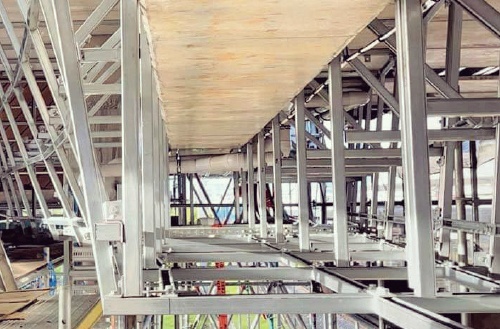
The little spring nut offers a particularly clear demonstration of the proposition. A connection that can be positioned along a channel gives the installer flexibility. A bolted system changes how assembly and later modification happen. The benefit lives in the work performed with the component. That makes installation knowledge a commercial asset alongside manufacturing knowledge.
The truck is part of the product
Atkore’s buyers include electrical distributors such as Graybar, Rexel, Sonepar and Wesco. They serve contractors who install the products. Other customers include equipment manufacturers and industrial users. The eventual settings range from hospitals and factories to solar installations and data centers. It is a business in which the buyer, designer and installer may be three different people.
The distribution channel therefore matters enormously. Atkore offers co-loading through six regional service centers: several product categories can travel under one order and one shipment. For a distributor, that can reduce the administrative shuffle surrounding an order. It gives Atkore’s breadth a practical purpose. A long catalog becomes more useful when the customer can combine its contents.
ReliaRoutes adds a timetable. The service advertises more than 70 routes, with trucks running on regular schedules regardless of shipment weight. The appeal is predictability: knowing when an order should move helps the next person plan. Delivery times remain estimates, and route coverage matters. A schedule is useful precisely because construction already contains enough things that refuse to keep one.
Get into the drawing first
Atkore also reaches upstream, into the designer’s software. Its free BIM Toolbar brings product families into Autodesk Revit. The accompanying tools include hanger configuration and bill-of-materials export. A designer can work with the manufacturer’s components while developing the model, rather than assemble a plan and search for suitable products afterward. For Atkore, helping with specification brings its products into consideration earlier.
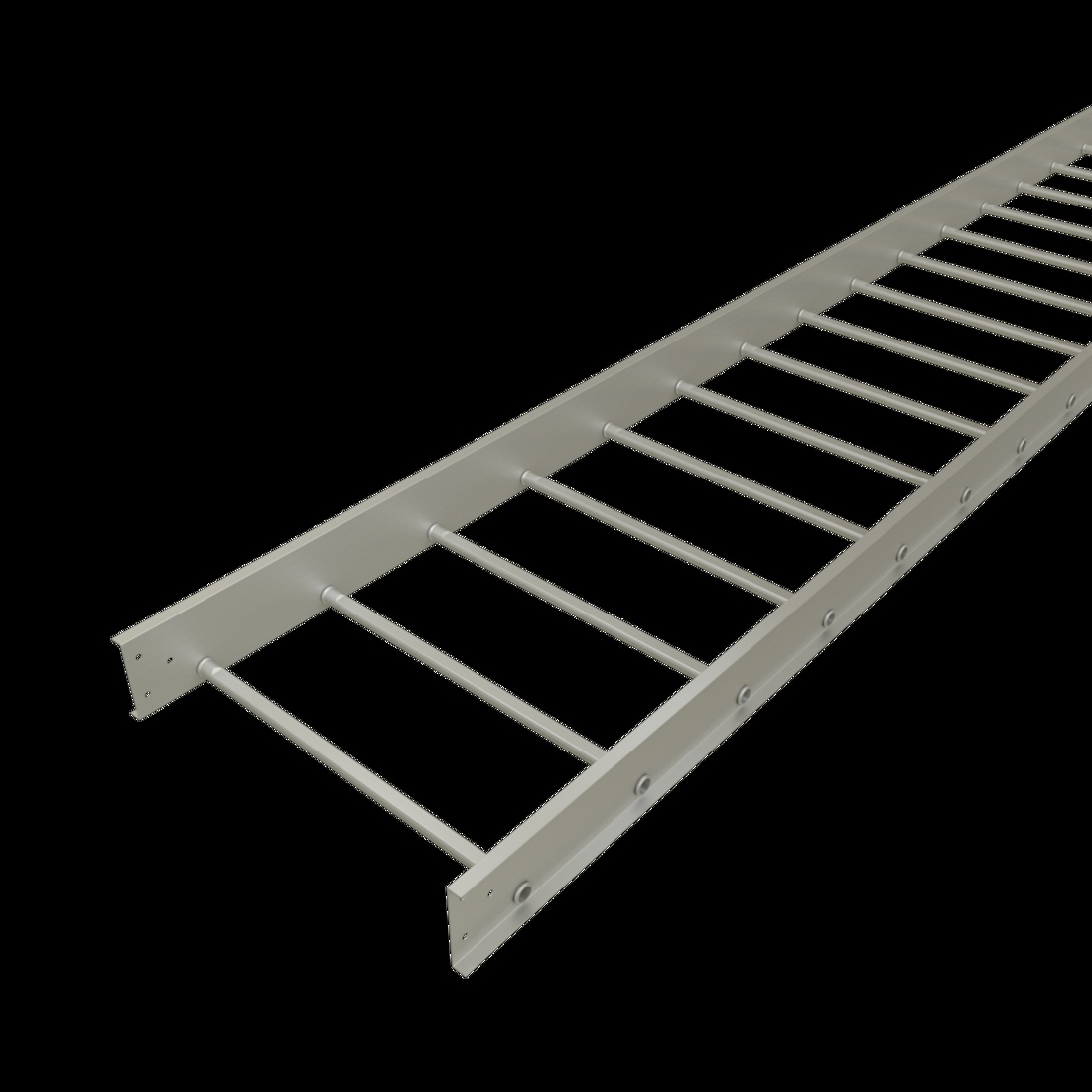
Prefabrication takes that logic onto the shop floor. Unistrut kits can arrive pre-cut and assembled for projects with repeated specifications, reducing cutting and assembly on site. The construction services business goes further, offering design, fabrication and installation of mechanical support structures. Its work includes healthcare, semiconductor and data center environments, where the support system has to meet the project’s particular demands.
The useful lesson is to examine every task surrounding the sale. Could the drawing be easier? Could the order combine products? Could repeated assembly happen before delivery? These are questions another manufacturer can copy. Prefabrication still depends on dimensions being right, and component selection still depends on engineering requirements. Moving work earlier makes early decisions more consequential.
More pieces. Less money.
There is a limit to what convenience can accomplish. In fiscal 2025, Atkore’s net sales fell 11% to $2.85 billion. Lower average selling prices reduced sales by $381.8 million, while increased volume added $21.6 million. The company could move more product and still report less revenue. That is a useful corrective to any account that treats customer service as protection from manufacturing economics.
Same dollar scale. Selected factors, not the complete revenue bridge.
The competitive field includes Zekelman, Nucor and Southwire in electrical products, and Eaton, ABB and nVent in support and infrastructure categories. The alternatives vary with the part. Atkore’s broad offer and delivery network provide reasons to choose it, but customers still compare price, quality and suitability. In fiscal 2026’s second quarter, input costs rose faster than selling prices. Operational discipline had plenty to do.
Management responded by narrowing the portfolio. Three manufacturing facilities closed; the HDPE business and Belgian coatings operations were divested. In November 2025, the board had widened its strategic review to include a possible sale of the whole company. The public record shows the change in direction. It also shows the price of the HDPE arrangement: a roughly $28 million cash commitment over time, with Atkore retaining 10% of the combined business.
“We remain focused on continuous improvement”
Bill Waltz · September 2025 strategic update
The cable meets its supporting cast
On October 19, 2026, Prysmian completed its purchase at $95 per share in cash, an implied enterprise value of approximately $3.8 billion. A cable company now owned more of what surrounds the cable: conduit, management systems and framing. The pairing extends a shared commercial idea across more of the installation. Follow the electrician’s work closely enough, and the supposedly separate products start looking like adjacent steps in the same job.
Follow the work
Explore / Watch / Connect