Forty-two years. One company. The civil engineer who poured foundations for San Francisco landmarks and then ran the whole operation.
"Change and improve, disrupt yourself or die."
Eric Foster — CEO, Swinerton
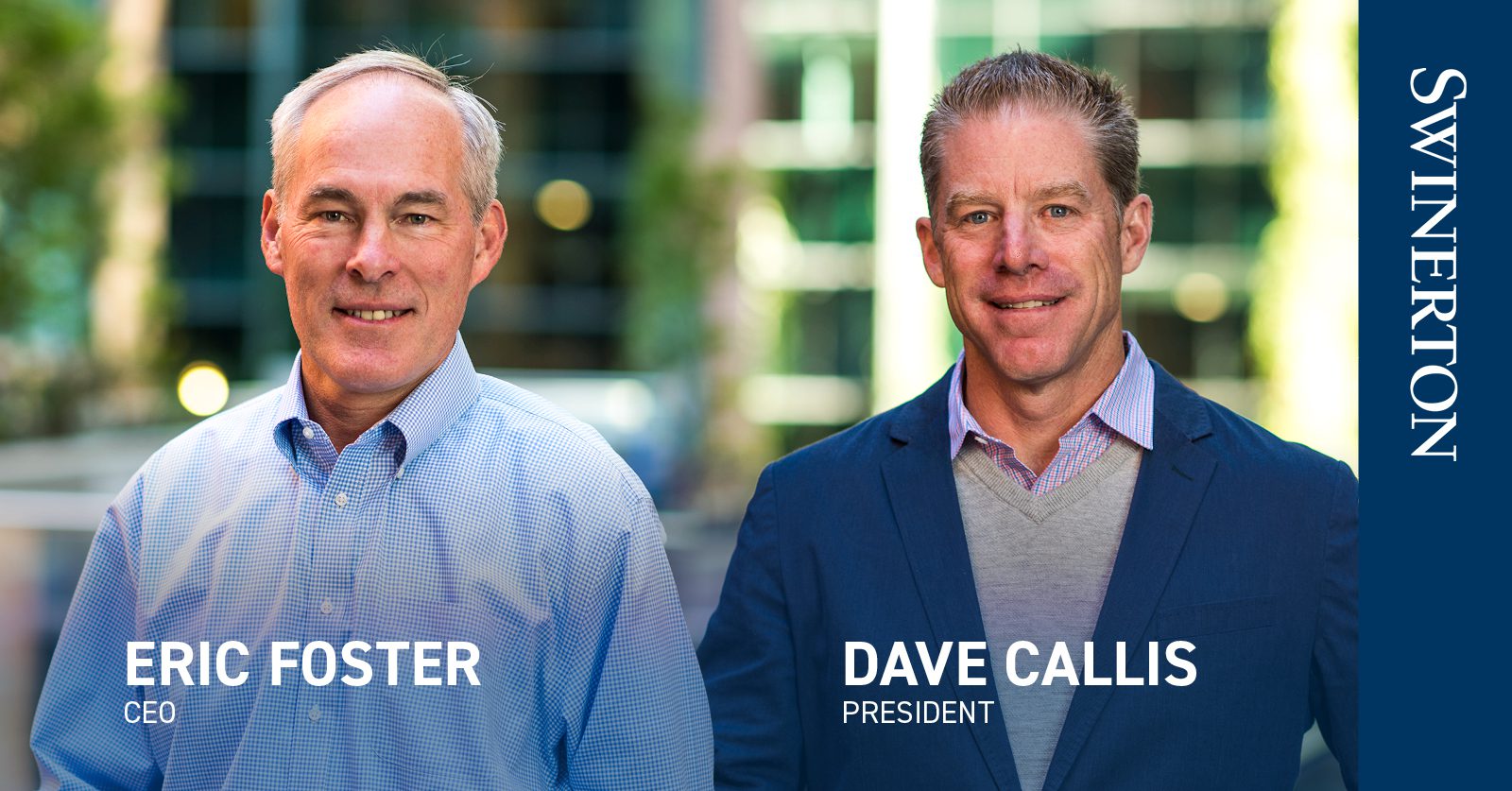
In January 2020, Eric Foster became the twelfth chief executive in Swinerton's 132-year history. He'd been at the company since 1982, starting as a project engineer in the San Francisco Structural division, fresh out of UC Berkeley with a civil engineering degree and a hard hat. The building he was about to lead had been standing - literally and figuratively - since before the Great San Francisco Earthquake.
That kind of institutional tenure is almost extinct in American business. People at his level don't stay four decades at a single firm unless something about the place is worth the loyalty. At Swinerton, that something is ownership. Since 1984, the company has been 100% employee-owned - no Wall Street shareholders, no private equity overlords. No single employee holds more than 4% of the company. Everyone's interests run parallel. That ethos shaped Foster's entire career and became the lens through which he ran the firm.
He retired on January 11, 2024, exactly four years after taking the top role. He handed off a company that had grown to $4.3 billion in revenue across 20 locations, with 4,400 employee-owners, new subsidiaries in mass timber and industrial energy, and a pipeline that stretched from Hawaii to the Carolinas.
The timing of his CEO tenure was not gentle. Foster took the job in January 2020. By March, the global economy had frozen. He became the first Swinerton CEO to navigate a global pandemic - in a 132-year run that included two World Wars and the Great Depression. The construction industry kept moving, mostly. Foster's job was to make sure Swinerton moved with it.
"Our very healthy economy is a blessing and a challenge. Attracting, training and retaining employees at both the administrative and craft levels is a focus of ours right now."
Eric Foster — Construction DiveFoster's path inside Swinerton tracked steadily upward, but never rushed. He started in the structural division of the San Francisco office - the kind of work where you're close to the steel and the concrete, where the building either stands or it doesn't. That grounding in physical reality distinguished his eventual approach to corporate strategy.
Through the 1980s and 1990s, he moved through project manager and division manager roles, accumulating a portfolio that spanned Northern California, Hawaii, and Oregon. The work included landmark structures: the San Francisco Museum of Modern Art, the UC Davis School of Medicine Research Facility, the Oakland Convention Center, and the rehabilitation of the historic Monadnock Building in San Francisco - a building that survived the 1906 earthquake and needed hands careful enough to honor that.
In 2005 he was elected to the Board of Directors and named Senior Vice President. By the time he became CEO, he'd held nearly every operational role in the company. The promotion to the top job wasn't a leap - it was a conclusion.
"After working alongside Jeff for over 30 years," he said when named CEO, "I look forward to carrying forth with our initiatives focusing on the talent of our employee-owners, thoughtful expansion of our geographic footprint, and exploration into new lines of business and services."
Thirty years of working alongside his predecessor before taking the chair. In an era of CEO tenures averaging four to seven years, that kind of context is its own competitive advantage.
"Think about what you can accomplish in the next 42 years. There is no limit except your imagination and work ethic."
Eric Foster — 2023 Annual Shareholders Meeting
Foster's most durable bet was on mass timber. When he backed the creation of Timberlab, Swinerton's mass timber subsidiary, it wasn't an obvious move for a general contractor built on steel and concrete. Mass timber - large engineered wood products used as structural elements - was still a niche product in the US market, associated more with European architecture than American commercial construction.
Under Foster, Timberlab developed facilities in Portland, Oregon and Greenville, South Carolina. It positioned Swinerton at the leading edge of low-carbon construction just as the industry began seriously interrogating its environmental footprint. The bet was early. That's what made it count.
The same logic drove his embrace of technology. "Construction technology is a constant focus," he said. He appointed Eric Law - founder of EADOC software - to lead Swinerton's innovation department and pushed into robotics, data analytics, solar automation, and Wi-Fi connectivity on job sites. For a 132-year-old company, these were not small pivots.
He also added Swinerton Energy for industrial EPC work, Facility Solutions for building maintenance, and Perq for pre-engineered parking. Together, these additions diversified Swinerton far beyond its general contracting roots without abandoning the core identity that made it trusted.
In 1984, Swinerton made a decision that defined the next four decades: it became 100% employee-owned through an ESOP. At the time, the company had two offices and about 250 employees. By the time Foster retired, it had grown to 4,400 employee-owners across 20 locations doing $4.3 billion annually.
The arithmetic of that growth is one argument. The culture is another. Swinerton's ESOP caps individual ownership at 4% - no one person can dominate the table. The structure forces decisions that serve the collective, not a controlling shareholder. Foster understood this wasn't just an HR perk. It was the company's operating system.
"To me, that set the tone for acting in the best interest of our employee-owners," he said of the original 1984 ESOP decision. The statement isn't complicated. But living by it - for 40 years, across economic cycles, through a pandemic - is a different kind of commitment.
When he praised his successor David Callis as CEO, Foster's first note was about the ownership model: Callis is "committed to our forward vision and growing our employee-ownership model." Not revenue projections. Not market share. Ownership first.
"Change and improve, disrupt yourself or die."
On technology & innovation"You have to be optimistic in this world and attitude is everything."
On leading through adversity"Think about what you can accomplish in the next 42 years. There is no limit except your imagination and work ethic."
2023 Annual Shareholders Meeting"To me, that set the tone for acting in the best interest of our employee-owners."
On Swinerton's 1984 ESOP decision"Our very healthy economy is a blessing and a challenge. Attracting, training and retaining employees ... is a focus of ours right now."
Construction Dive interview, 2020"David is the absolute perfect person to lead the firm. He is committed to our forward vision and growing our employee-ownership model."
On succession, December 2023Explore primary sources, press coverage, and industry context.