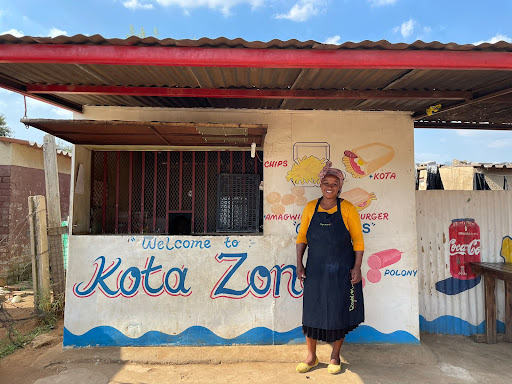
Phindi’s groceries needed their own minibus seat. Running a fast-food business in Ekurhuleni, South Africa, she hauled supplies home from the wholesaler, then carried them roughly a kilometre from her stop. Each trip cost ZAR42 in fares. Buying stock two or three times a week consumed money, time and energy before she had cooked a thing.
In BFA Global’s 2022 account, deliveries from Yebo Fresh reduced those journeys. Stock credit let her order beyond the cash she had available. The useful innovation was tucked into an ordinary question: how does the food reach the shop before the shop has earned the money to pay for it?
- BFA combines field research with product design, venture support and investment expertise.
- Its customers are institutions and ventures; the intended benefits reach underserved households and businesses.
- Its recurring lesson: design around cash flow, familiar tools and the people doing the work.
01 / A business model that missed payday
BFA and J.P. Morgan’s Digital Spazas program worked with A2Pay, Yebo Fresh and Vuleka, companies serving township retailers. The first phase improved digital operations. Then Yebo Fresh’s payment-on-delivery requirement produced costly returns: customers wanted the goods, but couldn’t always pay when the van arrived. Better ordering had exposed a financing problem.
BFA’s credit work included research with 100 shops, product design, selection criteria, controls and rollout support. Agents were already extending payment terms informally to trusted customers. The program helped formalize that practice and provided a temporary guarantee covering 70% of defaults. This gave the companies room to test stock supplied on short payment terms.
Yebo Fresh reported about 300 shops enrolling in its five-month Stock Boost pilot, with defaults below 1%. That was a promising pilot result. Repeating it elsewhere would still require sound underwriting and collections. The transferable insight is the sequence: let inventory produce revenue before demanding the payment that buys it.
Payment timing becomes part of the product.
02 / The people behind the experiment
David Porteous founded BFA in 2006. Its legal name, Bankable Frontier Associates LLC, still carries the original financial-inclusion ambition. Porteous describes the company as “a platform for good work.” His definition includes benefits for clients and society, alongside fair rewards and growth for the people doing the work.

That work brings together financial diaries, quantitative analysis, business modeling, policy advice and product development. BFA can study a customer’s behavior, prototype a response and help a venture implement it. For a foundation, regulator or financial institution, that combination offers continuity between learning about a problem and doing something about it.
The market position is unusually broad: specialist consultancy, product-development partner and venture builder, with investment expertise alongside. A client might otherwise hire several providers. BFA’s institutional engagements and donor-backed programs support this mix; the public record shows different funding arrangements for different initiatives, rather than a single product with a posted price.
In its March 2026 retrospective, BFA reported reaching 22 million people across 107 countries over the preceding decade, through more than 600 projects. Those figures describe reported reach. They invite a closer look at the projects underneath them, where adoption, repayment and business performance become more revealing than a grand total.
03 / The app customers already had
A2Pay supplied another lesson. BFA helped it develop a three-week credit-wellness course delivered through WhatsApp. The choice followed interviews with shop owners: here was a platform many already knew how to use. During the reported three-month pilot, weekly loan applications doubled, and 36% of loans went to customers who had never borrowed.
A2Pay adopted the co-designed approach for its credit training. Behind the apparently simple messages sat coaching, transaction information and lending processes. Familiar software reduced one obstacle; the rest of the service still had to work. There is a useful warning here for anyone who believes a new app is automatically progress.
Other BFA programs change what gets measured. In Mexico, MetLife Foundation-backed FinnSalud developed CIMA, a self-service financial-health tool for institutions. Its audiences include customers, employees and program beneficiaries. The distinction matters: opening an account is an observable event; understanding whether someone’s finances are healthier requires asking a different set of questions.
“A platform for good work.”David Porteous, founder
04 / A freezer is a financial product, too
BFA’s expansion into climate resilience follows the same practical concerns. TECA, its venture launcher, began in 2022 with FSD Africa’s $3.3 million commitment over four years. By 2026, TECA Amplify was offering follow-on support: four alumni ventures received a combined $273,000 in funding and venture-building assistance. These are program figures, separate from BFA’s corporate finances.
ClimaFii, delivered with Accion in Sub-Saharan Africa, brings the reasoning to perishable goods. Its 2026 fisheries analysis describes Keep IT Cool’s solar-powered cooling, leasing and pay-as-you-use access. A fisher or trader can preserve stock without buying an entire cold room. Samaking approaches the chain through reliable demand, connecting fish producers with buyers and informal traders.
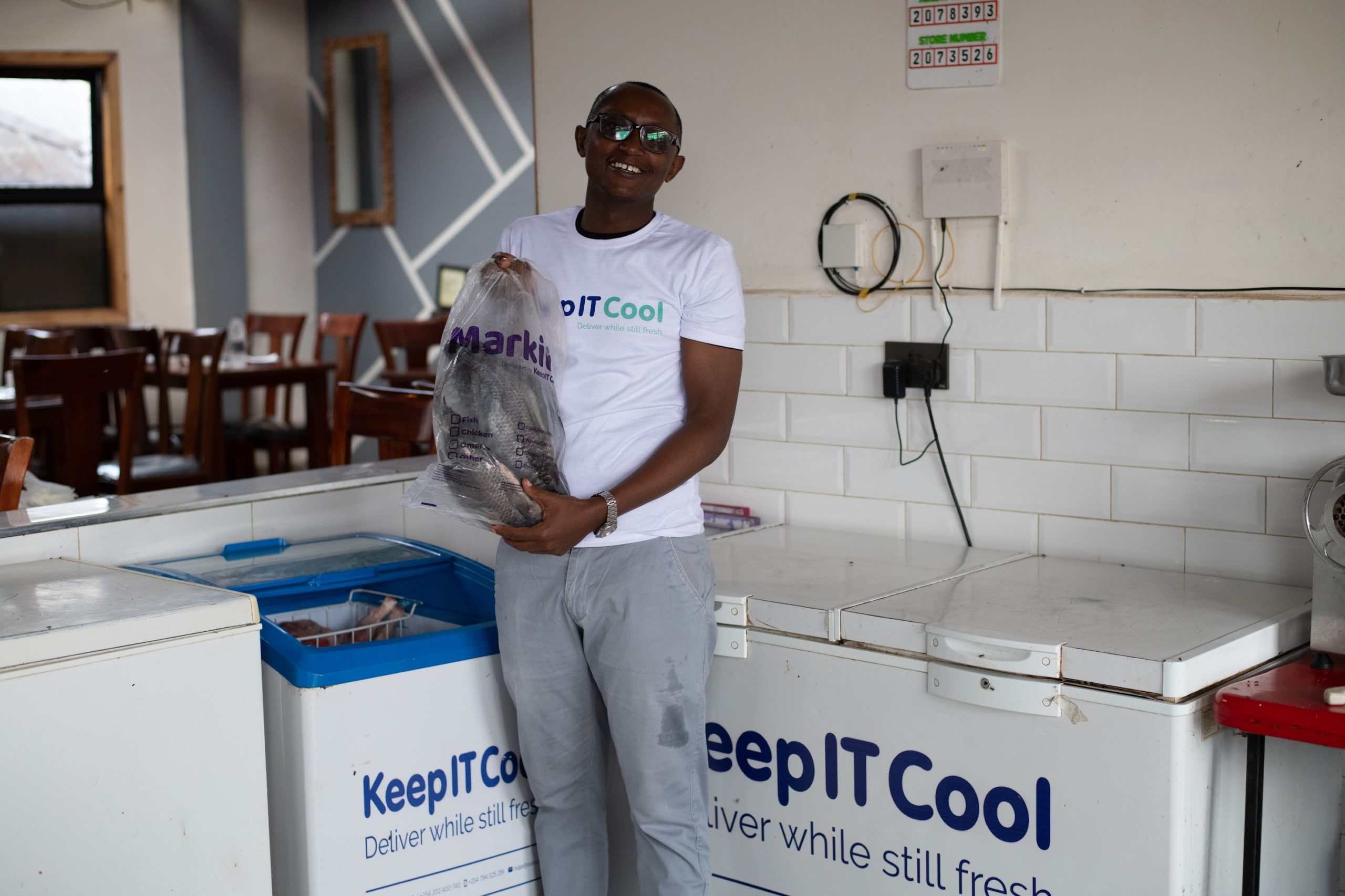
The September 2026 cooling analysis makes the financing issue explicit. Hardware needs capital; customers have daily cash constraints. Usage fees and installment payments can connect the two. Expansion also needs enough storage utilization, disciplined credit and buyers for the preserved food. An idle cold room is an expensive monument to a good intention.
05 / What to borrow from BFA
Founders can explore TECA or Jobtech Alliance, the initiative BFA launched with Mercy Corps to support platforms connecting people to livelihood opportunities. Institutions can commission research, product work or strategic advice. The useful starting point is a specific constraint: who cannot use the service, afford it or turn it into income?
The broader lesson is available without joining a program. Watch a customer complete the whole task. Find where money, time or confidence runs short. Test a change there, with enough human support to learn why it works. Phindi’s extra seat was a small expense with a large explanation inside it.