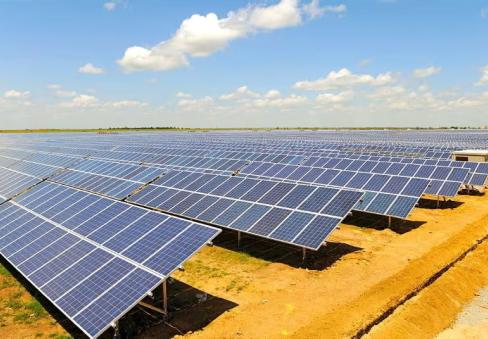
In southern Kazakhstan, the sun was never the scarce resource. Consider Burnoye, a solar park developed through a venture involving United Green and Samruk-Kazyna Invest. Its first 50 MW phase entered operation in 2015. Another 50 MW followed in 2018. A field of panels is the obvious achievement. The less photogenic achievement was getting the law, lenders, partners and land arrangements to line up.
- United Green invests its own capital and helps develop businesses and physical assets.
- Burnoye grew through two 50 MW phases, with sovereign and development-bank participation.
- Its Kenya agriculture programme connects farming, processing and access to markets.
- The transferable lesson: solve the surrounding constraints before scaling the asset.
United Green is a privately owned investment group with a family-office ancestry reaching into the early twentieth century. Its interests span energy, food, property, technology and trade. Read that list quickly and it resembles a cupboard into which every investment idea has been tidied. Read its stated preference for high entry barriers, then examine Kazakhstan, and a more coherent business appears.
The difficult part becomes the investment
The group looks for sectors where money, technology or politics discourage new entrants. That preference explains its interest in emerging and frontier markets. The opportunity, in this interpretation of its strategy, lies partly in assembling something other investors find awkward to assemble. A useful local relationship or a workable financing structure can matter alongside the asset itself.
Kazakhstan supplies a concrete example. Work on Burnoye followed the adoption of a renewable-energy law in 2014. The European Bank for Reconstruction and Development had worked with the government on that framework. United Green’s energy business joined a sovereign investment partner. Local and European contractors participated. Technology arrived within a structure that could support it.
This places United Green in the overlap between principal investing and project development. It can own an investment, work with an existing management team or establish a joint venture. For a government partner, that can mean help organising a new industry. For an entrepreneur, it can mean capital and operating support. The relationship changes with the project.
A price tag with several signatures
The 2017 financing announcement for Burnoye’s second phase put the expected project cost at up to $80 million. The EBRD offered a loan equivalent to up to $44.5 million in Kazakh tenge, with a term of up to 15 years. The Clean Technology Fund supplied a $10 million loan for up to 20 years. Owners would supply the remaining capital.
Expected project cost
EBRD
Up to $44.5m
CTF
$10m
Owners
Remainder
Illustrative split at announced ceilings; project finance, not a United Green funding round.
Those terms reveal a constraint more useful than any slogan about innovation. The EBRD said financing of that duration in local currency was unavailable in the country. A solar park earns over many years. Matching debt to that timetable, and to the currency of the market, helps explain why a development bank belongs in the story.
Baikonur extended the pattern. In 2018, a financing package for another 50 MW plant brought together the EBRD, the Clean Technology Fund and the Asian Development Bank. Different institutions could lend around one project company. For anyone copying the approach, the practical task is to establish which party can carry each obligation before ordering the equipment.
Sunlight does not settle land rights
Burnoye’s development also involved historic pasture land. The EBRD’s assessment identified the effect on land use and the surrounding community as a key issue; expansion would further reduce grazing space. Public consultations informed an environmental and social action plan, and a livelihood-restoration plan was to address the land question.
That detail gives the group’s ethical language a practical test. Its foundation says business should be “both profitable and responsible”. Responsibility here means accounting for people whose interests sit outside the electricity contract. A technically sound installation can still require difficult negotiations over what the site used to provide.
“business should be both profitable and responsible”United Green’s stated foundation principle
A food system needs somewhere to sell
The Kenya programme moves the same investment logic into agriculture. In November 2023, the UK government announced a KES 31 billion agreement involving United Green and Kenya Development Corporation. It described climate-smart crops and agro-industrial processing, with a Kisumu County joint venture and markets across the Lake Victoria region.
The announced ambitions included 2,000 direct jobs, income for a further 20,000 farmers and $200 million in annual food-import savings. These are projected benefits. They are useful for understanding the programme’s intended scale; a memorandum records an agreement, while harvested crops, functioning processing facilities and paid suppliers establish delivery.
A diagram of the announced approach, not a claim of completed facilities.
The appeal is the connection between production and what happens afterwards. A farm needs buyers; processing needs dependable inputs. Bringing those needs into one programme is a plausible route to a stronger local business. It also creates dependencies. Weak demand, unreliable infrastructure or unresolved land arrangements can undermine the economics even when farming methods improve.
The investor behind the assembly
United Green also advertises investment management and renewable-project services for sophisticated investors. Its venture activity supplies capital and active support to growing businesses. Commodity trading adds transaction-risk management and connections between suppliers and buyers. These offerings place potential clients and counterparties on several sides of the same commercial problem.
Its alternatives therefore vary: a specialist renewable developer for a power project, a venture fund for a young company, an agricultural operator for a food investment. United Green’s distinguishing proposition is its willingness to combine ownership, development and partnerships across sectors. The bargain is complexity. The useful lesson is to map that complexity early: identify the lender, operator, buyer and affected community, then test whether their interests can hold together long enough to build.