A former boss gave Hari Subramanian a piece of advice with a rather inconvenient consequence: “Don’t do things that are smaller than you.” It is the sort of encouragement that sounds generous until you realize it rules out a comfortable afternoon. Subramanian took it seriously. Years later, after co-founding a software company that GE bought for $915 million, he was still choosing projects large enough to make him uneasy.
His explanation was that a little fear could be a useful signal. A business that already fitted neatly inside his abilities would offer less reason to stretch them. There is an appealing awkwardness to this philosophy. Experience is supposed to make work easier. Subramanian appears to value the point at which experience stops being sufficient.
The companies he helped create tell a more particular story than the familiar tale of a founder pursuing bigger markets. ServiceMax brought software to field-service technicians. Appify let business users build applications around their own work. Helpall Social proposed connecting people who needed practical assistance with people able to offer it. Read together, these ventures suggest a recurring interest in the distance between knowing something useful and being able to act on it.
A business hiding in the service van
Subramanian grew up in Thoothukudi, in the southern Indian state of Tamil Nadu. His later career took him deep into enterprise software, through roles in support, programming, solution architecture and engineering leadership. Enterprise resource planning, customer relationship management, workflow and document imaging were part of his working vocabulary. These are unglamorous phrases for problems that can consume an entire working day.
ServiceMax began in 2007. Its early form, Maxplore, addressed a gap in the software available to technicians who installed and maintained equipment. Athani Krishnaprasad and Subramanian were among its founders. A customer relationship system could hold the account; the person standing beside the machine needed tools for the actual service work. The office and the service van occupied the same business, but they did not enjoy the same digital conveniences.
In 2008, Maxplore won the first Force.com developer contest, held with Salesforce and Emergence Capital. Emergence led a $2 million Series A investment. The contest mattered because it turned a working application and its customer uses into something investors could examine. A good idea had acquired a practical demonstration, and a practical demonstration had acquired a route to becoming a company.
- 2007ServiceMax begins
- 2008Force.com contest win
- 2017GE acquisition completed
Borrow the foundation. Build the useful part.
One of the founders’ consequential decisions was to build on Salesforce. The choice sounds technical; its effects reached into the calendar. A startup building its own underlying platform spends time maintaining the foundation before it can deliver the particular tools its customers want. ServiceMax could concentrate more of its effort on field service.
Dave Yarnold, who joined as CEO, later credited that choice with helping the company move quickly. His previous experience at SuccessFactors had shown him how much work a homegrown platform could demand. Salesforce also gave prospective customers a familiar environment. The founders were entering a specialist market with infrastructure that buyers already recognized.
The supporting cast mattered too. Yarnold assembled commercial and service leadership around the founding team, including Stacey Epstein, Scott Berg and Karen Pisha. ServiceMax also built a community publication for field-service workers, initially called SmartVan. A company selling tools to a dispersed workforce had discovered that the workforce benefited from a place to recognize itself. The service van, usually noticed when it parks inconveniently, had become the center of a business conversation.
The number, and the work behind it
On January 10, 2017, GE Digital completed its acquisition of ServiceMax for $915 million. The date puts a firm endpoint on Subramanian’s first decade leading the company’s technology and engineering. The price makes an arresting headline. The machinery behind the price is more revealing.
GE described a combination of field-service applications and its Predix industrial software platform. ServiceMax contributed work-order management, scheduling, workforce optimization and parts logistics. Those functions connected analysis to the work a technician would actually perform. A machine’s data could suggest a problem; someone still needed the assignment, the appropriate parts and a way to record the repair.
Kleiner Perkins, an investor, placed ServiceMax at precisely that point in the industrial technology chain: turning analysis into action in the field. That distinction helps explain Subramanian’s career. Collecting information is only one part of the job. Software becomes useful when the information reaches a person in a form they can use, at the moment a decision is needed. A dashboard, however handsome, cannot climb into the van.
GE Digital’s announced purchase price for ServiceMax.Completed January 10, 2017
A programmer makes room for non-programmers
Subramanian founded Turbo Systems in 2017. In February 2019, it announced an $8 million Series A round led by Mayfield. Rajeev Batra, who had backed ServiceMax, was involved again. There was continuity in the relationship and a change in the proposed customer experience.
Turbo’s premise was that the person closest to a business process often understood what an application should do, while lacking the programming knowledge to create it. Its drag-and-drop platform was designed to bridge that gap, including for mobile and deskless workers. It would complement systems already in place, such as Salesforce and SAP, rather than require every customer to start over.
The proposition moved some authority toward the person doing the work. A process owner could bring operational knowledge directly into an application. That is an attractive idea, but it also sets a demanding test for the product: the software must make its power understandable. Removing code from the screen does not, by itself, remove complexity from a task.
Turbo became Appify in 2020. Jen Grant, who served as CEO, brought a background in enterprise software marketing. She described her skills and Subramanian’s product and engineering strengths as complementary. Their pairing echoed an earlier feature of ServiceMax: technical founders building alongside executives with different experience. Knowing which work to hand to someone else belongs in the founder’s toolkit too.
The person at the other end of the application
Subramanian’s interest in everyday use is visible in the details he chooses. Discussing mobile technology in 2017, he argued that different devices would suit different field tasks. Accepting an assignment did not require the same screen or interaction as a complicated diagnostic job. The latest gadget would not automatically make the older ones redundant.
He also allowed himself a joke about remembering client-server computing. The humor carried a point: he had watched the industry move processing between devices and central systems before. Fashion changes faster than the underlying question of where a task is best performed.
By 2021, he was discussing younger workers’ familiarity with technology and younger customers’ expectations of digital service. The implication for business software was straightforward. People accustomed to convenient applications elsewhere would bring those expectations to work. A complicated internal process would have to justify its complications.
In August 2023, he appeared on the inService podcast to discuss extended service networks. The focus included channel partners and the friction that digitization could create between organizations. Connecting an employee inside one company is a narrower challenge than connecting all the partners who help deliver a service. His field of attention still extended beyond the people with a company login.
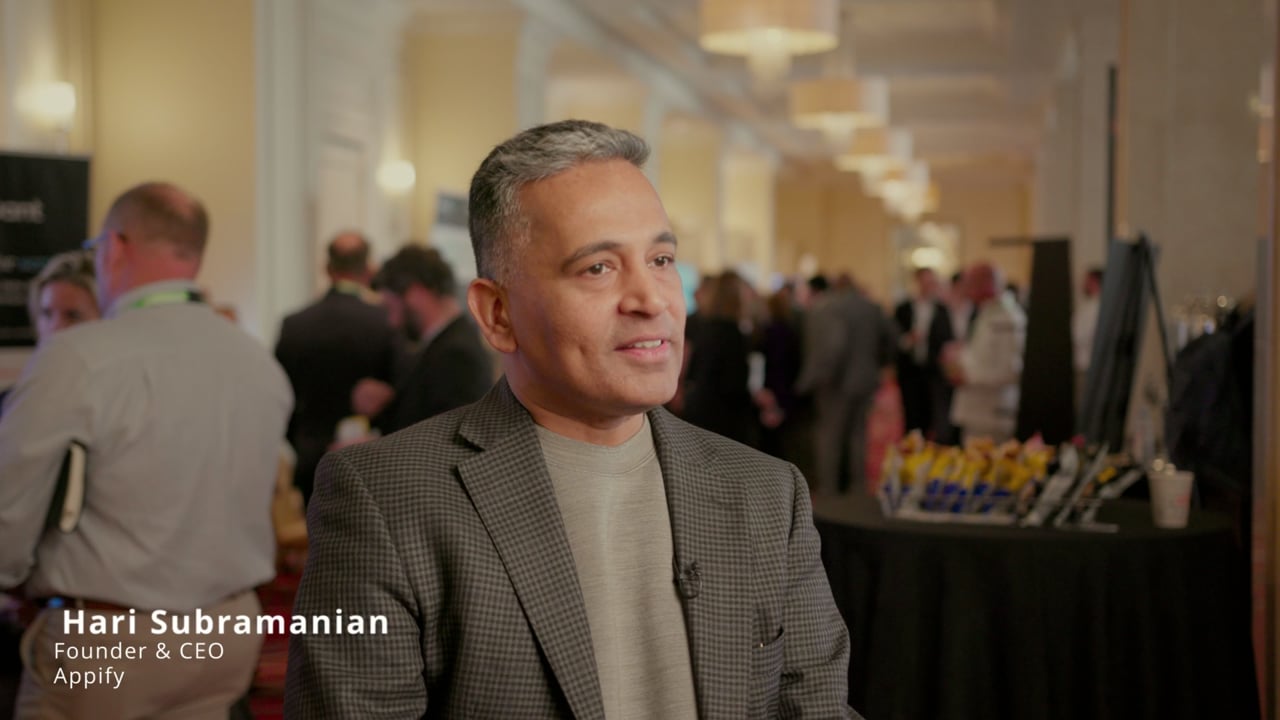 Watch the conversation ↗
Help, with the money taken out
Helpall Social gave that interest a different setting. In October 2022, Subramanian described a social platform connecting people who needed assistance with people who could provide it. Members could neither request nor give money through the platform. Time, practical help and the ability to find each other were the point.
The restriction was a design decision. Someone might be willing to help without having spare cash. An organization might need volunteers beyond its existing circle. A person needing assistance might have no idea whom to ask. Helpall tried to give those situations a common meeting place, with public and nonprofit editions described as free to use.
He co-founded the venture with Indresh Satyanarayana, a former ServiceMax chief architect. The proposed matching process considered location, availability and the help someone could offer. Familiar engineering concerns had crossed into a different kind of relationship: how to discover a need, find an available person and make the connection useful.
Subramanian connected his wish to help others with the values his father taught him. His stated ambitions for Helpall included encouraging children to practice compassion and making acts of assistance more visible. Those were aspirations, with the uncertainties that accompany any young venture. They also supplied a personal reason for tackling another large problem when he already had plenty of experience of how large problems behave.
“That burden, in a weird way, kind of inspires you to go after it.”Hari Subramanian, on ambitious work, 2021
Still looking beyond the office
In 2023, Subramanian joined the Service Council Technology Advisory Board. His appearance at that year’s Smarter Services Executive Symposium brought him back among the service leaders whose work had occupied so much of his career. The subjects had expanded, but the people fixing, coordinating and delivering things remained in view.
There is a temptation to arrange a founder’s life around transactions: a contest, a funding round, an acquisition, another company. Subramanian’s record supports a second reading. Each venture asks who has been left at the edge of an existing system. The technician outside the office. The business user waiting for a developer. The volunteer outside an organization’s immediate network.
That reading is an interpretation of his work, rather than a claim that every project followed a master plan. It is also what makes the sequence interesting. His former boss’s advice could have produced a career devoted simply to larger numbers. Instead, the recurring question is wonderfully specific: what would let this person get something useful done? There is enough unfinished business in that question to keep a founder occupied for quite a while.