Forty-five customers sounds better than fifteen. Put the figures on a boardroom slide and someone will probably ask what went wrong. Yet when Jen Grant discussed Appify, formerly Turbo Systems, in July 2022, the smaller number belonged to a business pursuing larger enterprise deals. The customer list had contracted. The value of an individual customer had changed.
- Turbo built mobile business apps around existing enterprise data.
- It became Appify in September 2020 and moved toward larger buyers.
- Its practical lesson: sell the completed workflow, then price the complexity.
That is a useful puzzle for anyone buying or building business software. An app can be easy to assemble and still be difficult to sell. The missing ingredient may be a buyer with an expensive enough problem.
The office fits in a pocket
Turbo’s founder knew the territory. Hari Subramanian had co-founded ServiceMax and spent a decade as its CTO before GE Digital acquired it in 2016. He founded Turbo in 2017. When the company emerged publicly in February 2019, it announced an $8 million Series A led by Mayfield.
The product addressed a familiar mismatch. A company’s records lived in systems built for managing the business; a person doing the work needed something useful on a phone. Turbo supplied a configurable application layer across those records, with work orders, inspections, checklists and inventory among its initial uses.
Consider the ordinary repair visit. The useful sequence is receiving the assignment, understanding the equipment, recording the work and returning the information. Turbo’s launch described mobile and offline operation, pulling existing data into an app and sending collected information back. The database could stay where it was.
One operational loop. Updates travel back to the business.
The customer supplies the clue
By September 2019, Turbo was available through AWS Marketplace. Its announcement described connections to more than 140 business and IT data sources, including Salesforce, Oracle, QuickBooks and SAP. United Service Technologies was a named customer. Its founder, Rodger Smelcer, emphasized the platform’s fit with the company’s field-service ambitions.
The important word is fit. A generic app builder competes on what someone can construct. A field-service buyer also cares about whether the construction matches a working day. Signature capture, maps and inventory tracking matter because they belong to jobs that already exist.
Other deployments widened the picture. Neisa Nordic selected Turbo for technicians maintaining IT equipment. Keysight’s internal innovation group used it for lead capture, sales forecasting and compensation applications. The common requirement was access to existing systems through an interface suited to a particular task.
“everyone deserves great software”
Jen Grant · CEO appointment announcement, 2020
Grant’s appointment was announced in March 2020. Her background included marketing leadership at Looker, Elastic and Box. Subramanian became the founder and CTO alongside an executive focused on growing the business. In September, the company’s release notes announced its new name: Appify. The mobile clients changed names, too.
A smaller list, a larger invoice
In July 2022, Grant described the economic consequence of pursuing enterprise buyers. Average annual contracts were roughly $125,000. The company had about 15 enterprise customers, compared with the 45 smaller accounts discussed in an earlier interview. She explained that integration across large organizations’ data systems made the platform especially valuable there.
Then-CEO interview figure.
Not a current subscription price.
Read that as a change in whom the company served. Fewer accounts alone would be a poor success measure. Larger contracts alone would also hide the effort required to win and support them. Together, the figures explain why the business might deliberately choose a different customer.
Distribution changed as well. In April 2022, CSG selected Appify to help power its Workforce 360 mobile application. The announcement named customers including Keysight, TataMD and Mettler Toledo. An embedded relationship gave Appify a route into another vendor’s offering, bringing its technology closer to an established field-service market.
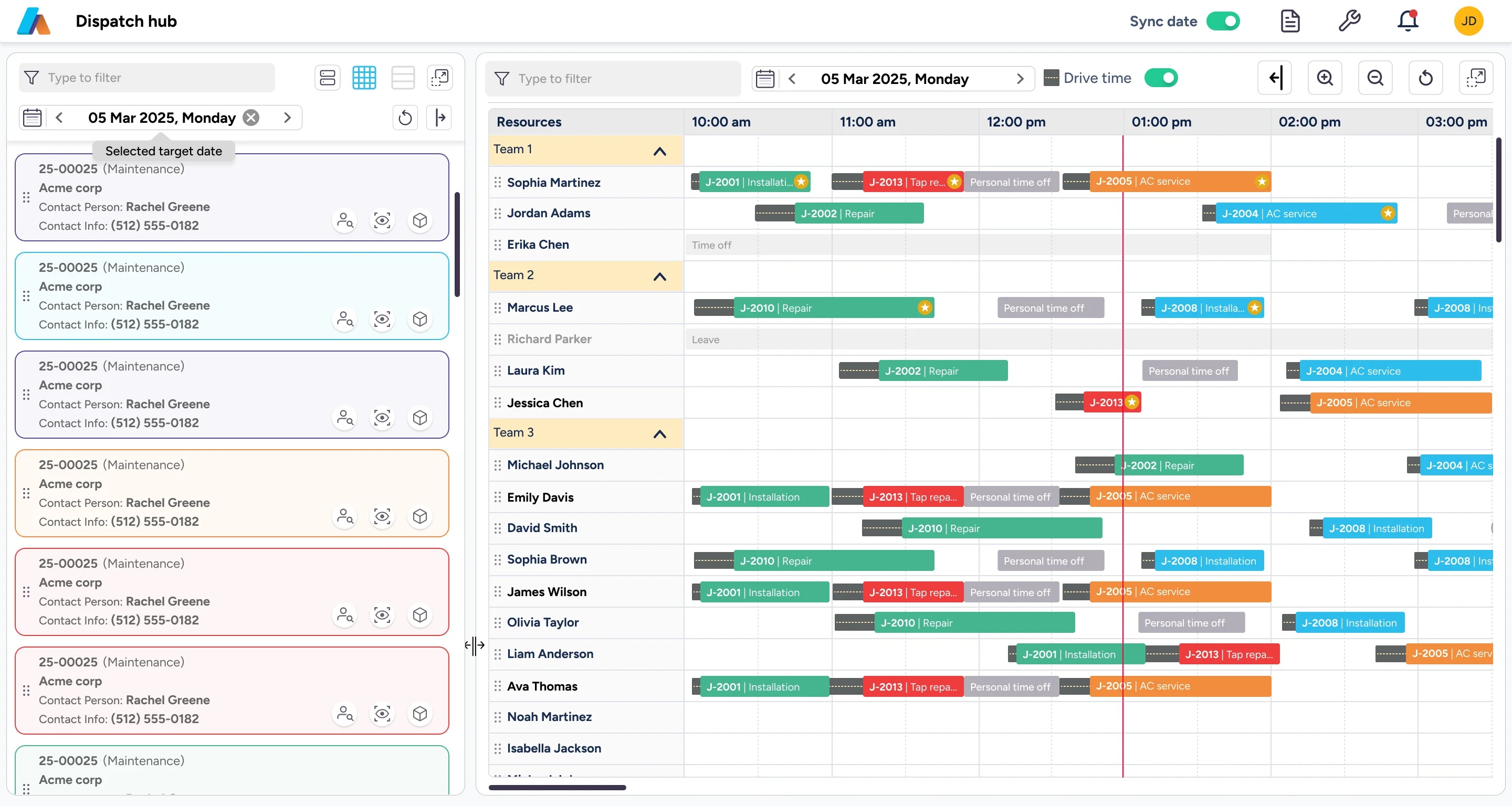
Today, Appify sells a quoted subscription with optional advanced capabilities and services. Its pricing page lists configuration retainers of 40, 80 or 120 hours, training and custom API development. Those extras are revealing. Removing programming from an interface does not remove the work of understanding a company.
The investment behind that experiment was $11.45 million in announced financing: the original $8 million round and a $3.45 million extension announced in July 2020. Mayfield led the extension, joined by B Capital’s Ascent Fund and Nassau Street Ventures. That is capital raised by the company, distinct from what a customer paid to use the product.
Someone still has to run the engine
The machinery underneath was substantial. An nClouds case study describes Turbo migrating from Amazon ECS to EKS, adding a virtual private cloud and using Terraform for infrastructure configuration. The earlier application environment had twelve services replicated across nine clients. Performance, scaling, communication between services and costs were explicit engineering concerns.
This helps place Turbo in the market. It occupied the space between writing a custom application and adapting an entire operation to packaged software. The attraction was preserving established records while changing how people worked with them. The trade-off was another platform to configure, govern and maintain.
The builder changes. The job remains.
Appify now markets Unshackle, an AI-assisted builder that promises applications from plain-language descriptions, including data models, permissions and automations. That is the company’s current proposition. It does not erase the original buying question: can the resulting app handle the actual work?
There is a simple distinction for buyers here. A team with a routine process already covered by its existing software may gain little from another builder. The more persuasive case is a recurring task that crosses systems, has a clear owner and wastes measurable effort. That is an evaluation principle drawn from Turbo’s positioning, rather than a guarantee about any deployment.
The lesson to copy is practical. Pick one workflow, identify its records and permissions, and test it with the people who perform it. Check what happens without connectivity and what returns to the source system. Where records are inaccessible or the process remains disputed, easier app creation still leaves the central problem unresolved. Start with the job someone needs to finish.