The challenge was small enough to explain in a sentence: let a business receive and answer texts through its business number. The deadline was less comfortable. In a public account of an early Uncode project, team member Sandeep Botla described a team setting itself 15 days to deliver GoTextGo. There were doubts about the schedule. The team, he reported, delivered.
Botla’s account makes an interesting introduction to Uncode, the Irving, Texas company founded in 2021. He identified its founder and CEO as Ratan Ingu and named Banter and Textier as other applications built on the platform. His story was about a specific product with a specific job. That is a useful place to begin understanding a company whose catalogue stretches across business software.
- Build: custom business applications with visual tools.
- Connect: existing data, customer interactions, and operational processes.
- Get help: work with Uncode’s technical team on scope, delivery, and changes.
A number becomes a workflow
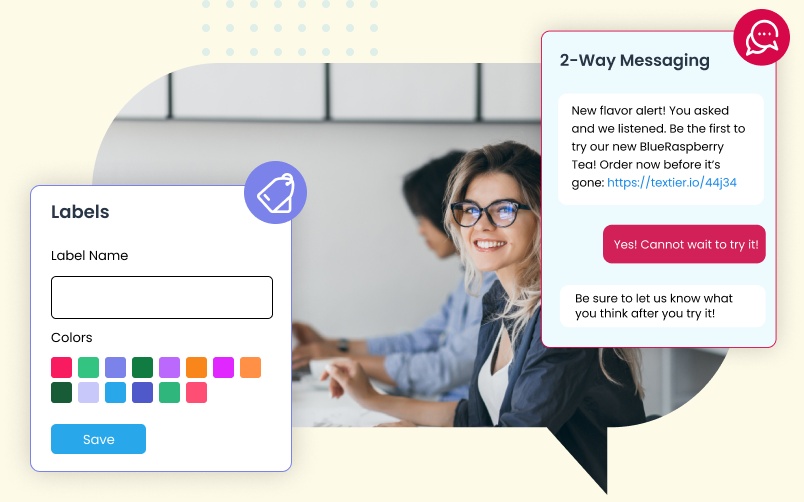
A business number is familiar. The work behind it quickly becomes complicated. Who answers? What happens after closing? How does a message reach the person who can act on it? Uncode’s communication offering includes existing-number text enablement, shared access, automatic replies, labels, and scheduled messages. Those are individual features, but together they describe an operating process.
The company also advertises triggers and business logic for handling messages. A keyword can prompt an action; a conversation can acquire a label; staff can work with controlled access. The point is to turn incoming communication into organized work. For a business owner, that is a more tangible proposition than a general promise to digitize everything.
The team comes with the tools
Uncode belongs in the low-code and no-code application market. Its distinction is the way it packages that proposition. The company repeatedly pairs its platform with a technical team. Its application optimization offer covers updating, migrating, and re-platforming existing systems. Its process automation offer brings in product leads and a dedicated development team. The customer is buying help with delivery as well as access to software.
That makes the practical alternative broader than another visual builder. A buyer might otherwise commission a conventional custom build or have employees assemble an application themselves. Uncode’s proposition sits between those decisions. It offers reusable platform capabilities alongside people who can interpret requirements. Whether that combination is valuable depends on how much help a particular business needs to turn its knowledge into a working application.
“We set a challenge of delivering a product within 15 days”Sandeep Botla, early team account
The work hiding behind the screen
Underneath the interface, Uncode advertises tools for data objects, relationships, APIs, and workflows. It also offers different ways to inspect information, including lists, calendars, Kanban boards, and charts. These views matter because people doing different jobs can need different presentations of the same work. A queue helps someone choose the next task. A calendar helps someone see when it is due.
The platform also allows scripts and CSS in its interface functions. That detail makes the low-code description useful: visual configuration can coexist with more technical customization. The practical buying question becomes how closely the available components fit the intended application, and where a specialist will need to extend them.
Consider employee onboarding, one of Uncode’s advertised internal operations uses. The visible surface might be paperwork, electronic signatures, and a checklist. The process also needs to move between people. Someone supplies information; someone checks it; someone decides what happens next. A useful application has to preserve those relationships as well as present a neat form.
Case management makes that requirement especially clear. Uncode describes assigning cases, tracking their status, and tracing related business transactions. Its customer experience catalogue adds order entry, appointments, and service requests. These are variations on an approachable pattern: collect information, identify the next action, and give the right person a view of the work. The business expertise lies in knowing which action belongs next.
An illustrative process pattern drawn from Uncode’s published use cases.
The homepage’s testimonials put names to parts of that proposition. Growith discusses storefronts and their management portals; Banter describes developing a business communication service; Spybaby describes inventory, orders, and sales. These are customer accounts published by Uncode. They help show the intended range, from selling products to managing the operations behind them.
The price starts with the brief
Uncode’s partner programme provides a particularly revealing description of how a project reaches a customer. A partner introduces the client. Uncode discusses the requirements, prepares a demonstration, sends a quote, collects payment, and pays a commission. The sequence puts scope and demonstration ahead of the purchase. It gives a buyer something concrete to inspect before agreeing to a project.
The commercial language includes monthly residual commissions and commissions on implementation and other non-recurring charges. Uncode also describes software licence fees as its revenue model. A sensible budget conversation therefore begins with the application’s requirements and the quoted terms: what gets delivered, which integrations are included, and how later changes will be handled. Those details determine whether a faster build becomes a cheaper working system.
Fifteen days is a story, not a forecast
The GoTextGo account is useful precisely because it has a boundary. It describes one team’s reported delivery experience. It gives a prospective buyer an example to discuss, rather than a timetable to paste onto every new project. A short build can still contain difficult decisions about what belongs in the first release and what users should be able to do.
For someone considering Uncode, the transferable idea is to start with a process that can be explained clearly. Choose one recurring task. Name its users, inputs, decisions, and exceptions. Ask for a demonstration that follows a real request through to completion. A tool that makes ordinary cases quick should also make the awkward cases understandable. That is where a pretty demonstration becomes a useful buying test.
Make the handoff visible
The same test reveals the limits. If a project depends on integrations that cannot supply the necessary data, or business rules nobody can agree on, a visual builder cannot settle those questions for the customer. The proposed workflow needs an owner and a definition of completion. Treat those as requirements for the demonstration, alongside the screen design.
Uncode’s appeal is easiest to understand at that scale: a message answered, a case assigned, an employee ready to start. The company offers ways to connect those everyday moments to custom software, with a team available to help build it. Its early texting story suggests a useful ambition for any business application: pick a job people recognize, make it work, and give them something they can try.