The trouble began with contracts. Chad Kreimendahl and Chris Pantaenius had considered about 25 business ideas and settled on software for managing them. Contracts seemed a sensible place to start: documents, obligations, dates, people who needed reminding. Then, about six months into the venture, the customers introduced a complication. They wanted to manage contracts in different ways. A tidy product idea had encountered the untidiness of work.
Kreimendahl's eventual answer, built with Pantaenius at Onspring, was to make room for those differences. The company became a configurable platform that could support many business processes. The change sounds straightforward in retrospect. At the time, it meant taking on a harder engineering problem than the one the founders had chosen. They had narrowed their list to one idea, only to discover that the useful version needed to open up again.
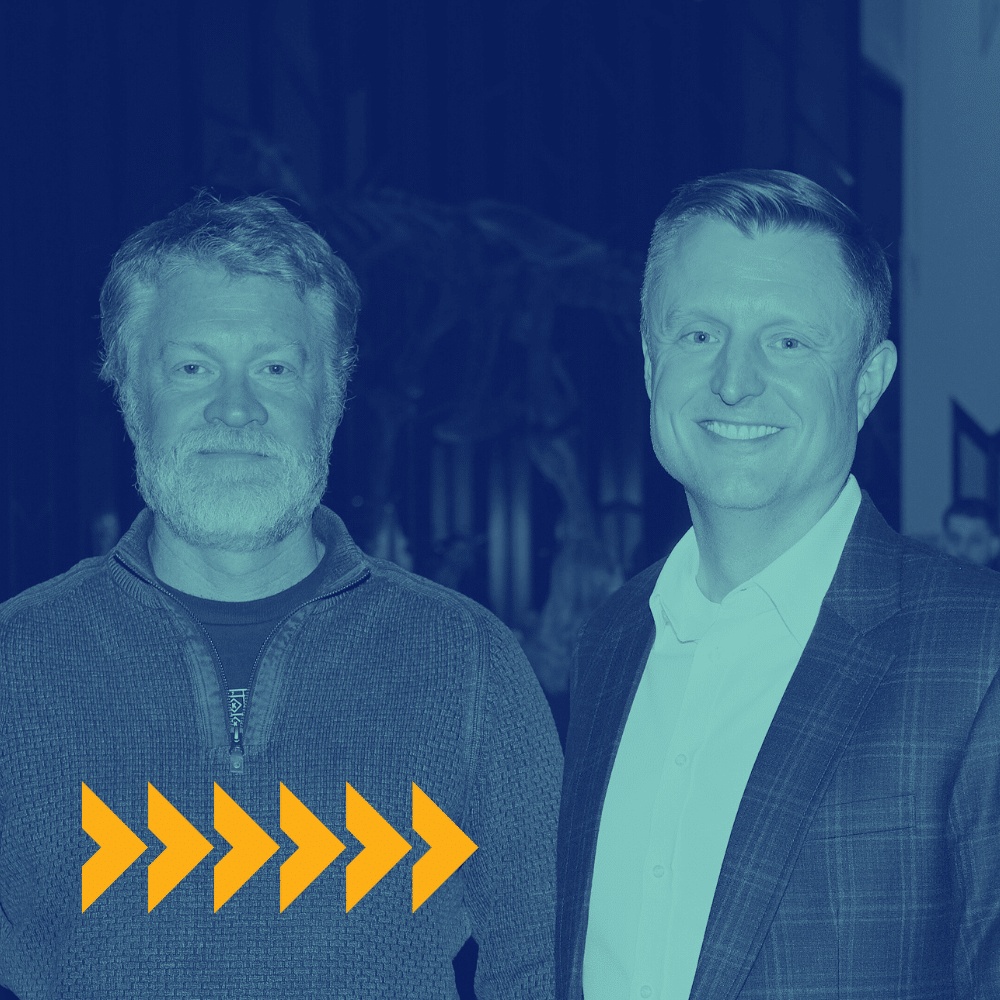
That early decision makes a useful introduction to Kreimendahl, now Onspring's co-founder and CEO alongside Pantaenius. His career combines the practical concerns of a technologist with the expanding responsibilities of a business owner. The recurring question is who gets to change the software when the work changes. His company has spent years giving business users more of that power.
Two colleagues, one inconvenient discovery
The partnership began at Archer Technologies, where Kreimendahl and Pantaenius shared interests in software and starting a business. Kreimendahl's earlier roles included director of Archer Labs; he also founded OrangePoint and served as its managing director. By 2010, the pair were working on their own venture. Their experience gave them a view of enterprise software from inside the industry, with its established products and customers already paying to solve complicated problems.
Their first plan was a contract-management application. The discovery that organizations needed different workflows and reports changed its scope. A contract might be the common object, but the route it took through a business was particular to that business. The founders chose to build a platform that customers could configure. It was an early concession to a fact anyone who has attended an office process meeting will recognize: agreement on the noun rarely guarantees agreement on the procedure.
The CTO wanted less equipment in the room
By April 2013, Kreimendahl was speaking publicly as Onspring's chief technology officer. The company's pitch was broad: business applications for more than 20 functions, including customer relationships and human resources, with the ability to create additional applications. Users could start with existing tools or design something suited to their organization. Access depended on a person's role, and the information lived in the cloud.
Kreimendahl emphasized the reduction in infrastructure a customer would need to buy and manage. Smaller organizations could get capabilities previously associated with much larger businesses, without acquiring the same equipment or technical staffing. It was a distinctly operational argument for software. The attraction was what people could get done once they had fewer systems to look after. The computer could stay someone else's responsibility; the business process could stay yours.
This gives his early CTO work a useful context. Making software configurable for customers still requires substantial technical work by its builders. Ease of use at one end depends on decisions about storage, access and performance at the other. The apparent simplicity is something the supplier has to construct and maintain. A drag-and-drop interface does not get to excuse itself when the database stops cooperating.
A founder in the bug tracker
In March 2015, Kreimendahl reported a MongoDB issue involving an out-of-memory crash with the WiredTiger storage engine. The public technical record includes configuration details and logs with an Onspring database name. It is a small, concrete glimpse of a founder engaging with the machinery underneath the product. There are no keynote lights in a database crash report. There is a problem, evidence of the problem, and the work of getting it understood.
The distinction matters when reading his no-code pitch. He was helping build a business in which customers could work without programming, while his own public activity reached down into database behavior. Those two kinds of work belong together. Moving technical responsibility away from a customer gives the provider more responsibility for it. The interface may be friendly; the infrastructure still has to answer difficult questions.
A little rhyme in the server room
His public writing has a lighter register than the product category might suggest. In a 2015 essay on cloud computing, he explained why he had chosen that architecture for Onspring, connecting technical choices to business costs and focus. He admitted his commercial interest and ended with a joke about his own rhyme. On LinkedIn, his description pairs the founder role and CISSP credential with the words “Meme Aficionado.”
The humor is welcome in a field that can make an ordinary approval request sound like a constitutional amendment. More revealing is his willingness to explain the choices behind the product. The argument has an audience beyond developers: people trying to decide where their time and money should go. Read as a portrait of his working interests, the writing suggests a founder who enjoys technology and wants its practical reasons to be understood.
The people buried in requests
In May 2020, Onspring introduced an IT service management solution. Kreimendahl, still identified as co-founder and CTO, addressed a familiar difficulty for IT teams: managing incoming requests while demonstrating their contribution to the company. His description connected the daily queue to the larger business. A team could be doing necessary work all day and still struggle to show what that work accomplished.
The offering covered incident and problem management, configurable processes across the ticket lifecycle, and reporting. That combination is consistent with the original platform decision. Different activities could sit within a shared system, with records and workflows connected to reports. The emphasis on reporting also acknowledged the person who has to explain the department's work upstairs. Closing a ticket is useful. Being able to see what changed across hundreds of tickets gives the conversation a different level of detail.
When years became months
The scope of Kreimendahl's public responsibilities widened. In May 2023, Onspring announced strategic capital from Capital IP, with plans to invest in artificial intelligence, integrations, user experience and new products. It also announced hiring across engineering, sales development and customer success. The ambition involved both the software and the organization required to deliver it.
Kreimendahl described the financing as an opportunity for larger product-development bets. The announcement characterized Onspring as founder-owned and led. For someone whose earlier public explanations dwelt on infrastructure and usability, this was another scale of decision: how to obtain the resources to move development faster while continuing to run the business.
His later testimonial for Capital IP makes the time calculation explicit. He describes a growth timetable brought forward from years to months. The useful word is time. Capital can change which plans a company can carry out now, which hires can happen together, and how long customers wait for what comes next. His description frames the partnership around that compressed timetable. It is a founder's measure of the distance between a product plan and the ability to execute it.
“Our goal to reaccelerate growth was shortened from years to months.”
Chad Kreimendahl · On the Capital IP partnership
The software has to meet the rest of the business
In April 2024, Onspring announced moderate-level FedRAMP authorization for GovCloud, its offering for federal agencies. The suite included tools for risk, controls and remediation planning. The move took a company founded around configurable business processes into an environment with formal security requirements. It also extended the circumstances in which the founders' original idea could be used.
A reseller partnership with GuidePoint Security followed in October 2024. Kreimendahl, identified as founder and CEO, emphasized the place of cybersecurity within third-party risk management. The offering brought together Onspring's platform and a security provider's customer relationships. Managing a supplier involves more than getting a contract signed; it can also involve keeping track of changing risk after the agreement is in place.
His comments about Onspring's SecurityScorecard integration are more compact: “Expediting remediation is the goal.” Risk information is useful when someone can act on it. Connecting external security ratings with a workflow gives the finding a route into work that people can assign and follow. In that sense, the partnership story returns to the contract-management problem: information needs a process around it, and the process has to fit the people responsible.
- 2010Onspring founded
- 2013Cloud application announcement
- 2020IT service management launch
- 2023Strategic capital from Capital IP
- 2024GovCloud authorization & GuidePoint partnership
Still making room for the next problem
Kreimendahl's professional connections now extend beyond Onspring. TENEX.AI lists him among its advisers. Momentum Cyber's first-quarter 2026 market review lists him as a strategic partner for GRC. These are adjacent roles in the cybersecurity business, connecting his experience in governance, risk and compliance software with other organizations working in the field.
At Onspring, the shared leadership arrangement remains visible: both founders hold the co-founder and CEO title. Their business still carries the marks of its early revision, with configurable workflows at the center of the offering. The interesting achievement is the accumulated work behind that continuity: building the platform, addressing its technical problems, extending its applications, arranging capital and forming partnerships.
Return to those first contracts and the lesson becomes pleasantly specific. Kreimendahl and Pantaenius had an idea for how a business might work. Customers supplied several other versions. The founders made a company that could accommodate them. A contract-management plan became a longer project in letting people arrange their own work. Six months into a new venture, that must have looked like a complication. It also gave them something worth building.
Follow the work
- Onspring · Company and leadership
- Chad Kreimendahl · LinkedIn
- His essay · 14 Reasons to Reconsider Cloud Computing
- Chris Pantaenius · The founding story in conversation
- IT service management · The 2020 launch
- Capital IP · Kreimendahl on the partnership
- SecurityScorecard · Partnership comments
- GuidePoint Security · The 2024 announcement
- TENEX.AI · Advisers
- Momentum Cyber · Q1 2026 market review