The servers were working. The network was working. Yet at PacificSource, a health insurer in the Pacific Northwest, expired digital certificates were helping turn ordinary months into a sequence of interruptions. In AppViewX’s published customer account, the company reported three or four certificate-related outages a month. A system could be physically healthy and still lose permission to be trusted.
- AppViewX finds certificates and automates their renewal and deployment.
- Its buyers run complicated businesses with complicated infrastructure.
- In 2026, it expanded into controlling AI agent identities and access.
This is an unusually revealing corner of cybersecurity. Digital certificates help software prove its identity and establish trusted connections. They also expire. Somewhere between buying one, approving it, installing it and remembering its deadline, an organization can create an outage without an attacker doing anything at all. AppViewX makes software for that chain of responsibilities.
The calendar was never the system
PacificSource adopted the platform in 2021. Its account describes centralized discovery, policy controls and automated installation, including binding certificates to the appropriate application instances. It reports that deployment fell from a full day to 15 minutes and certificate-related outages dropped to zero. Those are customer results published by the vendor, rather than a promise about every deployment.
The lesson travels beyond certificates: a reminder can tell someone to act, but it cannot do the work. At Nationwide Building Society, an earlier generic solution required multiple steps and repeated exchanges between stakeholders. AppViewX collected the necessary request information upfront and integrated the workflow with Active Directory. The friction lived in the handoffs.
“materially saved time and effort for users across the whole certificate management lifecycle”Nationwide Building Society
AppViewX’s CLM product connects discovery, issuance, renewal, deployment, monitoring and revocation. A security team can establish policy while an application team requests a certificate through a controlled workflow. The useful question is whether the replacement reaches the actual service before the old identity expires.
- 01 DiscoverFind the certificate
- 02 GovernSet policy and ownership
- 03 RenewIssue its replacement
- 04 DeployPut it into service
A business built between other systems
Founded by Anand Purusothaman, AppViewX developed around low-code automation for network and security operations. Its expertise sits where enterprise technology gets awkward: different certificate authorities, old appliances, cloud workloads and teams with different permissions. The company advertises more than 200 integrations. That number matters only when the required connection works in the buyer’s environment.
The AVX platform, previously marketed as AVX ONE, now spans CLM, private PKI, SSH access, code signing and application delivery controller automation. PKI creates and administers a private root of trust; CLM handles certificates across their working lives. Code signing brings protected keys and approval policies into software delivery. ADC automation reflects the company’s network operations heritage.
Its customers include Rabobank, Nationwide and Xcel Energy. AppViewX says one in five Fortune 100 companies uses its products. These are environments where a certificate can belong to one team, sit on another team’s equipment and support an application whose owner has a different budget. Coordinating those relationships is part of the product’s value.
AppViewX occupies a busy market alongside DigiCert Trust Lifecycle Manager, Keyfactor, Sectigo and the machine identity products formerly branded Venafi. Its pitch emphasizes working across existing infrastructure and certificate authorities, plus configurable automation. Buyers should resist treating CA independence as unique: DigiCert also describes its management product as CA-agnostic. The meaningful comparison is coverage, workflow depth and operating effort.
The deadline is getting smaller
Public TLS certificates now face a tighter timetable. The CA/Browser Forum schedule limits newly issued certificates to 200 days from March 15, 2026, then 100 days in 2027 and 47 days in 2029. These are public TLS rules; they do not impose the same schedule on every private enterprise certificate.
Shorter lifetimes turn an occasional task into recurring production work. They also make the economics of automation easier to discuss. A February 2026 Forrester study commissioned by AppViewX modeled 302% return on investment over three years for a composite organization, with $3.9 million in risk-adjusted benefits. It is a modeled business case assembled from customer interviews, not a guaranteed saving.
AppViewX sells enterprise subscriptions through custom quotes, with SaaS, private-cloud and on-premises options. A useful purchasing exercise therefore includes the subscription, integration work, operating permissions and the cost of retaining manual exceptions. A successful demo should follow one difficult certificate all the way to a functioning application.
Then the identities started making decisions
In March 2026, AppViewX acquired Eos, an AI agent identity business, and appointed Eos co-founder Archit Lohokare CEO. Agent Identity Security launched in June. October additions included shadow-agent discovery, an MCP Gateway and a runtime kill switch. The announced capabilities address software that can choose actions and exercise privileges inside enterprise systems.
There is a connection to the certificate business, but also a larger challenge. Certificates establish trust; an autonomous agent can use that trust to act. Governing it requires knowing its owner, tools and permissions, then controlling access while it runs. The acquisition extends AppViewX’s remit from maintaining credentials into supervising their use.
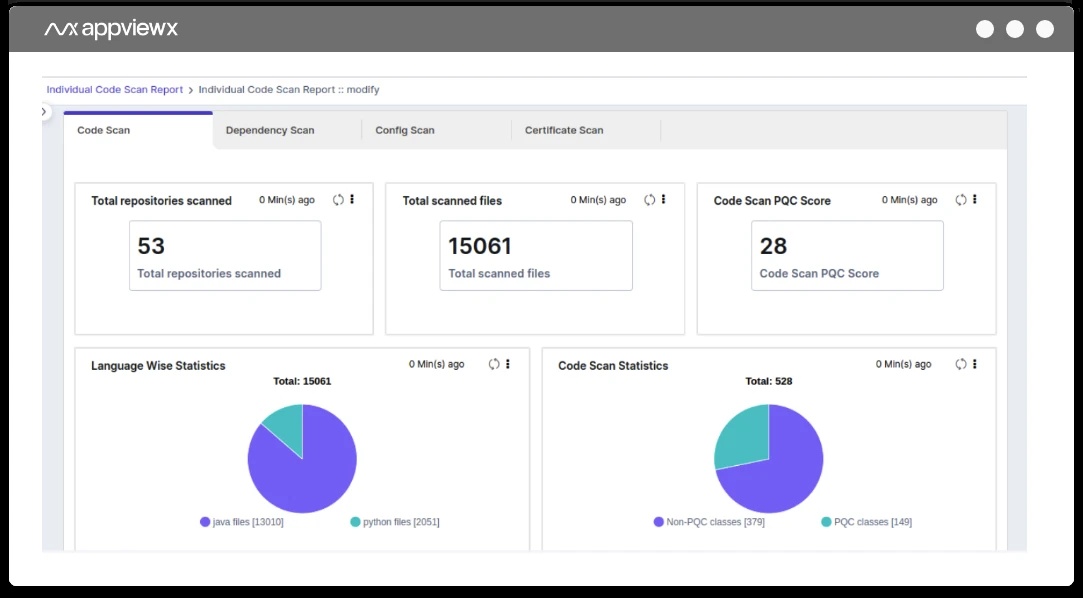
AppViewX is also building for cryptographic change. Its July release announced hybrid composite post-quantum certificates and an MCP server for governed certificate operations. The practical theme is adaptability: discover what exists, understand dependencies and make changes through policy rather than a collection of emergency instructions.
Start with the last step
The company has financed its expansion with a $30 million Brighton Park investment in 2019 and a $20 million Series B in 2022. Haveli Investments completed its acquisition in January 2025. Its engineering culture has an Indian base; the company announced Great Place To Work certification there for 2023-24.
Even AppViewX encountered the limits of manual operations. An AWS case study describes its move to Cloud WAN as dedicated connections and routing work multiplied. New VPC connectivity went from a week to 24 hours. For buyers, the transferable idea is modest: map ownership, automate a complete workflow and verify the outcome. An inaccessible endpoint or an unmigrated certificate still needs attention. The application, ultimately, gets the deciding vote.