Dave Krauthamer had sold the cloud business. The next project, he decided, ought to be enjoyable and intellectually interesting. He turned toward quantum computing, a field in which even the promise can require a small glossary. He remembers people wondering why he would bother. For someone raised in what he called “a super nerdy, Caltech/ JPL family,” the attraction was perhaps easier to understand than the objections.
His route into the subject gives his current work a particular character. Krauthamer arrived with experience in the systems companies actually use: finance, customer relationships, supply chains, engineering and the inconvenient connections between them. Those systems have customers waiting, employees working and bills coming due. They offer limited patience for a magnificent idea that interrupts Tuesday.
Today he is QuSecure’s co-founder and Field CTO, after serving as its CEO. The company works on post-quantum cybersecurity and cryptographic agility. Put those terms beside his earlier career and a recurring problem appears: essential technology needs to change, and the people depending on it need to carry on.
The cloud had customers attached
Before the quantum chapter, there was Intelenex. Krauthamer led the Oracle cloud applications integrator as president and CEO. In July 2015, Emtec acquired it. At the time, Intelenex had completed more than 50 Oracle cloud implementations, with a particular focus on enterprise resource planning and human capital management.
The language sounds dry until you consider what those applications hold. Payroll and financial processes are places where the theoretical advantages of a new system meet the consequences of a missed detail. Moving them requires a business to trust both the technology and the people implementing it. A migration plan has to survive contact with an ordinary working day.
When the acquisition was announced, Krauthamer described seeking a partner that could expand Intelenex’s global market, complement its strategy and fit its culture. The three considerations belong together. More reach is useful; a workable relationship is how that reach becomes something a team can deliver.
His previous work included a CIO role at Advanced Fibre Communications and information systems management at Parker Hannifin. Enterprise computing was already familiar ground. It is tempting to describe a career as a collection of titles, but these jobs point toward a more concrete occupation: making organizations and their systems function together.
A Thursday afternoon in Salazar Hall
On September 18, 2014, Krauthamer was scheduled to speak at Sonoma State University at four in the afternoon. The subject was enterprise cloud computing. The venue was Salazar Hall. The lecture description promised a look at large-scale applications at companies including Lyft, Pandora and Riot Games, followed by the mechanics of building a growing company.
He was returning as a graduate of Sonoma State’s computer science department. His education also included executive programs at Stanford and the California Institute of Technology. The lecture joined those two sides of his career: the technical work of implementing systems and the business work of building an organization around them.
A university talk is a modest detail in a founder’s biography, which is precisely its value here. The topic was practical enough to include deployments, broad enough to include entrepreneurship and directed toward people who might try it themselves. There was a room, a time and a problem to explain.
Earlier, the 2011 Oracle OpenWorld schedule placed him on an application integration panel with representatives from Accenture, Deloitte, Oracle and Wipro. Long before his quantum interviews, Krauthamer was participating in the public discussion of how enterprise technology becomes useful beyond a product demonstration.
“The system should be able to run the business while the people run the system.”
Dave Krauthamer, in a public recommendation for a former colleague
That line appears in his recommendation for Todd Ledet, a former Intelenex colleague. The rest of the recommendation emphasizes documented assumptions, realistic expectations and a shared understanding of project goals. It offers a small glimpse of what Krauthamer praises at work. The details are less glamorous than a launch announcement. They are considerably more useful when something must ship.
The ventures between the chapters
After Intelenex, Krauthamer’s career included revenue and marketing leadership at Emtec, the founding of Neural Sales and work with Quantum Thought. Neural Sales connected AI with the business of finding customers. Quantum Thought brought together collaborators seeking to develop and commercialize quantum computing ventures.
These projects widen the picture beyond a single company. The same person worked across enterprise implementation, sales technology and a field still developing its commercial applications. The chronology matters because it keeps the quantum story grounded in a working career, rather than making it seem to have appeared fully formed with a new company name.
There is also an investor chapter. The Band of Angels listed him as chair of its Digital Disruption special interest group. Its 2017 newsletter recorded him among the sponsors of Jirav, a financial reporting, forecasting and analytics platform. That connection places him on another side of the startup conversation: considering the work other founders propose to build.
The lock comes with a replacement problem
QuSecure was founded in 2019. Its concern is cryptography, the mathematics that helps digital systems establish trust and protect information. A sufficiently capable quantum computer could defeat important public-key methods used today. The timing remains uncertain. The work of preparing systems does not become instantaneous merely because the deadline is hard to pin down.
In August 2024, the US National Institute of Standards and Technology released its first three finalized post-quantum cryptography standards. The agency encouraged administrators to begin integrating them. That is an important distinction in the story: usable standards can arrive before an organization has finished the work needed to deploy them.
The standards address different tasks. One helps two parties establish a shared secret key across a public channel. Two concern digital signatures, which help authenticate who signed something and reveal unauthorized changes. These are everyday foundations of digital trust, even when their names remain unfamiliar to the people relying on them. The transition reaches beyond the comforting padlock symbol in a browser. NIST also advises technology managers to identify the applications using encryption and involve their vendors in preparing for change. There is plenty of organizational work alongside the mathematics.
A new mathematical method still needs a route into a working network. It must coexist with equipment, software and operational responsibilities accumulated over years. This is where Krauthamer’s earlier career becomes relevant. His public explanations return to deployment and management, the less photogenic part of a technology transition.
In his April 2026 writing, he describes moving cryptographic decisions into adjustable policies. Administrators would manage algorithm choices and key lifecycles through rules, rather than requiring each application to be rebuilt whenever a change becomes necessary. The aim is to make security adaptable across a network.
The policy idea also gives people work to do. Krauthamer calls for cooperation among security, compliance and network operations teams, alongside testing and training. A rule that can be changed quickly still needs to be a sensible rule. Automation does not relieve an organization of deciding what it means to protect.
A conversation, then a factory floor
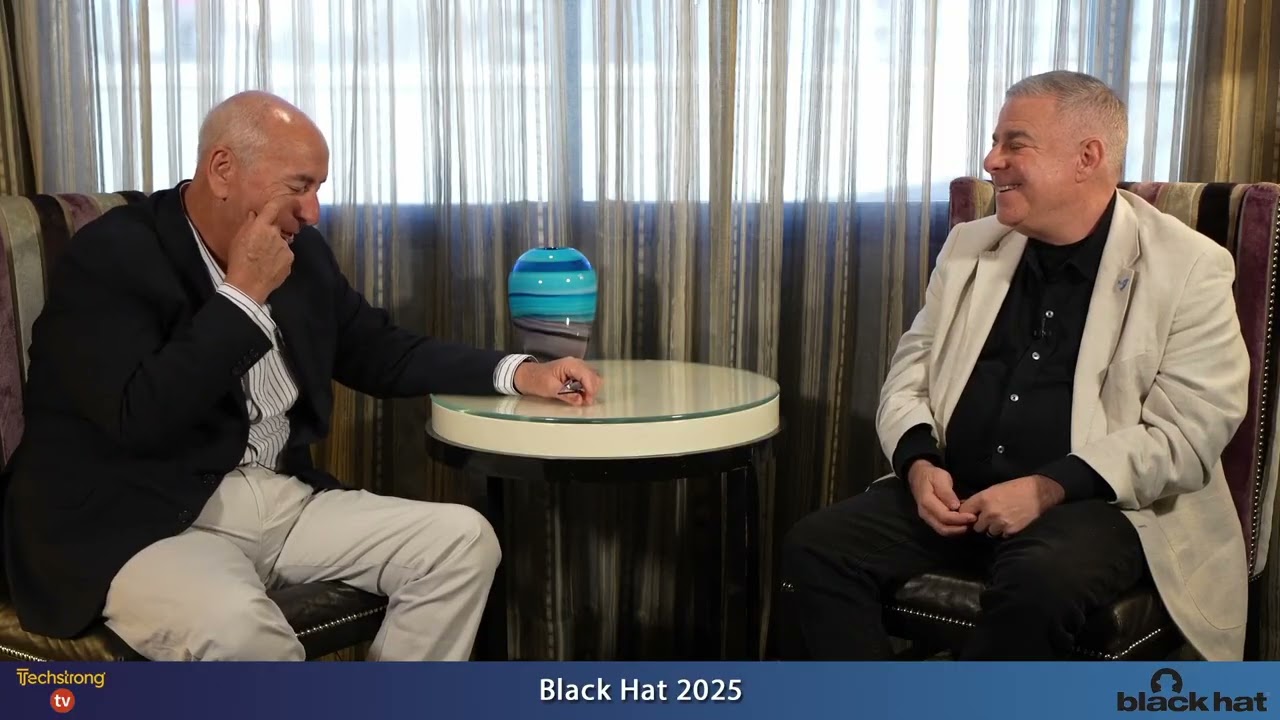
Krauthamer’s public work increasingly translates the subject for different audiences. At Black Hat in 2025, he spoke with Alan Shimel about quantum computing and security. In a June 2025 webinar with T-Mobile’s Stacy Williams, the discussion concerned post-quantum network encryption and network modernization. The technology has to make sense to the people running communications infrastructure.
The CES program listed him for a January 2026 session on quantum security and the Global Industry Challenge. An April Converge Digest video featured his discussion of network-wide cryptographic management, including deployment across cloud and air-gapped environments. These appearances give the Field CTO title a visible public dimension: explaining how the proposed change fits into the systems already there.
His May 2026 article turns toward industrial equipment. Manufacturing plants and critical infrastructure may keep assets operating for decades, he writes. Updates can be infrequent, replacement cycles long and changes constrained by certification requirements. The equipment’s useful life may be longer than the security assumptions that accompanied its purchase.
Krauthamer argues for inventorying cryptographic dependencies, setting priorities and introducing agility before a rushed transition becomes unavoidable. The practical tension is easy to recognize. A factory cannot casually retire a working machine because the encryption conversation has advanced. Planning must accommodate the machine, the network and the people whose work depends on both.
The founder remains in the conversation
In February 2025, QuSecure announced funding that brought its Series A round to $28 million, led by Two Bear Capital with participation from Accenture Ventures. It also appointed co-founder Rebecca Krauthamer as CEO. Dave’s current role is co-founder and Field CTO; his published biographies also identify him as a board member.
The leadership change is a chapter in his story, rather than its ending. He continues to write and speak about encryption, networks and operational change. His June 2026 Forbes Technology Council article listing turned to cybersecurity at machine speed, extending the conversation to AI-driven attacks.
His writing has returned to this maintenance problem repeatedly. A September 2025 Forbes Technology Council article addressed cryptographic debt; a May 2026 listing described post-quantum migration as an opportunity to rethink secure communications. Taken together, the subjects show the persistence of his interest in what organizations have already built, and what they must be able to change next.
The career now stretches from enterprise information systems through cloud implementation to cryptographic management. Its continuity lies in a stubborn, ordinary requirement. People need their technology to keep working as it changes. Krauthamer’s chosen problem gives that requirement a new setting: a network full of locks, each of which may eventually need replacing, while the doors remain in use.