Breaking
Blumen Systems supports 57,458 MW of prospective energy projects across ~500 U.S. projects Hannes Boehning raises $6.39M seed round from Climate Capital - July 2024 Blumen Systems: turning regulatory chaos into clean energy projects at machine speed Stanford MS in Computer Science meets America's permitting bottleneck 27-person team. San Francisco. Environmental intelligence for the energy transition From Rothschild & Co analyst to climate-tech founder - the Hannes Boehning story Blumen Systems supports 57,458 MW of prospective energy projects across ~500 U.S. projects Hannes Boehning raises $6.39M seed round from Climate Capital - July 2024 Blumen Systems: turning regulatory chaos into clean energy projects at machine speed Stanford MS in Computer Science meets America's permitting bottleneck 27-person team. San Francisco. Environmental intelligence for the energy transition From Rothschild & Co analyst to climate-tech founder - the Hannes Boehning story
Climate Tech / San Francisco
CEO & Founder - Blumen Systems

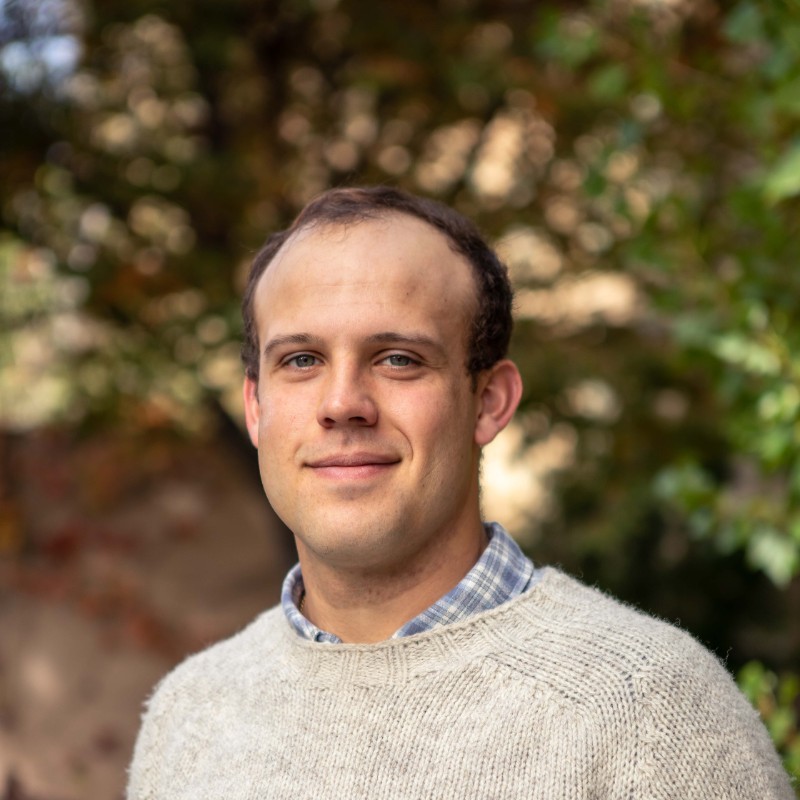
Hannes
Boehning

The permit whisperer who turned regulatory paperwork into a $6M startup

In a field where solar farms wait years for the paperwork to clear, Boehning built a machine to untangle the tape. Stanford engineer. Former Wall Street analyst. Two-time state wrestling champion from Larchmont, New York. Now the founder running AI across thousands of federal, state, and local regulatory documents so energy projects can actually get built.

AI / Climate Permitting Intelligence Geospatial Stanford MS&E + CS Seed Stage
57K+ MW of projects supported in 2025
$6.4M Seed funding from Climate Capital
~500 Active U.S. energy projects on platform
27 Employees and growing
2023 Year Founded
Blumen Systems, San Francisco, CA
2x State Wrestling Champion
Rye Country Day School, NY
2022 Stanford MS, CS
BS Management Science & Engineering (2021)
100 Tackles in one season
School single-season record, HS senior year

The Energy Project Nobody Could Start

Somewhere in America right now, a solar farm is stuck. Not for lack of capital. Not for lack of land. Stuck because nobody can decode the 4,000 pages of federal, state, county, and local regulations that determine whether a project can actually be built - let alone how, and by when.

Hannes Boehning watched this happen from up close. At Fortress Investment Group, where he worked in energy infrastructure, and before that at Rothschild & Co as a software analyst, the bottleneck was always the same: the permitting labyrinth. Brilliant engineers, committed capital, willing landowners - all waiting on regulatory paralysis.

He did what engineers do with systems that are broken: he built a replacement. In 2023, Boehning founded Blumen Systems in San Francisco, a company whose product name - "environmental intelligence" - is both precise and slightly understated. What Blumen actually does is convert raw regulatory chaos into structured, actionable engineering output. Site layouts. Permitting matrices. Engineering documents. In minutes, not months.

Stanford's generation should learn humility from the disruptive events they've witnessed, becoming engaged citizens rather than overconfident predictors or builders.

- Hannes Boehning, The Stanford Daily, May 2020

There's a paradox at the center of this. Boehning wrote a 2020 Stanford Daily opinion piece arguing that intellectual humility - the willingness to admit the limits of what we can know - is the most underrated capacity for his generation. He cited Nassim Taleb, the Harvard MBA study showing 45% confidence interval errors where 2% was expected, and the unsettling finding that janitors and cab drivers often outperform experts precisely because they make no pretense of certainty.

And yet his bet on Blumen is a very confident one: that AI can systematically do what human regulatory experts do slowly, inconsistently, and expensively. The epistemic humility applies to predicting the future. The engineering ambition applies to redesigning the present.

The Insight

The energy transition doesn't have a capital problem. It has a paperwork problem. Build the machine that eats the paperwork.

From Larchmont to Sand Hill Road

Boehning grew up in Larchmont, New York, son of Reiner (German-born) and Lisa Glover Bohning. He attended Rye Country Day School, where he was the kind of athlete who made 100 tackles in a single football season while simultaneously becoming a two-time state wrestling champion. He was named to the 2017 National Prep All-America team in wrestling. The football team wasn't his ceiling - it was one room in a larger house.

At Stanford, he enrolled as a fullback - 6'2", 220 lbs - and pursued a degree in Management Science & Engineering, the program designed for people who can't decide between the humanist and the quantitative, and ultimately don't have to. He served as head Teaching Assistant for MS&E 178 and TA for CEE 107 (Civil and Environmental Engineering), which means he was teaching the very technical and regulatory disciplines his company would later automate. He completed his MS in Computer Science in 2022.

Stanford's ExploreCourses page lists his interests with spare honesty: "Hannes enjoys surfing, hiking, and reading." Not a performance. A person.

What Blumen Actually Builds

The infrastructure economy in America is notoriously expensive to navigate. A geothermal well, a hydrogen hub, a carbon sequestration site, a utility-scale solar project, a data center - each one faces a maze of federal agencies, state environmental reviews, county zoning boards, tribal consultations, and utility interconnection queues. The people who specialize in mapping these mazes are called permitting consultants, and they're expensive, scarce, and operating largely on institutional memory.

Blumen replaces that institutional memory with geospatial AI. The platform aggregates regulatory datasets and applies machine learning to convert project files into permitting intelligence and engineering documents. A developer uploads a project - say, a 200MW wind farm in Wyoming - and gets back a permitting matrix that shows every required authorization, its source agency, its timeline, and its dependencies. What once took weeks of consultant time takes minutes of compute time.

By 2025, Blumen's platform was supporting 57,458 MW of prospective energy, infrastructure, and data center projects across approximately 500 active U.S. projects. The company covers renewable energy, carbon sequestration, geothermal, hydrogen, and data centers - essentially the full stack of America's energy transition infrastructure.

The company name is not accidental. Blumen means "flowers" in German - a nod to Boehning's father's heritage, and perhaps a small joke about what happens to land when it's properly tended.

100 Tackles. Two Championships. One Startup.

🏈
100 Tackles - Single-season school record, Rye Country Day School senior year
🥇
2x State Wrestling Champion - New York State, Rye Country Day
🎖
2017 National Prep All-America - Wrestling, one of the highest prep honors
🎓
FAA Senior Student-Athlete Award - 2017, recognizing athletic and academic excellence
🏛
Stanford Football Roster - Joined as fullback, class of 2021
🌍
57,458 MW Supported - Projects on Blumen platform by 2025

The athlete-engineer archetype tends to produce a specific kind of founder: someone who has trained to operate at the edge of personal capacity, who understands that the gap between good and exceptional is mostly about systems and repetition, and who has a very high tolerance for discomfort. Boehning fits this cleanly.

Wrestling, especially at the championship level, is a sport of pure problem-solving under physical and psychological pressure. You cannot delegate. You cannot wait for help. The opponent adapts in real time and so must you. It is, in a non-metaphorical sense, exactly the kind of skill that transfers to founder life.

The error rate turned out to be closer to 45% when only 2% was expected. Even experts systematically misjudge what they don't know - which is why intellectual modesty is a genuine competitive advantage.

- Hannes Boehning, The Stanford Daily, May 2020 - citing Harvard Business School research

Why Permitting is Climate's Hardest Bottleneck

The numbers on clean energy are staggering - and so are the backlogs. As of 2024, the U.S. had hundreds of gigawatts of renewable energy projects waiting in interconnection queues. Most would never be built. Not because the technology wasn't ready, and not because capital was unavailable. Because the permitting systems were overwhelmed.

Federal agencies, state environmental boards, county zoning commissions, tribal historic preservation offices, utility interconnection desks - each project touches dozens of regulatory bodies, each with its own forms, timelines, and interpretations of the same underlying law. The consultants who specialize in this work are in short supply. Their institutional knowledge lives in their heads, not in machines.

Blumen changes the unit economics of that expertise. By aggregating geospatial datasets and regulatory documents - and running AI across them to identify required permits, critical issues, site constraints, and document requirements - the platform gives project developers a permitting intelligence layer that scales. What one specialized consultant can assess in weeks, the platform can assess in minutes. And then do again, for the next project, without fatigue.

Project Scope

What Blumen Covers

Renewable energy (solar, wind) - Carbon sequestration - Geothermal energy - Hydrogen production - Data centers - Critical minerals - Natural gas infrastructure

From New York to Stanford to Battery Street

Pre-2017
Rye Country Day School, Larchmont NY. Three varsity sports: football, wrestling, track. Sets school single-season tackle record (100). Wins two state wrestling championships. Named 2017 National Prep All-America in wrestling.
2017
Enrolls at Stanford University. Joins the Cardinal football team as a fullback (6'2", 220 lbs). Declares Management Science & Engineering as major.
2019-2021
Serves as Head Teaching Assistant for MS&E 178 and TA for CEE 107 (Civil and Environmental Engineering) at Stanford. Teaches the regulatory and infrastructure frameworks his company will later automate.
2021
Completes BS in Management Science & Engineering, Stanford University. Begins MS in Computer Science program.
2022
Completes MS in Computer Science, Stanford University. Interned at Fortress Investment Group (Energy Infrastructure). Joins Rothschild & Co as Software Analyst.
2023
Founds Blumen Systems in San Francisco. Raises initial seed funding from Climate Capital. Launches environmental intelligence platform for infrastructure developers.
Jul 2024
Closes $6.39M seed round from Climate Capital - Blumen's largest funding round to date. Grows team to 27 employees.
2024-2025
Blumen speaks at Techonomy Climate 2024. Platform scales to support 57,458 MW of prospective energy and infrastructure projects across ~500 active U.S. projects.

The Details That Don't Fit the Bio

@inallhannesty
His Twitter handle is a wordplay on "in all honesty" - a quiet signal that the guy who writes about epistemic humility is also playing with language when nobody's looking.
Blumen
"Flowers" in German. His father Reiner is German-born. A startup name that is both a nod to heritage and a metaphor for what careful land stewardship produces.
CEE 107
He was a TA in Civil and Environmental Engineering at Stanford - before founding a company that automates exactly those permitting disciplines. He was teaching his own future product.
6'2" 220
Stanford recruited him as a fullback. The most physically punishing position on the field, where your job is to clear the path for someone else to run through. The metaphor is almost too clean.
45% vs 2%
The Harvard MBA study he cited in his Stanford Daily piece: students predicted 2% confidence interval errors in their estimates. Actual error rate: 45%. He wrote about this in 2020. In 2023, he built a company to close that gap in regulatory prediction.
Clay shooting
Among his listed hobbies: shotgun clay shooting. Alongside surfing, hiking, cycling, and swimming. A rare combination for a Bay Area tech CEO. The guy contains multitudes.

What's Been Happening

2025

Blumen Systems reports supporting 57,458 MW of prospective energy and infrastructure projects across approximately 500 active U.S. projects - spanning renewable energy, geothermal, hydrogen, carbon sequestration, and data centers.

July 2024

Blumen closes its largest round to date: $6.39M in seed funding from Climate Capital. The company has now raised $7.69M in total. Team reaches 27 employees at 1161 Battery Street, San Francisco.

2024

Boehning speaks at Techonomy Climate 2024 on technology, policy, and energy innovation - joining a growing public presence in the climate-tech conversation alongside his role building Blumen.

2023

Founds Blumen Systems in San Francisco with initial backing from Climate Capital. Launches the environmental intelligence platform to automate permitting and site development workflows for energy infrastructure projects.

Share This Profile

Hannes Boehning - CEO & Founder, Blumen Systems