The Six-Person Studio That Put a Movie Camera Inside a Game Engine
How a former VR outfit turned into the off-the-shelf toolmaker for virtual production - selling filmmakers a camera that shoots worlds that do not physically exist.
Point a camera at nothing. No set, no actor, no light. Now look through the viewfinder and there is a mountain range, a spaceship corridor, a digital human breathing on the other side of the lens - and when you step left, the whole world parallaxes with you, exactly as if it were real. That trick, more than any glowing LED wall, is what "virtual production" actually is. And a small Los Angeles company called Glassbox Technologies has spent years turning it into software you can buy off a website.
Glassbox makes tools for shooting things that do not physically exist. Its flagship product, DragonFly, is a professional virtual camera that plugs into the game engines filmmakers now use as sets - Unreal Engine, Unity and Autodesk Maya. Its second product, BeeHive, is the less glamorous but arguably more important half: a way for a crew scattered across cities to work on the same virtual scene without overwriting each other. Together they answer a question that used to require a studio's custom pipeline and a studio's budget: how do you direct a shot inside a computer?
01 / The PivotFrom making the gold to selling the shovels
The company did not start out selling tools. It started out making content. Its roots trace back to Opaque Media, a virtual reality studio co-founder and CEO Norman Wang began in 2012, whose work included a NASA-assisted spacewalk experience. Somewhere along the way the team noticed the pattern every toolmaker eventually notices: the hard part was never the finished experience, it was the plumbing needed to make it. So around 2016 the focus shifted from experiences to instruments, and in 2019 the company relaunched as Glassbox Technologies.
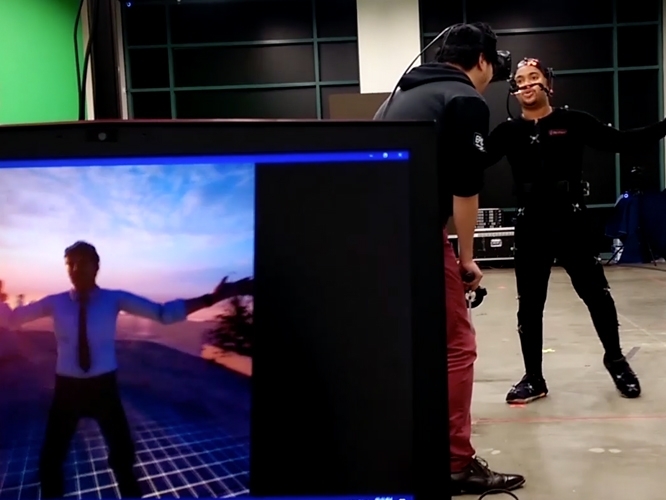
It is the shovels-in-a-gold-rush move, and the leadership bench came pre-loaded for it. Wang, a former researcher and lecturer, runs the company alongside co-founder and Chief Product Officer Mariana Acuna Acosta, a former on-set VFX supervisor who spent years at studios like Sony Imageworks and later led product specialists at The Foundry. Philippa Carroll, also ex-Foundry, handles sales and marketing; Andrew Britton, with a background in light-field research, is the technical lead. It is a senior team of maybe six to ten people, which is small for the size of the problem they picked.
Acuna Acosta's framing of the mission is refreshingly unmystical. The goal, she has said, is "simple, off-the-shelf packages that integrate with whichever game engine and digital content creation applications" a creator already prefers. In a field that loves to talk about revolution, Glassbox's pitch is closer to plumbing: buy the part, plug it in, keep your workflow.
02 / DragonFlyAn iPad that shoots a world that isn't there
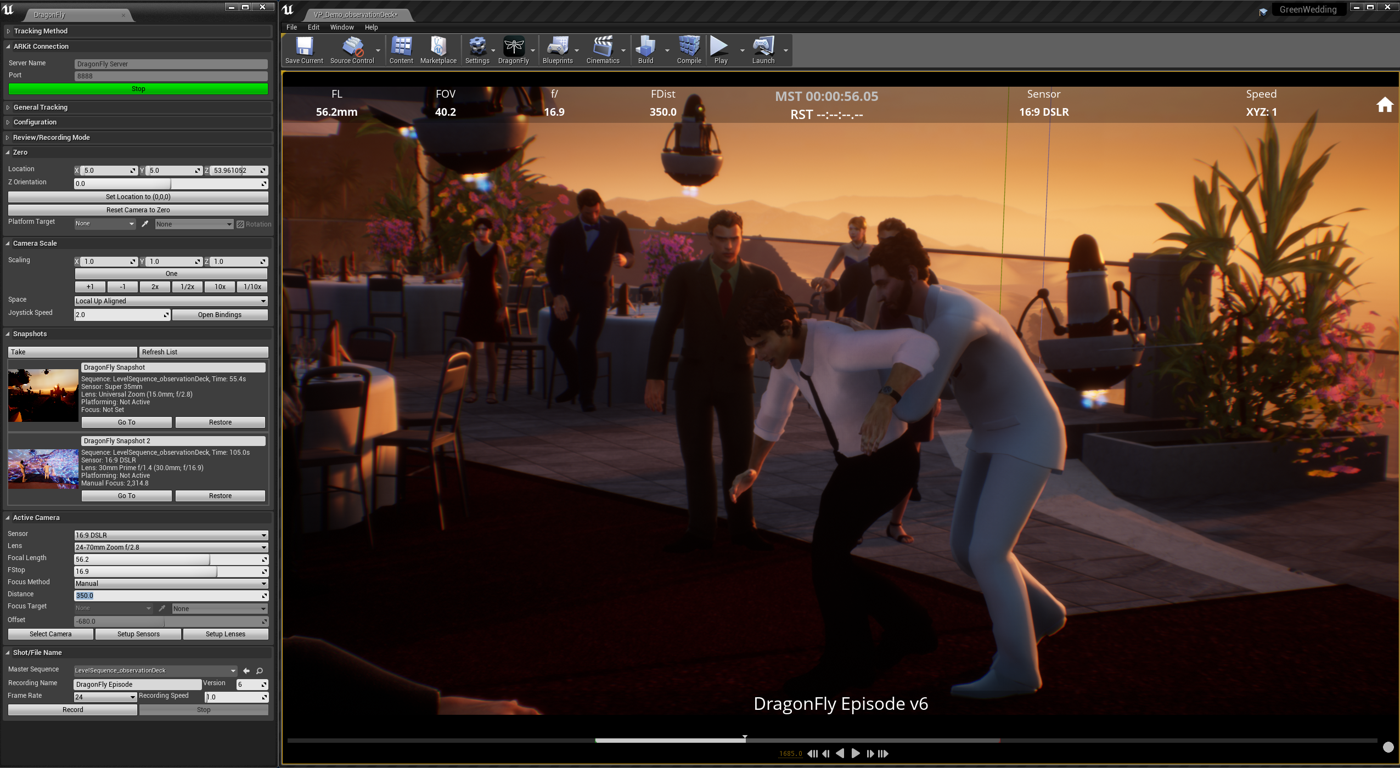
DragonFly is the product people remember, because the demo is genuinely strange to watch. You hold a tracked device - a rig, a VR controller, even an iPad running a companion app - and it behaves like a real film camera pointed at a real scene. Except the scene lives inside Unreal or Maya. You can see it through a viewfinder, on an external monitor, or on the tablet in your hands, and you can record takes, drop bookmarks, snap stills and replicate real camera moves.
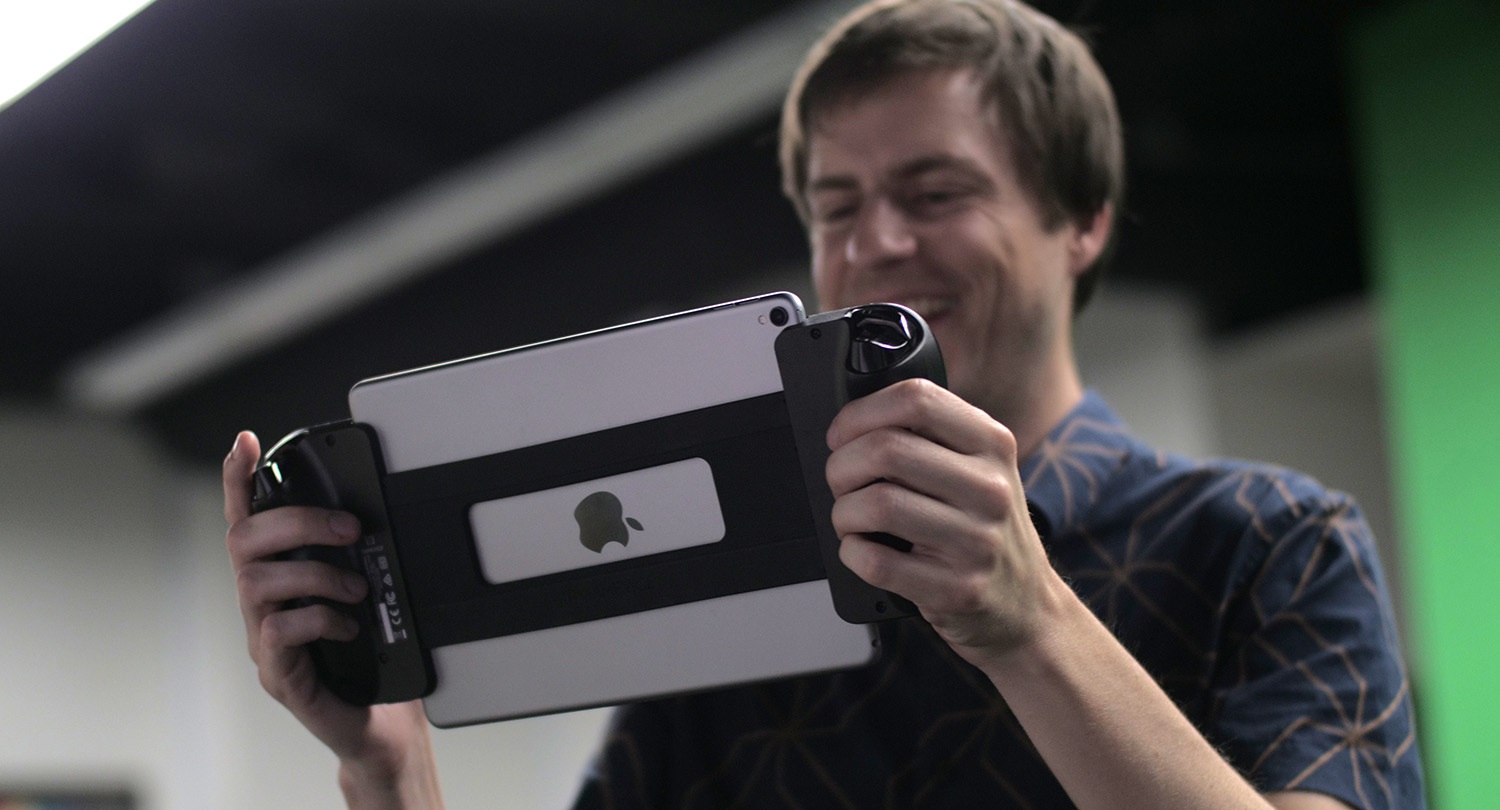
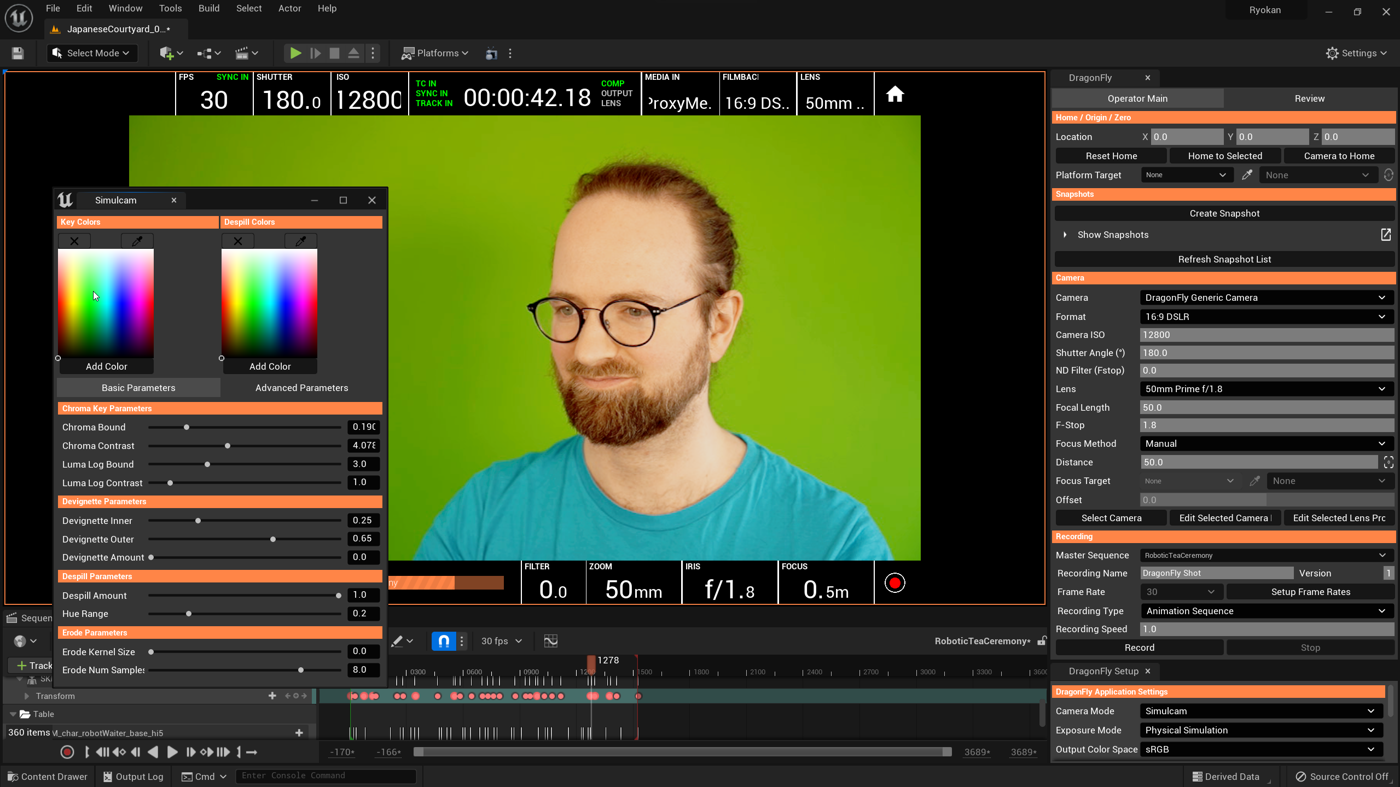
What keeps it from being a toy is the simulation underneath. DragonFly reproduces the behaviour of physical cameras and lenses - lens distortion, anamorphic squeeze, and settings down to ISO, shutter speed, frame rate, ND filter strength and aperture. There is a Simulcam mode that composites live actors into the CG background in real time, so a director can see the finished frame on the day instead of imagining it. And because a virtual camera is only as good as its sense of where it is, DragonFly connects to a wardrobe of tracking systems: OptiTrack, Vicon, Apple's ARKit and Vive trackers.
Game engines and real-time technology have the power to revolutionize filmmaking.Mariana Acuna Acosta, Co-founder & CPO
03 / BeeHiveThe boring tool that is actually the moat
If DragonFly is the star, BeeHive is the stage manager - and in the long run it may matter more. Virtual production has a version-control problem that traditional filmmaking never had: when the set is a file, dozens of people can touch it at once, and without discipline the file becomes a mess. BeeHive is a multi-user content management and collaboration layer that lets local and distributed teams work on the same virtual scene across multiple workstations, with real-time review, synchronization, checkpoints and per-asset version control.
The payoff its users describe is speed. Ian Forester, CEO of VR Playhouse, has said BeeHive can cut iteration time "from hours to seconds" for teams working on VR, games and other real-time content. That is the unglamorous superpower: not a prettier render, but a shorter loop between an idea and seeing it on screen. Boring infrastructure is usually where the durable advantage hides.
The third piece rounds out the picture. Live Client, which predates the Glassbox rebrand, is a plugin that pipes Faceware's markerless facial capture into Unreal Engine, driving digital characters and MetaHumans straight from an actor's face. It has been used for live, broadcast-style animated performances - the kind of thing that once needed a full post-production cycle and now happens in the room.
04 / The BusinessWhat Hollywood magic costs on a subscription
Here is the part that reframes the whole company. A custom virtual-production pipeline used to be a bespoke, six-figure undertaking. Glassbox sells the same capability as a license. DragonFly rents from about $129 a month, or $850 a year, for a node-locked seat; a floating license runs a little more, and a perpetual license lands somewhere between roughly $1,350 and $1,836.
That pricing is the strategy stated out loud. It is B2B software licensing with a services layer on top - pipeline consulting, training and stage setup for studios that want help wiring it all together. The bet is that the market for real-time filmmaking is far larger than the handful of studios that can afford to build tools from scratch, and that being productized and cheap beats being bespoke and expensive. Glassbox raised only about $850,000 - a convertible note, most recently in early 2022, with backers that have included HTC's Vive X accelerator and a set of Asia-Pacific funds. It is competing against better-capitalized rivals on distribution, not on cash.
A custom virtual-production pipeline once cost six figures. Glassbox sells the same idea for the price of a used laptop.
05 / The Company It KeepsCustomers, partners and a crowded arena
The clearest way to read a virtual-production company is by its integration list, and Glassbox's is deep: Epic Games' Unreal Engine, Unity, Maya, Faceware for faces, Vicon and OptiTrack for tracking, HTC's Vive hardware. In a market built on interoperability, being the connective tissue is the business. Its tools have shown up in real work too - DragonFly was used for previsualization on Netflix's series "Away," and named users and collaborators have included visualization house The Third Floor, Electronic Arts, Psyop, MacInnes Scott and Hasbro. The work has drawn recognition, including an Advanced Imaging Society Lumiere Award for BeeHive and an honorable mention for DragonFly at the 2022 HPA Awards for engineering excellence.
The arena is not empty. Glassbox shares the virtual-production and camera-tracking space with the likes of Mo-Sys, Ncam, Vu Technologies and Technicolor's tools, and - the ever-present risk for a plugin maker - with Epic itself, which ships a built-in virtual camera inside Unreal. The counter-argument is that Glassbox is cross-engine and vendor-agnostic where the platform holders are not, and that a tool designed by former on-set VFX supervisors tends to fit a real set better than one designed by a platform team.
06 / What You Can CopyThe lesson under the lens
The transferable idea here has nothing to do with cameras. It is that in any gold rush, the people panning for gold and the people selling shovels are different businesses - and the second one is often the better one to be in. Glassbox spent years making VR content before deciding it was better at making the tools that content required. The rebrand from Opaque to Glassbox is really a story about noticing which half of your own work is the durable half, and betting the company on it.
The conditions where it does not work are worth naming too. A tiny team competing against a platform holder is always one built-in feature away from a hard week, and the marketing pace has clearly slowed since early 2023 even as the product kept shipping into 2024. Off-the-shelf beats bespoke right up until the platform absorbs the shelf. But for now, Glassbox occupies a specific and useful place: the vendor that makes real-time filmmaking accessible to people who could never have built it themselves, sold at a price a working professional can actually approve.