There is a peculiar moment at the end of a fashion story when the fantasy becomes an inventory. The model has already occupied the grand staircase. The light has found the silk. Then, beneath the picture, the names arrive: photographer, stylist, hair, makeup, dress, shoe, ring. In that compressed list, among the makers and the image-makers, you may find an Instagram handle for & Public Relations.
The agency occupies Unit 202 at 855 Wilcox Avenue in Hollywood and describes itself in one clean breath: a Los Angeles showroom and communications agency offering media relations, product placement, and brand elevation. Its website says little more. There is no thunderous case-study carousel, no published rate card, no manifesto about disruption. The interesting evidence is elsewhere - in the credits attached to photographs.
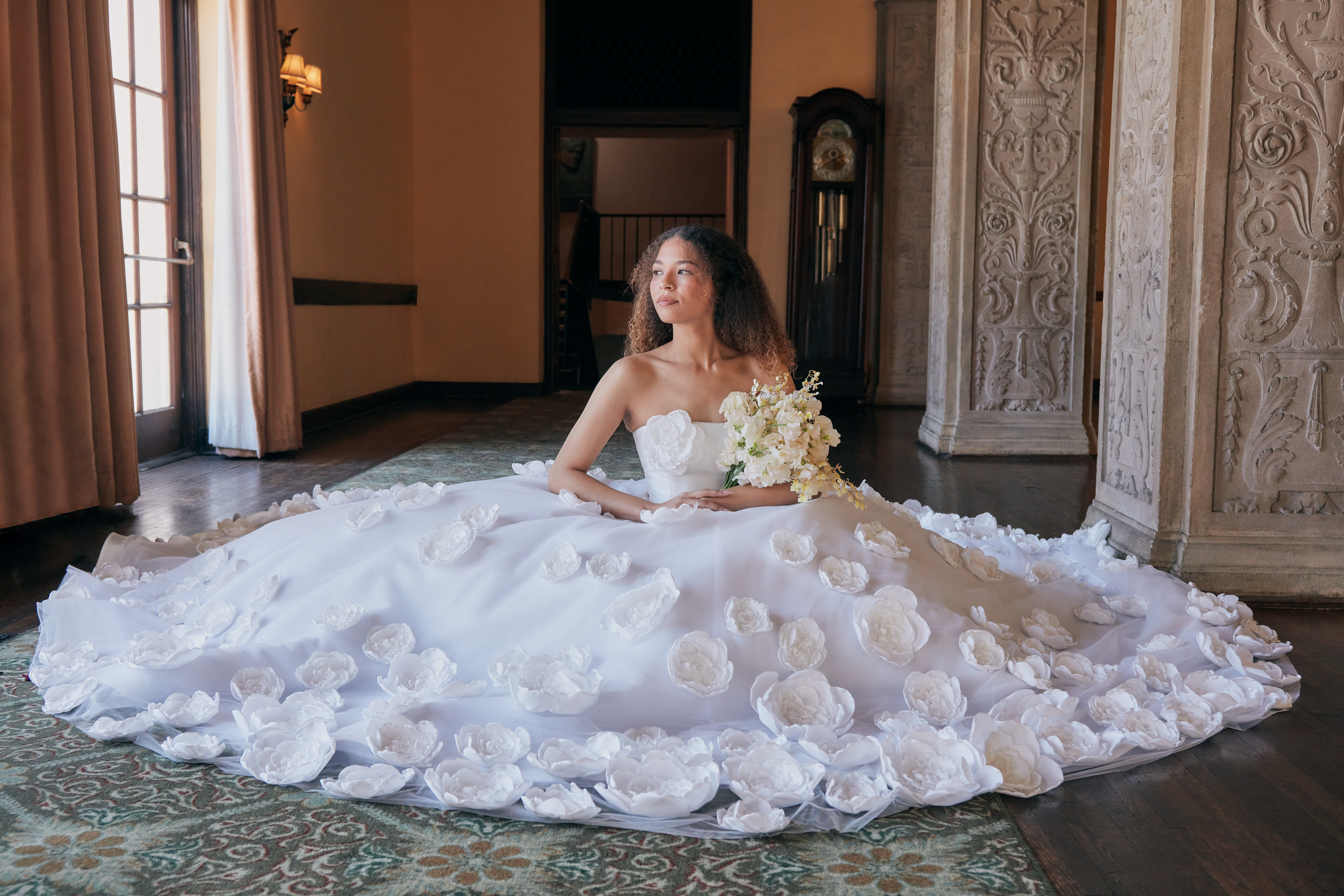
In March 2025, L'Officiel Baltic credited & Public Relations for the outfit in an editorial featuring actor and model Mercedes Blanche. A Marie Claire Nigeria shoot photographed by Alex Melgosa named the agency as its wardrobe provider. BASIC Magazine credited it alongside MASHIZAN shoes in an October 2025 feature on musician Goldie Boutilier. In April 2026, HATC Magazine's feature on Red Leather connected the agency with PYRRHA jewelry. Two months later, Melgosa's bridal editorial at The Ebell of Los Angeles named & Public Relations as the jewelry showroom from which a stylist pulled Hanying Jewellery.
The final image looks like inspiration. The work behind it looks more like routing.The showroom's real product is access under deadlineThe mechanism
A closet with a communications strategy
A showroom is easy to misunderstand because it resembles a room full of objects. Yet the valuable thing is not the rack. It is the reduction of uncertainty. A stylist working against tomorrow's call sheet does not merely need a beautiful shoe. The stylist needs to know where it is, whether it is available, whether it fits the brief, when it can be collected, how it must be returned, and whom to credit when the image runs.
That makes & Public Relations part library, part switchboard, part courier desk, and part advocate. The media-relations side gives a brand language and relevance. The showroom side gives it physical availability. Product placement joins the two. A press release can ask an editor to imagine a product in culture; a showroom can put the product into the hands of the person already making culture.
Two customers walk into the same showroom
The agency serves two groups whose incentives meet but do not perfectly match. Fashion and jewelry brands want visibility, association, and proof that their pieces belong in an editorial world. Stylists, photographers, and producers want speed, range, reliability, and products that survive the practical demands of a shoot. One side pays for representation; the other side supplies the opportunity. The agency becomes useful when it protects both.
This is also what separates the model from a broad communications shop. A conventional PR firm might concentrate on announcements, interviews, reputation, and press outreach. An influencer agency might buy or negotiate creator distribution. A talent agency represents people. A fashion showroom keeps physical samples close to the creative workers who can place them. Los Angeles matters here. Wilcox Avenue sits inside the geography of stylists, studios, premieres, entertainment offices, and rushed messenger runs.
The visible outputs are placements and credits. The less visible outputs are relationships and memory. A stylist who has one smooth pull may return for the next shoot. A designer whose product is photographed gains an image, a line in the credit, and perhaps an introduction to another creative team. None of these automatically produces sales. But each can shorten the distance between an unfamiliar brand and a trusted tastemaker.
The economicsWhat the credit line cannot tell you
& Public Relations does not publish prices, funding, revenue, or contract terms. There is no responsible public answer to the question, "What did it cost?" Prospective clients should ask whether the engagement is a monthly retainer, a campaign fee, or a showroom representation agreement; whether shipping, sample storage, insurance, and returns are included; and how damaged or missing items are handled.
The credits reveal activity, not return on investment. They do not tell us how many pitches went unanswered before one product appeared, which placement produced an inquiry, or whether a brand renewed. That is not a defect in the evidence. It is a reminder to measure the right chain: requests from relevant stylists, qualified pulls, completed placements, accurate credits, reusable photographs, retailer interest, and sales or search lift where attribution is possible.
Make the product borrowable. Keep current samples in shoot-ready condition. Attach sizes, materials, retail details, credit language, and return rules. Photograph each item plainly. Name one person who can approve a pull quickly. Then track what leaves, what comes back, what gets published, and what happens next.
A placement is not the same thing as demand
This approach is best suited to products that can be seen, borrowed, worn, photographed, and returned. It is particularly legible for apparel, footwear, jewelry, accessories, and beauty. It becomes less convincing when the product has no visual role, when inventory cannot support sudden attention, when samples are too scarce to travel, or when the buyer requires measurable direct-response acquisition rather than reputation and association.
Nor can a showroom manufacture newsworthiness indefinitely. The product still needs a point of view. The stylist still needs a reason to choose it. The publication still needs a reason to run the image. The agency can improve the route and increase the number of useful encounters, but it cannot make every encounter convert.
This is the most useful reading of & Public Relations' compact public record. The agency is not best understood through the usual heroic company narrative - founder sees future, raises capital, conquers category. Its work is closer to stagecraft. The proof appears briefly at the edge of someone else's performance: a MASHIZAN shoe under a musician, PYRRHA jewelry on a portrait, Hanying pieces pulled for a bridal editorial. The ampersand in its name turns out to be an accurate little diagram. Brand and stylist. Product and picture. Showroom and story.