At Bitter + Sweet, a coffee shop in Cupertino, the reward was straightforward: collect ten points, get a free coffee. The more revealing detail was what the baristas did alongside it. In Fivestars’ account of the shop’s early program, staff deliberately entered customers’ names so they could learn the people behind the orders. A digital loyalty system was helping the counter behave like a neighborhood counter.
- Rewards and automated messages give local shops a way to bring customers back.
- Connecting loyalty to payment reduced the need for a separate signup step.
- SumUp bought Fivestars for $317 million in 2021. Merchants now encounter SumUp Connect.
The free coffee matters. So does being remembered. Fivestars’ business sits between those two things: the measurable incentive and the human recognition that makes a place feel familiar. Its software gives a merchant a record of the visit, then a way to act on that record after the customer leaves.
Big-company memory. Small-shop counter.
Victor Ho and Matt Doka had worked together at McKinsey, helping large companies think about loyalty and customer engagement. Their question was why local businesses should have to do without comparable tools. Company announcements date Fivestars to 2011. Its starting proposition was to put sophisticated customer follow-up within reach of merchants who had neither a corporate technology budget nor a marketing department.
That distinction explains the product. A cafe owner does not need another empty dashboard demanding attention. The owner needs customers to enroll, rewards to make sense, and messages to go out while someone is steaming milk. Fivestars combined those jobs: customer records, points, promotions and automated outreach. It occupies the practical intersection of payments software and small-business marketing.
The phone number does the remembering
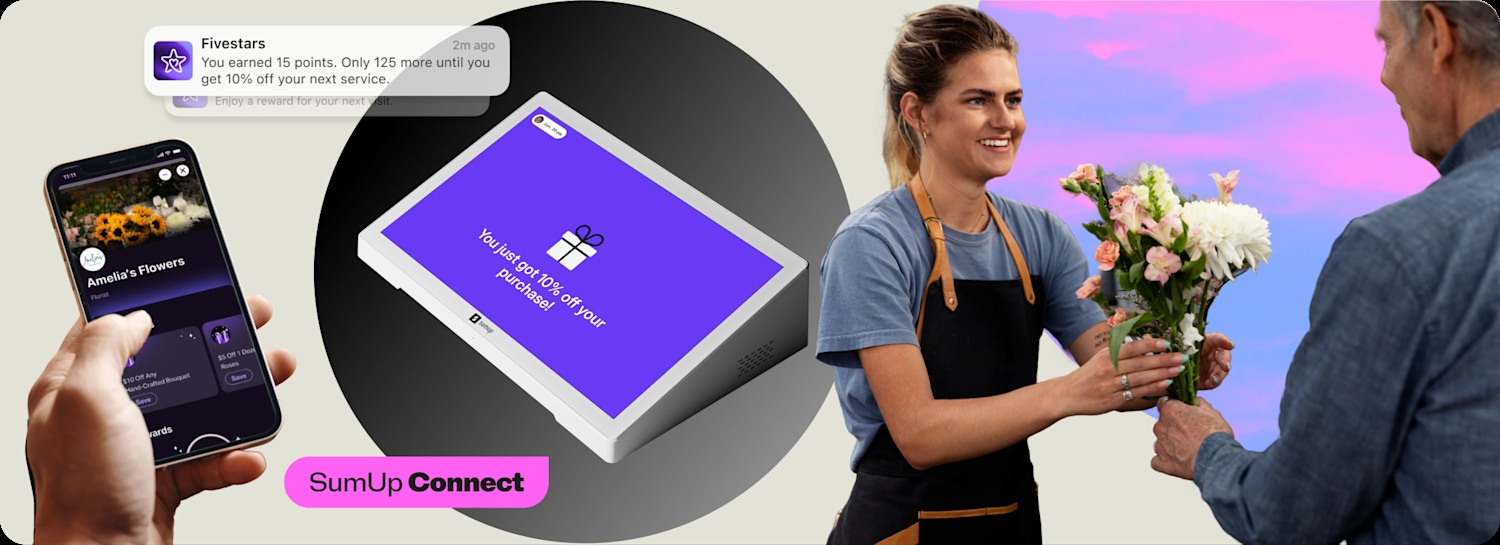
Customers can join and check in using a phone number. Merchants set rewards; shoppers earn points and redeem offers. The Fivestars app adds nearby-business discovery and a view of rewards. Its App Store description explicitly says a credit card is unnecessary. The familiar punch-card bargain survives, with fewer pieces of cardboard to misplace.
AutoPilot handles the follow-up: a birthday message, a welcome after a first visit, or an offer to someone who has stopped coming. Merchants can also send a promotion themselves. The customer directory and dashboard make visits, enrollment and redemptions visible. The expertise here is operational: connect a small amount of customer information to a useful next action.
- 01Join at
checkout - 02Earn a
reward - 03Get a timely
message - 04Come
back
There is a second mechanism: nearby participating businesses can put a merchant’s offer on their customer screens. Discovery becomes a neighborhood handoff. That shared network does not make every shop’s points interchangeable. MAKE Collectives, for example, tells customers that its Fivestars points must be redeemed at MAKE.
The cashier found the catch
Originally, payment and loyalty could require separate devices. Infinicept’s partner case study describes how that split hurt enrollment. Fivestars moved into integrated payments, using Infinicept’s infrastructure to become a payment facilitator. The partner reported that merchants using the integrated product more than doubled loyalty participation, on average, compared with the marketing-only version.
But enrollment was only one measure. In her 2019 design case study, Mary Dyer describes merchants preferring the older experience despite increased signups. The trouble was line speed and visibility into rewards. A customer wanted to check available rewards before paying; the merchant wanted fewer trips back and forth between systems.
“I miss the old Fivestars loyalty experience.”
AK Subs merchant, in Mary Dyer’s design case study
The proposed repair moved check-in and reward selection earlier, so the customer could handle them while the merchant created the order. Reward information also needed to be visible to staff. It is a useful lesson for anyone building business software: watch the whole transaction. A signup chart cannot tell you whether the queue is getting annoyed.
Then the doors closed
The pandemic changed what merchants needed from the relationship. In an interview published by payments partner Infinicept, Doka said Fivestars delayed announcing financing while customers struggled. The company supplied more than $1 million in credits and free messaging upgrades to help businesses communicate operational changes. Payments and the customer network took on greater urgency.
In October 2020, Fivestars announced $52.5 million in combined equity and debt financing, led by Salt Partners. The practical value of reaching customers now included telling them how a business was operating. A system designed to encourage the next visit had become useful when the rules for visiting changed.
A $317 million bet on the second sale
SumUp completed its acquisition on October 28, 2021, for $317 million in cash and stock. At closing, it reported more than 12,000 businesses and 65 million consumer members. These are historical network figures. SumUp also described more than $3 billion in annual merchant sales flowing through the network; that figure is not Fivestars’ revenue.
The strategic fit is easy to see. Payments put SumUp at the moment of purchase. Fivestars brought tools for what happens afterward. Today the merchant offering is branded SumUp Connect, while the consumer app retains the Fivestars name. Alternatives include Square Loyalty and restaurant-focused systems such as Toast; the relevant comparison starts with the merchant’s existing checkout setup.
Count the visits, then buy the software
SumUp’s published pricing, checked in October 2026, lists Connect Plus at $269 a month and Pro at $349. Separate POS bundles are advertised at $199 and $289. Package scope matters; merchants should establish the applicable equipment, processing and contract terms before comparing totals.
Monthly software price ÷ contribution per extra visit = extra visits needed.
Hypothetical $5 contribution after variable costs and rewards. Excludes other charges; assumes visits are incremental.The copyable idea is simple: enroll customers consistently, offer something they value, and follow up at a sensible moment. Then measure additional profitable visits. Low repeat-purchase frequency, weak enrollment, thin margins or too few nearby network merchants can undermine the economics. A discount redeemed by someone who would have returned anyway is a cost. The achievement worth counting is the customer who actually comes back because of it.