Zach Hyman had a sales force, a merchant network and a plausible idea. Businesses already bought payment processing from his company. Some were beginning to buy digital loyalty software, too. Why not put the two together? The people who sold the first product could introduce the second. On paper, the route to market was practically drawn in ink.
The difficulty was the people doing the selling. Getting experienced payments professionals to sell software became, in Hyman’s recollection, “an uphill battle.” A familiar customer did not make an unfamiliar sale easy. The existing business had taught its salespeople a trade. The new business asked them to learn another.
That small frustration is a useful place to meet the SpotOn co-founder. His career has the large numbers expected of a payments entrepreneur: acquisitions, financing rounds, company valuations. But the more revealing episode involves a product that could not simply ride along with the old pitch. Hyman had to build a business around the difference.
A sales force meets its limits
The software experiment took shape while Hyman, his twin brother Matt and their collaborator Doron Friedman were working around Central Payment. In 2011, they saw merchants taking an interest in loyalty tools. The attraction was understandable: collecting a payment tells a business what happened once. A loyalty relationship offers a way to invite the customer back.
The economics also appealed to them. Combining software with payment revenue could help pay for the effort of reaching small businesses. Yet the distribution channel needed work of its own. A rate discussion and a software demonstration ask different things of a salesperson. One can end with a comparison of charges. The other invites questions about how the customer runs the shop.
SpotOn eventually developed a sales team trained around software. The lesson had consequences beyond hiring. If the product was meant to help a merchant run a business, the conversation had to begin with that business. The payment was one part of a longer working day. Hyman’s next company would try to occupy more of it.
Two brothers, and an earlier reckoning
The brothers’ payments career began with CardPayment Solutions in 2000. They sold it to iPayment in 2003. Central Payment followed in 2005. By the time SpotOn emerged as a separate business, they had spent years selling to the merchants whose transactions make the payments industry possible.
There was also an earlier regulatory chapter. In January 2001, Zachary Hyman, Matthew Hyman and Productive Marketing settled Federal Trade Commission charges concerning the marketing and sale of auction-information guides for homes and vehicles. The settlement required consumer redress and barred the brothers from the guide-selling business. It also restricted deceptive practices. The stipulated settlement did not constitute an admission of a law violation.
That episode belongs alongside the later career, without turning it into an invented explanation for everything that followed. The dates establish a record. They do not establish a private conversion story. Hyman’s subsequent companies would make their own promises to merchants, and those promises deserve to be assessed against their own terms and performance.
Central Payment became a substantial operation. Its transaction adviser described a business serving nearly 80,000 merchants and processing more than $10 billion in annual credit-card sales in 2018. The brothers sold their final stake that year at an $840 million company valuation. Those figures describe the company, rather than either founder’s personal fortune.
The founders write a cheque
SpotOn’s current business was founded in 2017 by Zach, Matt and Friedman. An April 2018 announcement described an initial $20 million investment led by the Hyman brothers. After years of learning the economics of merchant services, they were committing capital to a broader proposition: payments connected to tools for marketing, customer loyalty, reviews and business analysis.
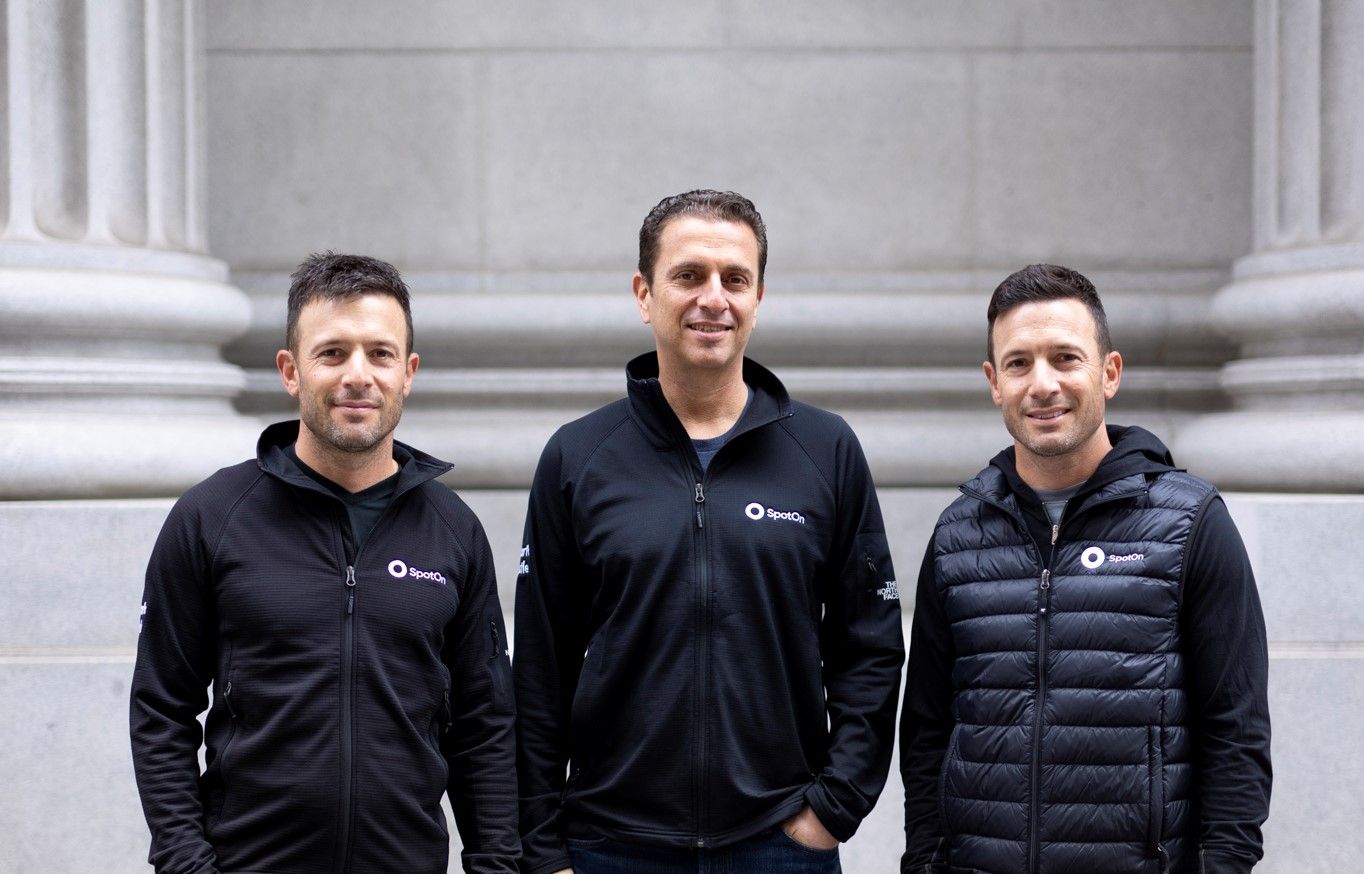
The team’s composition matters. Zach and Matt brought a long-running partnership and payments experience. Friedman was the third founder, and remains listed as chief innovation officer. The two brothers share the co-CEO title on SpotOn’s executive page. It is a business with a family partnership at its centre and another founder beside it.
For a small operator, a collection of tools can be either useful or exhausting. Each tool has to be learned. Each has its own moments of inconvenience. Combining functions creates a chance to reduce that work, while increasing the vendor’s responsibility when something goes wrong. A restaurant has limited patience for a committee of screens.
Hyman’s public writing puts people close to the product. In May 2021, announcing the significance of SpotOn’s Series D financing, he described expanding in-person installation and service alongside round-the-clock support. He also pointed to hundreds of product changes and additions to the team. The intended relationship extended beyond the day the equipment arrived.
A bigger company learns to narrow its focus
The financing accelerated. SpotOn raised $125 million in its May 2021 Series D, followed by $300 million in September. The later round supported the acquisition of Appetize, bringing the company into large venues and enterprise hospitality. The proposed reach stretched from neighbourhood businesses to stadiums, campuses and entertainment destinations.
In May 2022, another $300 million round valued SpotOn at $3.6 billion. Dragoneer led the financing. The company said its restaurant segment had tripled over the preceding year. These were company-reported measures of expansion, and they put a much larger organization around an idea that had once struggled to find its sales pitch.
Historical financing figures, not a measure of personal wealth.
Expansion did not continue in a straight line. In October 2023, SpotOn agreed to sell its sports and entertainment business to Shift4, retaining selected assets to support restaurants. Shift4 announced an approximately $100 million cash transaction involving customer relationships, technology assets and part of the employee base.
The change makes the founder story more interesting. A company can find technical similarities between customers without choosing to serve all of them indefinitely. A stadium and an independent restaurant both take orders and accept payments. The organizations buying the equipment, and the service they require, have different working rhythms.
SpotOn’s restaurant concentration gave the company a more specific arena in which to prove its usefulness. For Hyman, the question became less about how many kinds of business could use the platform and more about how much it could do for the operators already depending on it.
Thirty minutes and a working day
The 2026 product announcements bring that question back to payments. In April, SpotOn introduced Rapid Fund, promising card deposits in an operator’s bank account in under 30 minutes after batching out, including weekends and holidays. The announced fee was 0.2% per deposit. Standard morning funding remained available without an additional charge.
The distinction is practical. Making a sale and having the money available are separate events. Faster access has a cost, so the operator needs a choice about when speed is worth buying. That is familiar payments territory, now presented inside a company selling a wider restaurant management system.
<30 min announced transfer time after batching out · 0.2% fee per deposit
In June, SpotOn opened beta access to Profit AI. The product was designed to examine supported sales, labour and accounting information, explain changes and suggest actions. Recommendations appear in the dashboard. Operators make the decisions; the system does not automatically change how the restaurant runs.
One early example involved The Breakfast Brothers. SpotOn reported a 5% increase in beverage spend after the restaurant tested a recommendation to offer single-serve mimosas alongside pitchers. It is a company-published customer example, rather than a universal prediction. Its appeal is easy to understand: a specific menu decision gives an abstract analytics product something concrete to discuss.
A July update reported record second-quarter sales, signings and installations. It also continued to describe general availability for Profit AI as planned for the end of 2026. For Hyman, the current ambition is recognizably connected to the earlier one: give independent operators useful tools without requiring them to become a separate technology department.
Who answers when the screen stops helping?
Hyman’s public language can be unusually plain about the limits of a product. “Profitability doesn’t come out of a box,” he wrote in a LinkedIn post about SpotOn’s role in restaurants. The sentence leaves room for knowledge, support and the people operating the business. It also sets a demanding standard for a company that sells boxes.
“Profitability doesn’t come out of a box.”
Zach Hyman
His long partnership with Matt supplies continuity across the different companies. The move into software supplies the change. The early loyalty experiment showed that access to a merchant did not settle the question of what to sell, how to explain it or who should do the explaining. A large installed network could still require a fresh start.
That is the thread through Hyman’s story: the distance between getting a transaction and earning a larger place in a business. SpotOn now occupies more of that space, from orders to deposits to recommendations about tomorrow’s menu. Every addition gives the restaurant another reason to expect help. The next useful answer has to arrive while there is still time to act on it.