The nuisance was almost comically complete. Edo Windratno needed to send money to a relative in Europe, which meant leaving work during office hours, entering Jakarta traffic, finding a counter, waiting his turn and filling out forms. More than two hours disappeared. The transfer cost roughly Rp400,000 to Rp500,000. After all that visible effort, the money still needed three or four days to arrive.
It was the sort of errand modern technology was supposed to have killed already. Windratno did not merely grumble at the absurdity. He began asking importers he knew whether they suffered the same routine. They did. The irritation had company, and company is where a private annoyance begins to look like a market.
The question that followed was admirably plain: why, at this point in time, was sending money still so difficult? Transfez would become his answer. Its origin story has no garage mythology and no lightning-strike revelation. It has traffic, a queue and an itemized lesson in wasted motion. Fintech, in this case, arrived wearing the drab clothes of an administrative errand.
An engineer learns the rails
Windratno graduated in Industrial Engineering from Institut Teknologi Bandung in 2008. Before fintech, his own account of his career moves through mining, export-import and e-commerce. He also worked as a partner in a consulting firm, advising business owners, senior managers, global and local clients, and government institutions. It is a background of systems and varied operating rooms, useful preparation for an industry where the clean tap of an app conceals a thicket of counterparties and rules.
He and his partners moved from idea to product in about eight months. “Building the product is one thing,” he observed in an early interview. Regulation was another. International money transfer is not a field in which enthusiasm substitutes for permission. Partners in different countries had to be selected carefully. Bank Indonesia approvals mattered. Payment rails and compliance requirements changed from place to place.
“Our goal is to make cross-region transfer in this country as easy as a domestic transfer.”Edo Windratno, 2020
The Transfez app launched in the third week of December 2019. Soon it could send money from Indonesia to 37 countries. A customer could verify an identity, see the exchange rate and the full amount a recipient would receive, then create a transaction in under two minutes. On some routes, settlement was measured in minutes rather than days. The proposition was not mysterious. It removed the trip and made the price and destination amount legible before the customer committed.
By May 2021, the company said it served more than 50 countries in 26 currencies. That month Transfez announced an undisclosed seed round co-led by East Ventures and BEENEXT. It expected to process Rp1.5 trillion in transaction value that year and reported that the number of transactions had grown thirtyfold over the prior year. The claims belonged to the company, but the investors and the round were public markers that the small irritation had become an operating business.
Graduates from Institut Teknologi Bandung in Industrial Engineering.
Transfez launches its consumer app after roughly eight months of development and regulatory preparation.
East Ventures and BEENEXT co-lead an undisclosed seed round.
Transfez joins Y Combinator, where it is described as “Brex for small businesses in Indonesia.”
Transfez for Business becomes Jack, a separate brand for corporate finance.
Every payment has a biography
Windratno has spoken about the human thread connecting transfers. A parent pays a child’s overseas tuition. A student studies abroad. A migrant worker supports family. A business pays a supplier. Each transaction may look identical in a ledger, but each is attached to somebody trying to improve a life or keep a promise. He wanted Transfez to be the bridge.
That idea rescued the product from the chilly language of financial infrastructure. A fee is money diverted from school or stock. A delay is a person waiting at the far end. A form is time borrowed from work. The old process charged in several currencies, only one of which appeared on the receipt.
The service also grew organically among student communities, expatriates, parents and importers. In those early users, the team discovered a clue more valuable than a flattering survey response. Some small businesses were using individual accounts to pay invoices from overseas vendors. Their behavior said the consumer remittance product was doing a corporate job.
Follow the invoice
Transfez for Business emerged to serve those companies. Then the team kept looking. Cross-border remittance, they learned, was merely one drawer in a finance office full of stuck paperwork. Businesses also struggled to gain access to corporate credit cards. Bills, reimbursements, payroll, local transfers and international payments lived across different systems. Requests and approvals became scavenger hunts.
In July 2023, Transfez for Business reappeared as Jack. The fresh name made a useful separation. Transfez would remain the consumer brand for sending money abroad. Jack would serve registered companies with a broader and more complex product. Both brands remained under the same corporate entity, but each could speak to a different customer without making the other read the footnotes.
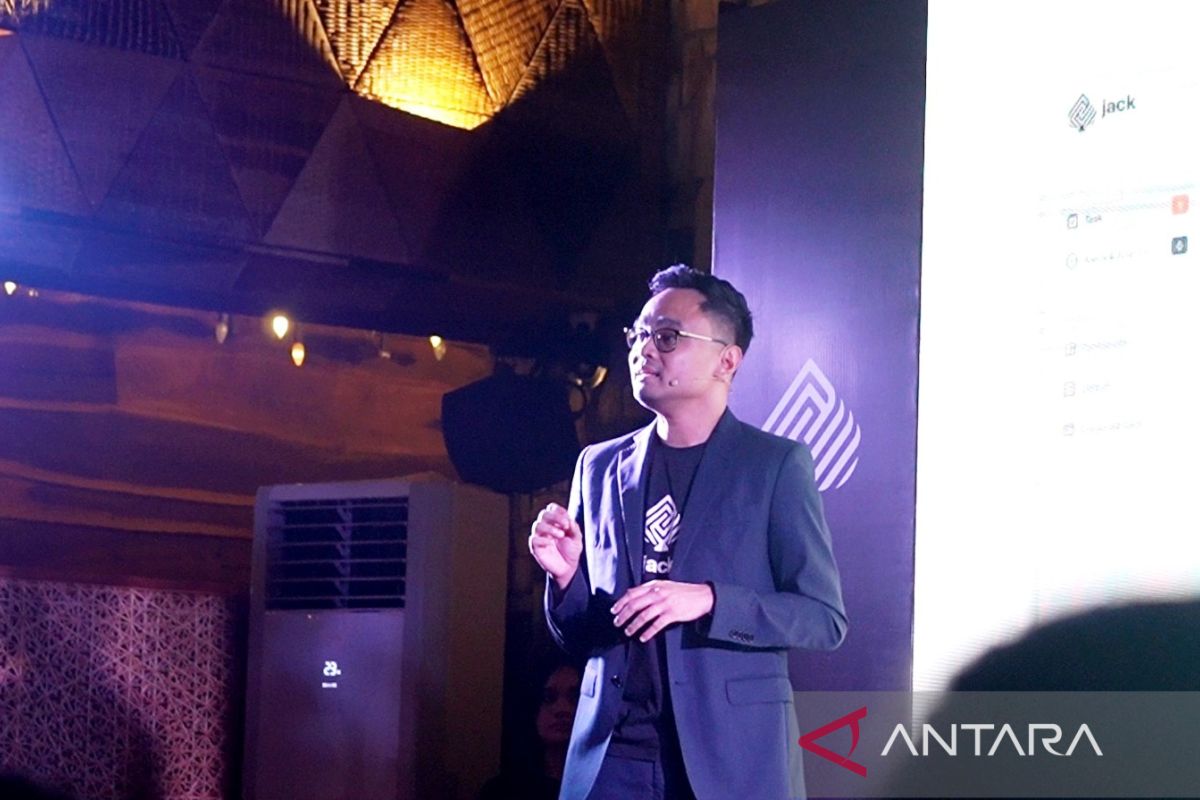
Jack joined submission, approval and payment into a single flow. Employees could photograph invoices, route reimbursements to the required approvers and let the system trigger a transfer after the final sign-off. Corporate cards, bill payment and transfers sat beside that workflow. At launch, the company said its beta clients included Visinema, Adhimix Precast Indonesia, Impactto and Love, Bonito.
This was expansion by adjacency rather than decoration. The team did not wander from remittance into an unrelated fashionable category. It followed the transaction upstream, from the movement of money to the decisions and documents that cause money to move. The border was one source of friction. The office supplied the rest.
“The impact of Jack goes beyond time and cost savings, but also enhances control, transparency, and accountability in a company’s financial processes.”Edo Windratno, 2023
The virtue of being specific
Windratno’s operating thesis for Indonesia is deliberately local. The country is too fragmented across industries and geographies, he argues, for one generic solution to settle every problem. Winning requires staying close to customers and tailoring the work by vertical. It is less glamorous than declaring a universal platform. It is also more observant.
The history of Transfez supports the point. Importers revealed one kind of need. Students and parents revealed another. Small businesses exposed the limits of a remittance-only product. Finance teams supplied the approval chains and reimbursement rituals that Jack had to understand. Fragmentation was not an inconvenience to be waved away; it was a stream of product information.
Regulation kept its place in that stream. Early customers routinely asked whether an online transfer was safe. Windratno’s answer pointed to oversight by Bank Indonesia and PPATK, and to the licensed partners behind each route. When Jack launched, its public materials again put supervision, anti-money-laundering rules and the company’s remittance license in plain view. Trust could not be sprinkled over the interface at the end. It had to be built into the partnerships, approvals and controls beneath it. For a founder accustomed to consulting, this was a familiar kind of systems problem: several institutions, several incentives, one result the customer needed to understand. The product had to feel simple without pretending the underlying work was simple.
There is a founder’s lesson here worth stealing. Begin with a problem sharp enough to describe without jargon. Learn the constraints that make it difficult, including the boring institutional ones. Then watch what customers do after they arrive. The workaround may be a sketch of the next product. The unexpected customer may be the next market. Complaints, when repeated, are unpaid product briefs.
Transfez entered Y Combinator’s Winter 2022 batch. Windratno later joined Endeavor Indonesia’s ScaleUp program and appeared as a coach for Startup Studio Indonesia. Those affiliations enlarged the circle around the company, but they do not improve the origin story. Nothing could. A person lost two hours to a task that should have taken two minutes, then refused to accept the difference as normal.
Today his public role spans both Jack and Transfez. The brands address different ends of the same broad discomfort: financial work that asks too much time, hides too much cost or scatters too much responsibility. One began at a remittance counter. The other walked back through the office door to find out who approved the payment and why the invoice was still waiting.
There is something pleasantly unfashionable about the whole progression. No prophecy was required. The market announced itself in traffic, queues, fees, forms and improvised business payments. Windratno listened closely enough to hear it. In finance, money talks; paperwork mutters. The useful founder learns both languages.