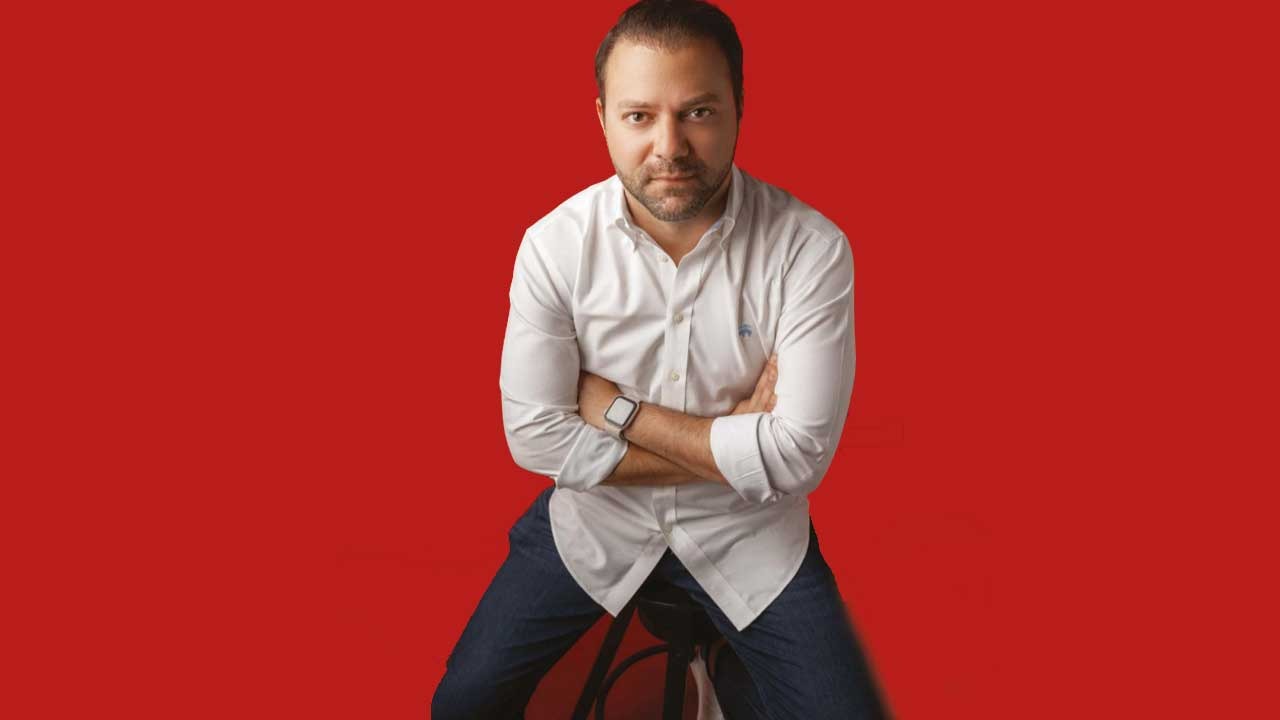
Piero Nunez del Risco knew how banking worked. He had spent years inside financial institutions, helping them change the way customers used their money. Yet during a visit to the United States in 2020, he struggled to do something rather basic: open an account of his own. There were signatures and hours of waiting. The card he eventually received was an ATM card, rather than the debit card he expected. Getting help afterward proved difficult. A banking career, it turned out, was an excellent qualification for understanding the inconvenience.
He began asking friends and relatives what had happened to them. Their answers gave his frustration company. High fees, mistrust, and cultural differences were recurring problems. The experience helped give shape to Pana, the fintech he would build with Luis Peña. It also put an awkward question at the center of his career: how could someone who understood the machinery so well still feel unwelcome when he tried to use it?
The television family and the banking ambition
His interest in financial services had started long before that American bank visit. Piero grew up in the Dominican Republic in a family immersed in television and the arts. His father worked as a television personality, writer, producer, and host; relatives worked in other creative fields. Continuing in that world would have been an understandable choice. Piero was drawn to business instead. As a teenager, he told his girlfriend, who later became his wife, that he would have a bank one day.
“I will have my bank one day. I’m sure of that.”
Piero, recalling his teenage ambition
A declaration made to a girlfriend is a pleasingly informal prospectus. The subsequent preparation was more conventional. He studied business administration at Universidad Iberoamericana, then pursued an MBA through Barna Management School and the Universitat de Barcelona. Banking, insurance, and investment work gave the ambition somewhere to go. His early career included digital banking and payments at Banco Popular Dominicano. At Grupo Universal, he moved through bank-assurance and commercial responsibilities, later working across retail, corporate business, and wealth management.
That range helps explain the kind of founder he became. Money reaches people through different products and different institutions. A bank account, an investment fund, and an insurance product involve distinct decisions, but each asks a customer to trust a system. Piero had worked on several parts of that relationship before trying to build his own company. His preparation accumulated in roles that rarely make a tidy origin myth. It was, however, preparation for the practical work ahead.
A rehearsal called meSuma
Pana was his second fintech venture. Before it, he founded meSuma, a personal-finance business intended to help people keep track of income, expenses, goals, and budgets. The company eventually closed. Its subject was already close to the territory he would revisit: the everyday relationship between people and their money. The product asked what individuals needed to see and understand, rather than treating finance solely as an institutional exercise.
He was also involved in the Dominican fintech community beyond his own startup. He served as first vice president of ADOFINTECH’s 2018-2020 board. His involvement brought together business education, commercial experience, meSuma, and regional digital banking. This was a career being built among colleagues and institutions as well as customers. Starting a company did not erase the earlier network; it added another position from which to participate in it.
His later interview appearances returned to lessons from the earlier venture. On The Business of Benefits, the conversation includes the closure of his first startup and what he carried forward. A second attempt has a different texture from a first. There is already a product in the past tense. For Piero, meSuma belongs in the Pana story because it places entrepreneurship before the American account-opening problem. The problem found someone who had already tried building a financial product.
Eleven countries, then one difficult account
At Scotiabank, his responsibilities extended across the Caribbean, Central America, and Uruguay. His work included hiring and leading more than 130 engineers, designers, and product owners during the pandemic to rebuild mobile and web banking for two million customers in 11 countries. Those numbers describe the scale of the work before Pana. They also show why a difficult personal banking experience would have been particularly instructive. He could recognize both the customer’s irritation and the complexity behind the screen.
The regional role required thinking about more than one market at a time. A product could share technical foundations while meeting customers with different expectations. Pana would take that concern into a different setting: people whose lives connected the United States and Latin America. In a 2022 conversation about community banking, Piero emphasized social connection and a communal approach to expenses. The observation puts family and friends inside the product brief.
“The Latin community is about strong social connection and a communal approach to expenses and finances.”
Piero on the customers Pana was designed to serve
The initial proposal included a bilingual experience and easier account opening for people without a Social Security number. Sending money home belonged alongside those needs. For a customer living across borders, the sequence matters: earn money, receive it, use some locally, send some elsewhere. An app has to fit into that sequence. A beautifully designed screen is a small consolation if the first step keeps someone waiting outside the system.
The move that made the problem personal
Building for that customer involved a change in Piero’s own life. He left his regional role at Scotiabank, sold belongings, and moved to the United States with his wife and children. He obtained an O-1 visa. Moving put the company’s intended market around him in a daily, practical way. It also meant learning a new country while building a business there. The founder and the newcomer were now dealing with some of the same questions.
Luis Peña brought a complementary background to the partnership. A repeat fintech founder, he had worked as a technical lead at Rover and managed software teams across time zones. Piero’s regional financial-services work and Luis’s software experience gave Pana two different kinds of preparation. In the Summer 2022 batch, the company joined Y Combinator. Piero publicly thanked group partners including Brad Flora, Harj Taggar, Divya Bhat, and Tom Blomfield when announcing the backing.
The accelerator milestone supplied a recognizable name to a much less glamorous task. The company still needed to make useful products for people opening accounts and moving money. Piero’s 2022 Semilla.VC conversation ranged from getting into YC to the Caribbean venture ecosystem and the future of remittances. His story had become part of a wider conversation about which founders and markets receive attention. The Dominican background remained part of the work, even as the business looked outward.
When the transfer becomes an account
By 2025, Pana’s public descriptions increasingly emphasized the ongoing dollar account. The premise was that a remittance could introduce a customer to a continuing financial relationship. The sender and recipient would both have something useful after the transfer finished. By December 2025, Pana was using stablecoins and embedded wallets, allowing customers to receive, hold, spend, and send dollar balances. The company reported more than 150,000 users and $7.2 million in transaction volume during October.
The infrastructure is part of that development, but the customer’s routine gives it a purpose. Someone receiving money may need to pay for ordinary purchases or withdraw locally. Someone sending it may first need to receive wages. Connecting those activities makes the account useful between transfers. The business question becomes how to remain useful on an ordinary day, when nobody is making an international payment.
His 2025 discussions also described reaching customers through community relationships and partnerships. A culturally familiar experience was a practical concern, alongside identity verification and payment connections. The approach reflects a recurring theme in his career: technical delivery and customer understanding have to meet. The earlier personal-finance startup, the regional banking role, and his experience as an immigrant each gave him a reason to care about what happens beyond the transaction itself.
Orlando, with room for a life
In December 2025, Piero discussed his choice of Orlando with Tim Giuliani on The City Playbook. The conversation considered the city’s infrastructure, airport, international community, and quality of life. A company moving money across borders still needs a place from which its founder can work. For Piero, choosing that place was also a family decision. Orlando made it possible to discuss global ambitions and the practical shape of a home in the same conversation.
There is another side to his public work: talking with people. He hosts Pana 2 Pana, a Spanish-language podcast covering questions relevant to Latino immigrants, including entrepreneurship and financial life in the United States. On The Lobster Talks, he recommended Steven Pressfield’s The War of Art. A book about doing the work is an apt companion to a career whose preparation stretches well beyond the latest company announcement.
He has also spoken about keeping his roles as a father, husband, friend, son, and brother alongside entrepreneurship. The ambition has to fit among those relationships. That makes the teenage declaration to his future wife more interesting in retrospect. Years later, the business was a shared move, with children and belongings involved. The account he struggled to open supplied a problem to work on. The life around him supplied reasons to make the work count.
Keep the conversation going
Explore Pana, follow Piero on LinkedIn, X, and Instagram, or listen to Pana 2 Pana.