The first thing Aryah Oztanir built was not a financial data warehouse. It was a Discord bot called Astro, made during the pandemic to bring a little life to virtual communities. The bot could stream music, run games, read the news and report the weather. More than 8,000 people used it. Before there was a company, a batch name or a pitch about enterprise knowledge, there was a teenager watching people gather in a piece of software and teaching that software to be more useful.
That early project supplies a helpful key to Oztanir’s short but unusually crowded public record. His products have moved through different rooms: online communities, education, personal productivity, university clubs, urban farms, Microsoft Office and now the data systems of financial firms. The furniture changes. The instinct does not. He tends to begin where people are already doing the work, notice the part that is needlessly manual, and place software directly in the gap.
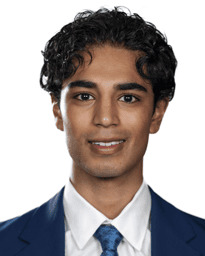
At Aragon High School in San Mateo, he mixed self-taught programming with water polo, mock trial, speech and debate. He founded Dzidza, an education-technology nonprofit aimed at helping schools in Zimbabwe manage high student-to-teacher ratios. He worked on a gamified goal-setting app called Soki. His résumé from that period reads less like a tidy specialization than a teenager testing how many forms a useful system can take.
The experiments earned concrete recognition. Oztanir won first place in the National Princeton Moot Court Tournament and placed third in the National Congressional App Challenge. In 2024, he arrived at the University of North Carolina at Chapel Hill as a Morehead-Cain Scholar, with plans to study business administration and computer science alongside philosophy, politics and economics. The scholarship was fully funded. The runway was generous. The route would not remain conventional for long.
A summer spent listening
In 2025, Oztanir and three fellow Morehead-Cain Scholars spent eight weeks working with Baltimore’s City Planning Office. Their brief was urban agriculture, a subject far removed from capital-markets software. The group interviewed more than 30 farm managers and residents, worked on beautification at Harlem Park Community Farm, and created CitySprout, an AI-enabled farm management platform intended to help operators find resources and organize their work.
The project mattered because the app was only half the answer. The students also did the onsite work. They listened to the people who would live with the result. They treated software as one instrument in a larger civic arrangement, not a magic wand waved from a laptop. For a future enterprise founder, it was valuable product training in work clothes.
“I’ve always believed in a new paradigm for how we interact with the web.”Aryah Oztanir, on his personal site
Oztanir had already been turning toward the daily machinery of organizations. KlubSpace, another project he founded, promised clubs an easier way to handle attendance, dues, events, membership and announcements. Again, the pitch was not to create a dramatic new behavior. It was to remove the clipboard, the stray notes app, the repeated message and the mile-high spreadsheet.
That preference for practical insertion became the opening move for o11, the company he started with Ajay Misra. The pair had come to college imagining traditional business careers. Conversations with finance professionals exposed a different reality: analysts were still spending large portions of their day wrangling presentations, spreadsheets and documents. AI existed, but often as a sidebar that could suggest something while leaving the user to carry it across the finish line.
The small door into a large room
o11 began with a Microsoft PowerPoint plug-in. This is wonderfully uncinematic. PowerPoint is where grand transactions acquire bullet points and where ambitious automation goes to discover formatting. Yet it was also where users were. When those users asked for Excel and Word, the team expanded. Requests carried the product into Google Slides, Docs and Sheets. Rather than insisting that customers adopt a pristine new destination, o11 followed them through the old neighborhood.
In late 2025, at 19, Oztanir announced that he was taking leave from UNC to build the company. He and Misra joined Y Combinator’s Winter 2026 batch. The decision is tempting to frame as a young-founder fable: scholarship surrendered, San Francisco beckoning, accelerator logo acquired. Oztanir’s own announcement was more specific. He credited the university, scholarship organizations, teachers, advisers, investors and teammates who made the move possible. He also named the evidence that pushed him: hundreds of conversations with finance professionals.
The distinction is worth keeping. Leaving school is an event. Knowing why you are leaving is a method.
From assistant to institutional memory
o11’s public description has since widened. It now calls itself an AI data warehouse for financial firms. The phrase is less immediately charming than “an agent inside every enterprise app,” but it points at the deeper problem the plug-ins uncovered. A financial firm’s intelligence does not live in one spreadsheet. It is dispersed across CRM entries, email, files, data rooms, market data and Microsoft 365. Each system remembers a fragment. The organization pays people to perform the reunion.
Large firms can devote expensive data-engineering teams to this problem. Oztanir’s stated ambition is to give smaller organizations access to the same sort of organized proprietary knowledge. o11 proposes a custom data model and ontology, with AI maintaining the warehouse and permissions controlling what can reach systems such as ChatGPT, Claude and Copilot. The appeal is not generic intelligence. It is intelligence that knows which relationship, document and deal belongs in the room.
“We at o11 give that power to any company regardless of size.”Aryah Oztanir, on the company’s YC profile
There is a clean strategic progression here. The Office plug-in is the wedge because it sits at the moment of production. The data warehouse becomes the foundation because output is only as good as the context beneath it. The company’s earlier slogan promised AI inside every enterprise app. Its current thesis asks what that AI would need to know once it arrived.
This is also where the founder’s earlier work looks less miscellaneous. Astro learned the behavior of online communities. Dzidza confronted a resource problem in education. KlubSpace gathered the scattered chores of student organizations. CitySprout began with interviews and put a digital tool beside physical work. None proves that o11 will prevail in the notoriously fussy world of financial data. Together, they show a builder repeatedly attracted to the same species of mess: people know what they want to accomplish, but their tools do not share enough context to help.
The advantage of unfinishedness
Oztanir’s biography is necessarily in motion. He is a founder at the age when many people are still trying on majors, and o11’s own category has evolved within a year. That unfinishedness can be an advantage if it remains paired with contact. The risk for any young founder is to fall in love with the grandeur of the pitch. His better habit, visible from Baltimore farms to finance desks, is to keep returning to the awkward detail of how work gets done.
His personal interests add useful texture. Morehead-Cain’s student biography lists water polo, swimming, hiking, boxing and weightlifting. His résumé adds vintage, film and digital photography. He told the scholarship program that he likes the political rap of Dave, especially songs about immigration and youth violence. These are small facts, but they rescue the founder silhouette from becoming a logo in a crewneck.
The most revealing joke may sit on his personal site. What comes after the last year? “The first year,” it answers, by the logic of a circular array. It is programmer humor with a founder’s impatience for endings. Products loop. Categories change. A plug-in becomes a suite, which becomes a warehouse, which may become something else once users pull on it.
For now, the o11 wager is crisp. Financial firms have accumulated plenty of data and too little usable memory. Oztanir wants to build the connective tissue without forcing everyone into another dashboard or hiring an army to maintain it. The grand ambition is to change how knowledge work interacts with the web. The practical test is smaller and harder: can the software remember enough of the organization to do the next piece of work correctly?
That is the sort of question a 19-year-old can spend a long time answering.