The nuisance was a spreadsheet. Sixteen columns, according to Reeju Datta, and a knack for producing errors. To send money through a corporate bank portal, someone had to add beneficiaries, upload a file, and investigate transfers that reversed without warning. Cashfree’s founders had already built a payment gateway. Yet the machinery for paying people remained stubbornly manual. A business could sell something online in seconds, then spend its afternoon convincing a bank to move the proceeds.
- Collect: accept customer payments through checkout, links, forms, or recurring mandates.
- Distribute: pay vendors, workers and customers without rebuilding a banking operation.
- Check: verify identities, track transfers and reconcile what actually arrived.
That mismatch is the useful way into Cashfree Payments. Founded in Bengaluru in 2015 by Akash Sinha and Datta, it occupies the space between a company’s software and the institutions that move its money. Its product is partly a checkout. Much of its appeal lies in the unglamorous work that follows one.
Six months to make money move
In Datta’s account of Payouts, the opening came when banks made transfers accessible through APIs: software could instruct another system to send money. Work began in mid-2016. About six months passed before real transactions went live with early customers, some already using Cashfree’s gateway. Their feedback shaped the product. Growth was slow initially; after Cashfree joined Y Combinator, payout volumes doubled monthly for a sustained period, he wrote.
“We were fed up with manually adding beneficiaries”
Reeju Datta · Payouts growth account, 2018
By November 2018, Payouts had crossed 100,000 daily transactions. The instructive detail is the development interval. An API made the idea possible. Getting actual businesses to entrust it with actual money took longer. This was software entering an established relationship between a finance team and its bank.
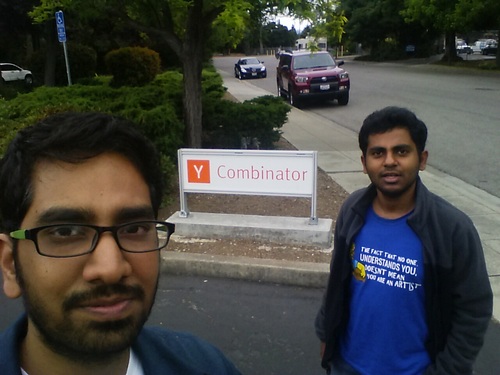
Sinha later described the resistance in a Global Fintech Fest conversation. Some companies already had people and processes doing the job. One large customer took about a year to adapt after Cashfree built an integrated checker. The obstacle was habit as well as technology. Automation became persuasive when expanding manual teams stopped looking like a sensible response to expanding transaction volumes.
Follow a sale past the checkout
Imagine a marketplace order. The buyer pays, but several obligations remain: allocate the seller’s share, retain the platform’s commission, handle a possible refund, and reconcile the movements. This is an illustrative workflow, not a customer case study. It explains why Cashfree offers several products around a payment rather than stopping at acceptance.
Payment Gateway accepts supported methods such as UPI, cards and net banking. Payment Links and Forms let a merchant collect without writing a custom checkout. Subscriptions handles recurring collection. Easy Split addresses marketplace allocations. Payouts handles outgoing transfers, with bank routing, beneficiary checks and reporting. Cashgram reverses the usual paperwork: a business sends a link, and the recipient supplies payout details to claim the money.
SecureID adds identity verification and onboarding checks. RiskShield supplies fraud controls. These tools matter to lenders, marketplaces and other businesses where accepting the wrong customer or paying the wrong account can be expensive. Cashfree’s January 2026 announcement names customers including Swiggy, Zepto, Nykaa, RedBus and BigBasket. Its claimed reach exceeds one million businesses; that is the company’s figure, not a count of equally active merchants.
The distinction from alternatives such as Razorpay or PayU is a buying decision, not a trophy. Cashfree’s documented history makes outgoing money a central part of its proposition. A merchant should compare the particular workflow, supported methods, approval requirements and support experience. Owning its processing technology is part of Cashfree’s pitch; it does not establish that every merchant will get better results.
A small fee, multiplied
Cashfree earns money by charging businesses for payment infrastructure. Its published pricing, checked in October 2026, displays a 1.95% platform fee for common domestic modes, alongside conditional promotions. Different methods and extra services carry different charges. Enterprise rates can be negotiated. The useful comparison is the bill for your payment mix, including taxes and any faster-settlement service.
Illustration only. Promotions, payment methods and your contract can change the rate.
For a ₹1,000 sale, that rate means ₹19.50 before taxes and extras. Price is only one variable. Faster settlement may help a merchant buy inventory sooner, but it can cost more. Cashfree’s own FAQ says pending payments cannot be instantly settled: the transaction must succeed first. A quicker timetable cannot repair an unfinished payment.
Scale also has a bill. Reporting on FY26 filings puts operating revenue at roughly ₹967 crore and consolidated net loss around ₹118.5 crore. Revenue grew sharply while losses narrowed. The business was still loss-making. For anyone studying payments, that is a useful distinction between attracting transactions and earning a profit from them.
The next border is a habit
The company raised $53 million in February 2025 in a round led by KRAFTON with Apis participating. Its international push is increasingly concrete. A December 2025 J.P. Morgan Payments collaboration supports import-payment flows. In June 2026, Cashfree announced its cross-border suite was operating across 40 countries. Selling into India means accommodating how Indian customers pay, while managing the banking and compliance work behind the purchase.
Cashfree Here extends the same argument to AI applications: let a purchase finish inside the conversation. Introduced with Mastercard and Swiggy in 2026, it is an announced capability, not evidence of mass adoption. Inside the company, a more tangible event arrived that January: an ESOP buyback covering over 400 people, including 175 former employees. Cashfree’s learning programmes and engineering meetups supply another glimpse of its working culture.
The lesson a founder can copy is practical: watch the repeated chore after the obvious transaction. Test one workflow, including its failures, before expanding. The approach fits businesses with enough payment complexity to justify integration; a simple shop may need only a link. Cashfree found opportunity in money that already had a destination. Someone still had to get it there.