Before Sambhav Jain helped put a payment card into a teenager’s pocket, he helped put a question into a college dining hall: how much food should the kitchen prepare when students might eat elsewhere? At IIT Roorkee, Jain and his friend Kush Taneja worked on a dining app that addressed a familiar mismatch. Students had plans. The kitchen had a headcount. The two did not always agree.
It is an unglamorous opening for a fintech story, which is part of its appeal. A dining hall gives you little room for abstraction. People either turn up for dinner or they do not. Food is either eaten or wasted. A useful product has to fit the habits of people who have lectures, friendships and appetites to attend to.
The app became an official campus tool. More personally, it gave the pair a reason to believe in their partnership. “That is when we realised that we can build something together,” Jain recalled. By 2019, they were working on FamPay, a payments business aimed at teenagers. The distance between a dining hall and a financial product looks considerable. The habit behind both is easier to recognise: notice an everyday arrangement, then ask whether it could work better.
The meal before the money
The early project, Appetizer, arrived before the accelerator badge and the investor introductions. It gave Jain and Taneja something a conversation about starting a company could not supply: evidence of how they worked together when other people needed the result.
That is a useful distinction in a founder’s life. Friendship can make an idea enjoyable. Building asks the friendship to accommodate deadlines, disagreement and users who have no particular interest in the builders’ intentions. An official dining app has to earn its place through ordinary use. It cannot live indefinitely on the charm of its pitch.
Jain’s later business would also depend on ordinary use. A payment product meets people in moments too small to become a case study: buying something, checking a balance, deciding whether another purchase can wait. The first campus project belongs in his story because it puts those moments ahead of the company’s more conspicuous milestones.
A dancer learns to ask
Jain grew up in Chandrapur, Maharashtra. His father was a civil contractor. As a boy, he liked cars and imagined building an automobile company. There is a pleasing change of scale in what followed: the future car entrepreneur began with college meals and eventually worked on pocket money.
He also liked performing. He learned Bollywood moves from videos and television, took tabla classes, and later joined IIT Roorkee’s dance group. In his first year, he contested a hostel election and became social and cultural secretary. Later came the role of general secretary for hostel affairs. He described himself as social and comfortable meeting people.
These details make the founder easier to picture than a list of credentials does. There was a student who could get onstage, campaign and work on campus problems. None of that automatically makes someone a good entrepreneur. It does, however, put conversation and participation into the biography early, well before the conversations became customer interviews.
Fam’s team page keeps the dancing detail alive. It calls him “The celebrity dancer”. In a business devoted to money, that is a welcome reminder that a founder can possess a personality beyond the spreadsheet. Even a payment needs someone to start the music occasionally.
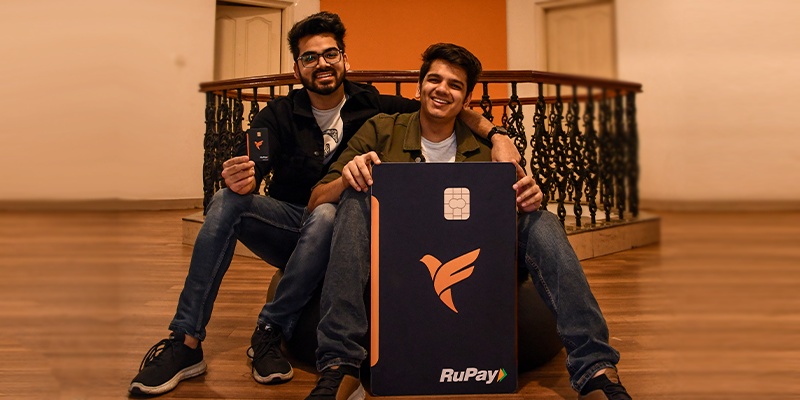
The salary question
By their final year, Jain and Taneja had decided to pass up campus placements. They had known each other since the first day of college, tried ideas together and experienced startups through internships. They graduated in 2019. The intention to build had become more definite than the particular business they would build.
Around them, placement conversations supplied another question. Jain noticed classmates choosing jobs for the package rather than for the work. He wondered how people could treat a salary as proof that life was settled. That observation led the founders toward the way people learn about money, and how late independent experience can arrive.
There is room to disagree with someone’s career choice without turning it into a sermon. An attractive salary is a sensible consideration. Jain’s interest lay in what happened before that choice: whether a young person had been given opportunities to make smaller financial decisions, understand limits and develop a relationship with money.
The founders took their questions into Bengaluru malls. They spoke with teenagers and parents about phones, accounts and spending. The contrast was concrete. Young people were at home with smartphones; many still depended on cash or a parent’s payment details. Digital confidence had run ahead of independent access.
That gave the business a starting point. A teenager needed a way to pay. A parent needed a way to provide money and understand its use. The product had to make sense to both, often within the same household. Family life had supplied a design brief, without the convenience of agreeing on every requirement.
Independence for the spender.
Visibility for the person funding it.
A card worth showing someone
FamPay entered Y Combinator’s Summer 2019 batch. Jain and Taneja applied while they were still students. The accelerator gave them a place among other builders and a route into the practical work of starting a company. A payments business also required bank relationships, compliance and a product people could actually use.
The early FamCard was numberless. Its payment details were available in the app rather than printed across the physical card. Parents could load money, and the teenager could spend it without setting up a conventional bank account. That arrangement turned a repeated request for help at checkout into a task the young user could perform.
A card also had to be something its owner wanted to carry. Later, the doodle card let users choose designs and signature fonts. The founders understood that personalisation mattered to an audience accustomed to expressing itself online. A financial object could participate in that expression, rather than looking as though it had arrived from somebody else’s filing cabinet.
Jain’s account of early growth includes outreach to students in leading schools, feedback from the first users and the appeal of unboxing a card. The team wanted people who liked the product enough to talk about it. There was a social life around the transaction: someone received a card, showed it to friends, and made the product visible.
The mechanism is easy to understand. A first card can become a small announcement of independence. It is also a thing you can photograph. Product usefulness and product identity meet in that moment, which makes the design of the object part of how it travels.

The money arrives. The work continues.
In March 2020, FamPay announced $4.7 million in seed funding. Its public launch followed that July. By June 2021, it was announcing a $38 million Series A led by Elevation Capital, with participation from existing and new investors. The company said it had crossed two million registered users within eight months of launch.
The numbers changed the scale of the undertaking. They also created a tempting way to tell it: two graduates, a fast-growing product, an investment round. That account is tidy, but it leaves out the recurring obligations of a payments company. A new user needs onboarding. A parent needs confidence. A transaction needs to finish.
Recognition followed. Jain and Taneja appeared on Forbes 30 Under 30 Asia in 2021. FamPay won Best on Campus at that year’s Economic Times Startup Awards. Those honours placed the college partnership in a larger public story about Indian entrepreneurship.
For Jain, the personal thread remained the question of financial experience. Giving a young person a budget creates choices: spend now, leave something for later, discover that a balance has a limit. The usefulness of those choices does not require them to be grand. A small amount can still make a decision real.
The customers turn eighteen
A business for teenagers eventually meets a calendar. Its users grow older. The product that helped with a first payment has to decide what role it will play when the user has a bank account and different needs.
In July 2025, Jain described Fam’s move toward a fuller UPI app. With the launch it called UPI 2.0, users could link bank accounts. He explained that many of the students who had used its wallet were now adults, and that the product needed to grow with them.
“We want to be a partner in their adulting journey”Sambhav Jain · July 2025
The phrase is informal, but the product question is substantial. The audience’s needs no longer fit neatly inside the original wallet. Bank-linked payments gave Fam another way to remain part of those routines. The customer could change without necessarily leaving.
The partnership had changed, too. Taneja’s public Y Combinator biography now says he has stepped away from day-to-day operations. Jain remains identified as a founder. Their shared beginning still matters, while the current chapter asks something different of the person continuing the work.
Fam received the IFTA award for Most Innovative Fintech Product in 2025. Its website now offers a spending account for ages eleven and up. Jain’s ongoing task is to keep the original promise useful through more stages of life, without assuming that a first successful product settles the next decision.
He began by asking what happened when students did not eat the meals a kitchen expected them to eat. Years later, the question has a different form: what happens when users stop needing the product you first built for them? In both cases, people have moved. Jain’s work begins with noticing.