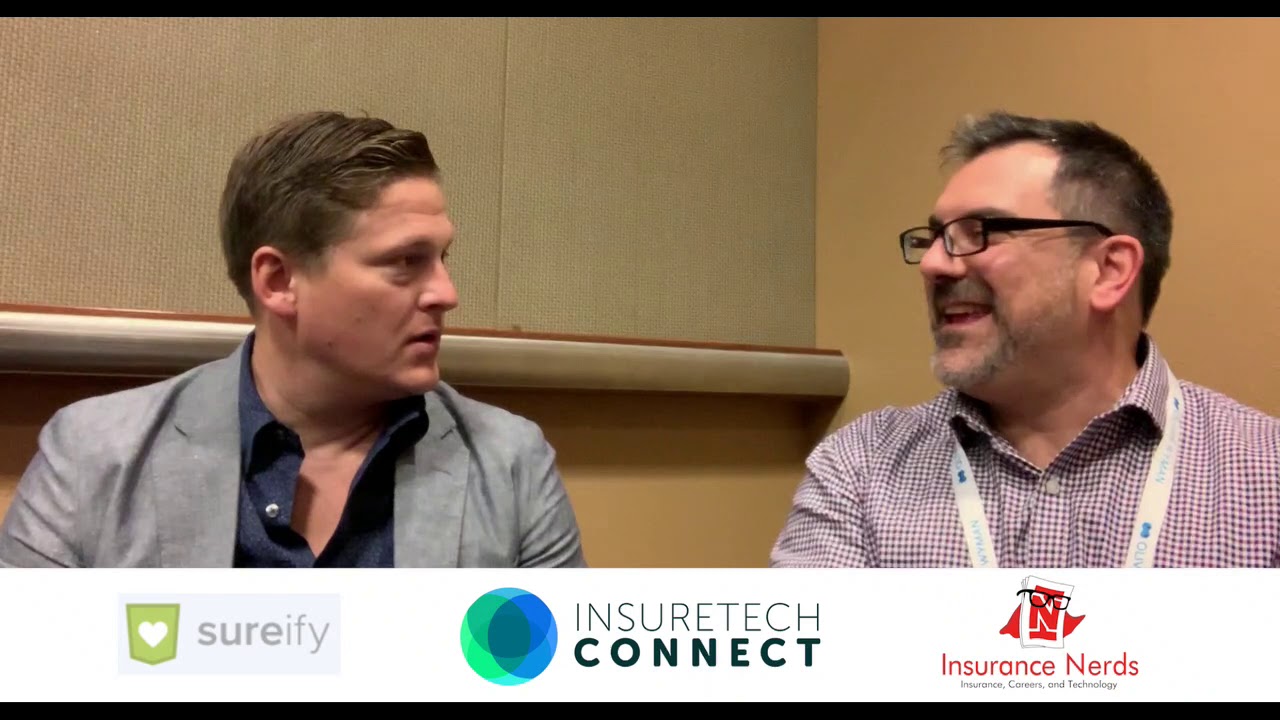
The man who grew up quality-testing insurance software in his father's brokerage is now running a $39M platform that powers digital insurance for State Farm, Allstate, and Nationwide. He's been building this since 2012 - when the word "insurtech" didn't exist yet.
Dustin G. Yoder · CEO & Co-Founder, Sureify
When Dustin Yoder founded Sureify in 2012, he wasn't chasing a trend. He was answering a question he'd been carrying since high school - sitting in his father's Silicon Valley insurance brokerage, testing clunky benefits software, watching a massive industry operate like it was still 1985. The life insurance sector had $20 trillion in policies in force and almost zero consumer-grade digital infrastructure. He saw the gap before anyone had a name for it.
The word "insurtech" wouldn't become a Silicon Valley staple for another three years. Yoder was already building. That timing wasn't luck - it was a consequence of knowing the industry from the inside out, from the customer service counter to the policy management back office. His father ran one of Silicon Valley's top independent insurance brokerages. Dustin didn't just grow up around insurance. He grew up testing its software.
Today, Sureify runs a cloud-native, low-code SaaS platform called Lifetime that helps life insurance and annuity carriers do three things they've historically struggled with: acquire customers digitally, service policies without a phone call, and keep policyholders engaged for the life of the policy. The roster of carriers using it includes State Farm, Allstate, AAA Life, Amica, Principal, Nationwide, Brighthouse Financial, and Modern Woodmen of America. That's not a list of edge-case startups experimenting with new technology. That's American insurance's institutional core.
Sureify reached $38.9 million in annual revenue by 2024, with projections pointing toward $63 million by 2026. The company has raised $25.1 million in total funding, including a $15 million Series C from Aspen Capital Group in September 2021. With 250-plus employees globally and a platform that has been in continuous development for over a decade, Sureify sits in a peculiar position: old enough to have survived every insurtech boom-and-bust cycle, mature enough that its biggest clients are legacy carriers with millions of policyholders.

"The life insurance industry had lost touch with today's buyer."
Yoder didn't walk into insurance software cold. Before Sureify, he built and sold Vendus Product Labs, an enterprise product development company whose clients included Genentech, Stanford University, and Honda. That's three of the most demanding technical environments imaginable - biotech, elite academia, and automotive manufacturing. Each one requiring integration with legacy back-office systems, strict compliance requirements, and stakeholder alignment across departments. Not so different from what life insurance carriers need.
He also spent time as VP of Business Development & Strategic Partnerships at PandaDoc - the document automation platform that has since become a $100M+ ARR company. The pattern is consistent: Yoder gravitates toward unsexy, infrastructure-level problems in industries where software has been underinvested. He fixes them by building platforms, not point solutions.
The Sureify thesis was simple and stubborn: life insurance carriers weren't going to be replaced by startups. They had scale, distribution, regulatory relationships, and trust. What they lacked was technology. Rather than compete with carriers, Yoder built infrastructure for them - a platform carriers could deploy without ripping out their legacy policy administration systems.
Sureify's core product is called Lifetime - a modular SaaS platform built on the idea that carriers shouldn't have to choose between digital capability and legacy infrastructure. Each module handles a specific part of the insurance customer journey, and all of them connect to existing back-office systems via CoreCONNECT, Sureify's insurance-aware middleware layer.
Digital policy purchase, quoting, e-application, automated underwriting, and new business transmission. Configurable sales experience built for direct-to-consumer and agent-assisted channels.
Web and mobile self-service for policyholders. Claims, policy changes, beneficiary updates - without a call center.
Agent engagement tools that modernize how independent and captive agents interact with carrier systems and manage their books of business.
Policyholder retention and engagement platform. Lifecycle communications, wellness incentives, and upsell/cross-sell automation across the policy lifecycle.
Insurance-aware middleware that links modern digital experiences to legacy policy administration systems in real time. The connective tissue of the Lifetime platform.
When State Farm, Allstate, Nationwide, and Principal are all on the same platform, the sales pitch stops needing to be made. These aren't early adopters - they're the institutions that define American life insurance.
At ITC Vegas 2025 - the annual InsureTech Connect conference in Las Vegas - Yoder organized a Sureify Life & Annuity Summit that drew 170 industry leaders. The session titles alone tell you something about his style. "Nobody Wants Your Portal." "Without Piping, AI Leaks Away." "Distribution is Moving On." "Building the Next Digital Era for Life & Annuity."
These aren't thought leadership platitudes. They're pointed provocations at an industry that has spent a decade building digital front ends that policyholders don't use, portals that agents avoid, and AI features that can't connect to the underlying systems where all the data actually lives. Yoder has been saying these things for years. Now he's saying them to rooms of 170 people who work for the carriers that have already bought his platform.
He also mentors startups at the Global Insurance Accelerator, contributing to the next generation of insurtech founders. It's a pattern familiar to anyone who has built something in a slow-moving industry and survived long enough to become the person newer entrants ask for advice.
The dominant insurtech narrative of the 2010s was disruption: direct-to-consumer life insurance startups that would cut out the traditional carrier. Lemonade. Bestow. Ladder. Each one betting that consumers would buy life insurance directly from a technology company if the experience was good enough.
Yoder bet differently. He bet that the institutional carriers - with their brand equity, financial ratings, distribution networks, and regulatory relationships - weren't going anywhere. The problem wasn't that carriers existed. The problem was that their technology was 20 years behind the consumer experience that policyholders now expected. Fix the technology. Keep the carriers. Let the industry modernize from the inside out.
Thirteen years into that bet, with $38.9M in revenue and State Farm as a client, the contrarian call looks prescient. The direct-to-consumer insurtech wave raised billions and produced mixed results. Sureify, quiet and methodical, compounded its way to the customer list most SaaS founders would trade for.
"My mission when I started Sureify was to modernize the life insurance and annuity industry."
"This round will enable us to further build out our platform and amp up research and development efforts to ensure market leadership for years to come."
"We're expanding our insurers' capabilities across digital sales, digital service and digital engagement."