Chuck’s Boots had a problem familiar to anyone who has paid for a billboard. People could see the advertisement. Someone could count the cars passing it. But which customers walked through the door because of it? The St. Louis retailer had bought radio, television, print and nearly twenty billboards. According to Drive Social Media’s account, sales had been declining for five years when the two businesses began working together in September 2019.
- Drive sells managed advertising, creative work and the machinery to track results.
- Its paid-social model grew out of an expensive change of direction.
- Copy the testing process. Treat the headline returns as case-specific claims.
Drive connected customer information to Facebook and Instagram campaigns through its Marketing Milk software. The agency reports 1,600 attributed purchases and roughly $214,000 in revenue during the first three months, against just over $3,000 in ad spend. Those are the agency’s figures. Still, the proposition is wonderfully concrete: a boot shop would like to sell boots. An advertising report ought to help explain whether it did.
The platform moved. So did the agency.
Drive began with a different proposition. Josh Sample’s early agency managed organic social posts, saving business owners the trouble of doing it themselves. Inc. dates the business to 2012; Drive’s origin account describes work beginning the previous year. The crucial date in that account is 2014, when changes to Facebook’s distribution persuaded Sample that an organic-posting business needed to become a paid-advertising business.
The change had a human price. Drive says half its staff left because they did not believe in the new direction. Sample brought in entrepreneur Andrew Foley to help finance the shift. Before the agency could sell clients on buying attention, it had to rebuild its own team around the idea. Nashville followed in 2016, and a first franchise relationship with Orangetheory Fitness arrived in late 2017.

That sequence explains something about the company’s personality. Drive’s mission centers on a minimum three-times return on investment. Read that as its stated target, rather than an outcome every buyer can assume. The business grew by making marketing legible to owners who had little patience for a busy social calendar without a commercial explanation.
The unglamorous part is the product
Drive is an agency with software inside it. Clients can hire it for paid social, search advertising, SEO, branding, video, email, public relations and website development. Its web offering includes WordPress and Marketing Milk Web Builder Pro. The useful connection is practical: an advertisement needs somewhere sensible to send a visitor, and that destination needs to make the next action easy.
Marketing Milk is the connective tissue. Drive describes a dashboard that brings together leads, purchases, customer journeys and revenue, with recommendations for adjusting campaign budgets. Its paid-social service starts with existing customer information, builds audiences and tests combinations of creative. The dashboard is meant to tell the team which combinations deserve another dollar.
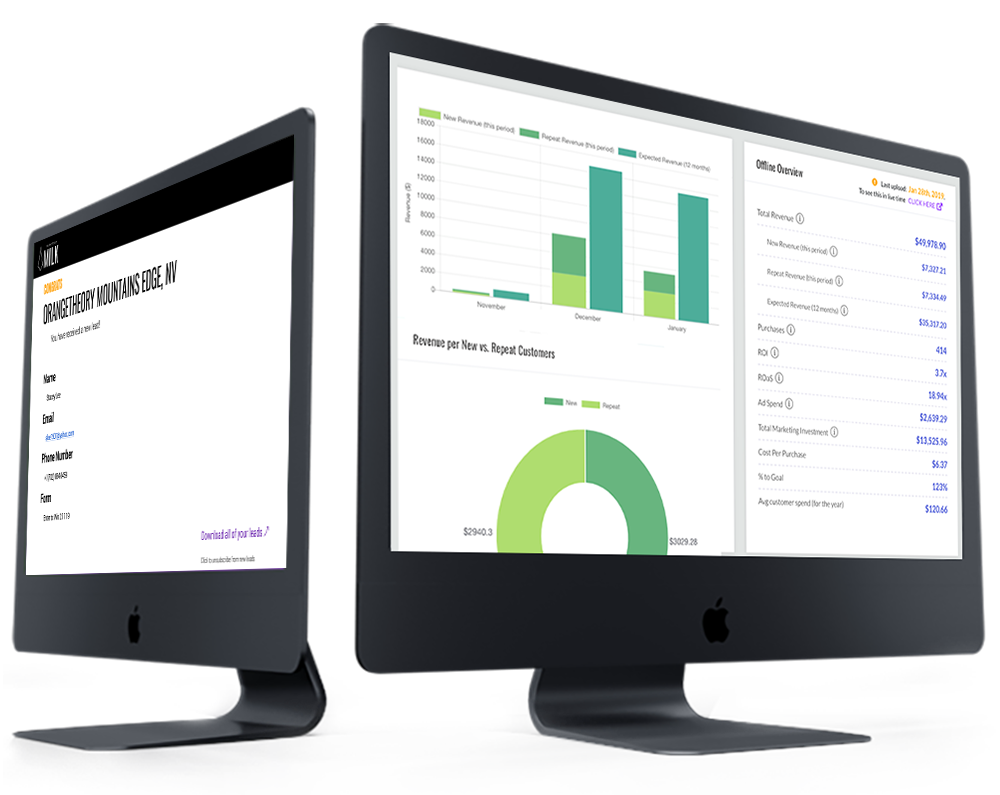
The distinction matters when choosing an alternative. A scheduling tool helps someone publish. An in-house marketer can operate ad accounts directly. Drive sells the people and coordination needed to execute the campaign as well as interpret it. Its onboarding runs through discovery, strategy and performance meetings over three nonconsecutive days. Understanding the business precedes pressing the launch button.
- 01 Customer data
- 02 Creative tests
- 03 Purchase reporting
- 04 Budget decisions
One dealership before four
Consider Bumpus Harley-Davidson. Drive’s case study describes falling dealership traffic and customer information that was not being used effectively for digital targeting. The campaign began in Murfreesboro, Tennessee. Ads combined local lookalike audiences, motorcycle imagery and an offer inviting prospects to enter for a free Rider Academy course.
The important detail is the order. Drive says it used the early campaign to refine audiences and creative; after results exceeded expectations over two quarters, Bumpus added three locations. The reported annual total was 816 purchases and $4.63 million in attributed revenue. Expansion followed evidence from one shop, rather than arriving as the opening assumption.
“The team holds you accountable.”Kathy P., Bumpus marketing director, in Drive’s case study
This is the part another operator can copy: begin with customer records, test a specific offer, examine purchase results, then decide whether to expand. Drive’s franchise service packages that coordination around a recurring problem: national brand standards must coexist with local demand. It offers location reporting, CRM and point-of-sale integrations, brand-compliant campaigns and locally tailored plans.
Keeping that work consistent takes an internal system, too. In January 2024, Drive brought its national team to St. Louis for Workshop Week, with education and speakers including former Disney creativity executive Duncan Wardle. Sample has also publicly advocated creative friction between colleagues. The company’s growth has an external marker: Inc. lists eight consecutive appearances from 2017 through 2024. Neither a training week nor a ranking proves campaign quality, but both help explain the organization behind the dashboard.
The denominator deserves a meeting
What does this cost? The Chuck’s Boots example specifies media spend, which is only one component. A separate public record offers a narrower, useful glimpse: Highland, Illinois listed $2,000 payments to Drive for monthly social-media service in October and November 2022. Those historical entries describe that engagement, not a general rate card.
Agency fees, production costs and product margins still matter when calculating profit.
Attribution needs the same scrutiny. Matching a purchase to an advertisement does not establish that the advertisement caused every dollar of that purchase. For an owner deciding whether to hire Drive, the questions are specific: which costs enter the calculation, which sales receive credit, and how are existing customers distinguished from newly acquired ones?
When the receipt changes
In June 2026, Drive issued a client update about Meta attribution changes, warning that reported conversions could fall while actual business performance held steady. An August release argued for examining the broader customer journey. These were company communications, but they exposed the central tension in its proposition: the measurement system can change around the business being measured.
The approach asks something of the buyer, too. Clean customer records, usable sales data, a workable offer and the capacity to serve inquiries make the feedback loop useful. Weak records or thin margins make a handsome revenue ratio less informative. Drive’s most transferable idea is a discipline: agree on what a result means before paying to produce one.