Learning Care had a problem that could pass for good news. People were filling out forms. The advertising was producing inquiries. But staff were spending time chasing interest that never became an enrollment. For a business helping parents choose a school, a raised hand and a registered child are very different things. The campaign’s definition of success had blurred them together.
- Wpromote combines media, creative, strategy, and measurement.
- Its Polaris IQ platform helps teams test ideas and plan spending.
- The useful lesson: teach campaigns what a valuable customer looks like.
Wpromote changed the signal. Qualified leads from Learning Care’s customer records went back into Google Ads, giving bidding systems something more meaningful to pursue. Google’s 2026 account reports four times as many student registrations. That result is a case-study outcome, rather than a promise. Still, it reveals something about this agency: the interesting work often begins by questioning the number everyone has agreed to celebrate.

01 / A dorm room with 200 search engines
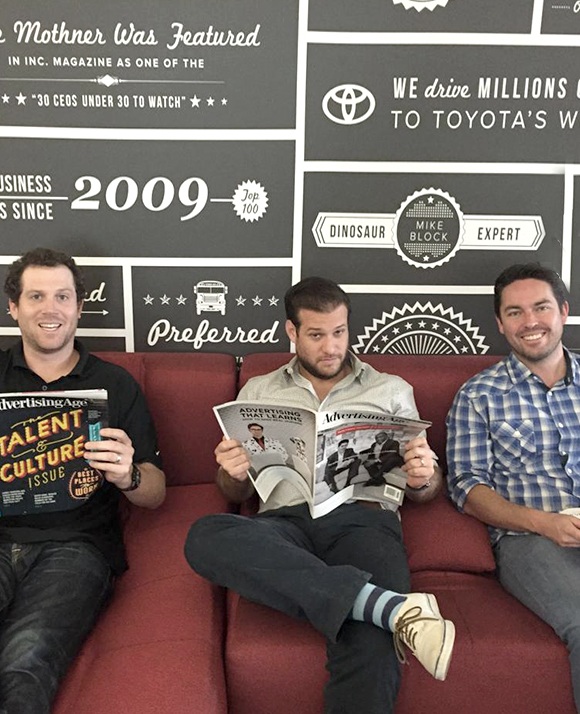
In 2001, Michael Mothner started Wpromote at Dartmouth. His service submitted small-business websites to roughly 200 search engines. The task sounds almost archaeological now. At the time, being found online was a problem someone would pay to solve. By graduation, the company was bringing in about $100,000 annually, according to Dartmouth’s alumni magazine. An anticipated banking career lost its appeal.
Mothner later recruited two childhood friends, both also named Mike. Three Mikes is a decent sitcom premise; the business was more practical. It moved into Google advertising, then broadened into search optimization, social media, and email. The original tagline, Mothner recalled, was “Helping businesses succeed online.” The wording aged better than the directory of search engines.
Today, clients can hire Wpromote to plan and buy media, develop creative, research audiences, improve search visibility, or coordinate customer communications. Retailers, financial-services businesses, technology companies, and hospitality brands face different buying journeys. The agency’s job is to connect those journeys to commercial decisions. Peacock, Vuori, Intuit QuickBooks, and TransUnion are among its publicly identified clients.
02 / The spreadsheet had a trust problem
Wpromote encountered its own version of the measurement problem. Its older reporting process involved custom work and competing versions of data. CTO Paul Dumais described the consequence bluntly: “no one could really trust that reports were accurate.” A polished report is a poor bargain when the meeting becomes an argument about which spreadsheet is right.
“no one could really trust that reports were accurate”
Paul Dumais, CTO, on the earlier reporting process
The agency considered building its new platform from scratch, then chose Google Cloud components, including BigQuery and Looker. Polaris supplied a common foundation. Google Cloud’s account describes new-client reporting moving from a process that could exceed a month to reports available on day one. That is a practical advantage: people can begin discussing a decision sooner.
The current platform, Polaris IQ, reaches into creative testing, media optimization, and forecasting. Growth Planner lets teams consider investment scenarios. Creative Accelerator tests concepts before spending more on winners. These tools sit inside an agency relationship, alongside people responsible for interpreting results and executing campaigns. A forecast still needs a person willing to question its assumptions.

03 / A diamond does not care about your channel
Consider Helzberg Diamonds. When pandemic closures pushed shopping online in 2020, Wpromote helped the retailer adapt while preparing for stores to reopen. The work included local campaigns, YouTube, and Google’s Store Sales Direct reporting. Digital activity could be connected with purchases that happened across a physical counter.
Year-over-year increase in store sales attributed to Google Ads.
Reported in the Google / Wpromote case study. Attributed sales are not a measured estimate of incremental lift.The distinction matters. A customer’s path may cross a video, a search result, and a store visit. Department budgets divide that experience into channels; the customer gets on with buying a ring. Wpromote’s appeal is its ability to coordinate those pieces. Platform partnerships with Google, Meta, Amazon, and others support execution, including access to specialist support and emerging products.
04 / Then the agency bought a bigger imagination
In November 2025, Wpromote acquired Giant Spoon, forming Wpromote x Giant Spoon. Giant Spoon brought brand creative, strategic media, and experiential expertise. Its previous work included the enormous dragon wrapped around the Empire State Building for HBO. That is quite a distance from submitting a website to a search directory.
Andrea Bendzick, appointed Wpromote CEO in 2024, leads the combined business. Private-equity firm ZMC invested in 2022, following Shamrock Capital’s first outside investment in 2018. Wpromote earns its living through client services; technology helps deliver that work. The commercial proposition is coordination: fewer handoffs between the people making an idea, placing it, and judging what happened.
That places it in the market for integrated growth assignments, alongside performance specialists and broader media agencies. Its distinguishing pitch combines proprietary measurement tools with creative and media execution. The combination gives clients a reason to consolidate work. Whether that is valuable depends on how well the teams collaborate on the particular account.
05 / Give the machine a better assignment
In June 2026, the combined agency introduced the Care Index. Its current framework organizes consumer relationships around knowing, liking, and loving a brand, connecting that diagnosis to planning in Polaris IQ. It extends the agency’s ambition beyond capturing an existing purchase intention to understanding what might produce the next one.
- 01Define the outcome
- 02Connect the records
- 03Test the investment
- 04Feed results back
The transferable idea is straightforward. Pick a business outcome. Record it consistently. Return evidence to the team making spending decisions. Then test whether the next decision improves. My reading of these cases is that this approach depends on usable customer records, clear definitions, and permission to connect the relevant systems. Without those foundations, a faster campaign can simply reward the wrong behavior faster.
That is the thread from the school inquiry to the diamond counter. Advertising produces plenty of countable things. Wpromote’s most useful assignment is helping a business decide which of them deserve to count.