Matthew Yaney had a perfectly respectable problem: he could clean a drain, but the internet did not seem sufficiently impressed. His Ohio business, Elite Drain Cleaning & Water Damage Professionals, had an offline reputation to build on. Its online presence needed work. Meanwhile, posting to separate social platforms was eating into the day, and then into the evening. The job had ended. The marketing shift had begun.
- Who it serves: local service businesses, from single operators to franchise networks.
- What it sells: marketing software plus people to manage websites, local SEO, and ads.
- What to copy: match ads to services, request reviews routinely, and count jobs rather than admiring clicks.
Olly Olly’s proposition begins in that uncomfortable space between being good at a trade and being easy to find. A customer cannot judge workmanship they never encounter. A splendid website offers limited consolation when the business listing has the wrong details, reviews have gone quiet, or an ad attracts someone looking for a service the company does not provide.
The company combines software with managed marketing. Its customers include plumbers, electricians, roofers, HVAC contractors, lawyers, and other local operators. Its homepage says more than 17,100 businesses trust it. The number is Olly Olly’s own claim; the more revealing details are the small jobs it tries to remove from an owner’s calendar.
A quiet phone is a discovery problem
Olly Olly’s homepage makes a provocative claim: the website accounts for only 10% of why customers call. Treat that as its marketing thesis, rather than a measured law of customer behavior. The point is that a business has a public presence scattered across search, maps, directories, reviews, and social feeds. Buying a website addresses one piece of that presence.
Its proposed answer is recurring maintenance with visible records. Fix a listing. Request a review. Update a profile. Show the owner the activity. The company emphasizes a dashboard where the work and its results can be inspected. That is a sensible demand to make of any agency: an invoice should have a more interesting companion than reassurance.
The awning account that bought the wrong attention
Consider Accent Awnings, a Southern California business established in 1979. When marketing manager Erica Cross joined in 2022, its Google Ads account needed attention. Olly Olly’s case describes broad keywords attracting irrelevant searches, ad groups mixing different awning types, and a conversion rate below 1%. The company already had experience making awnings. What failed first was the system for buying attention.
The rebuild separated window, patio, and commercial awnings into distinct ad groups. The team refined keyword matching, added negative keywords to exclude unsuitable searches, and introduced responsive ads. Cross also wanted regular communication and timely reporting. The change was practical: treat different customer intentions differently, and keep managing the account after launch.
50% reduction, reported by Olly Olly. Earlier value calculated from that reduction; rounded figures are approximate.
Olly Olly reports 800-plus qualified leads and a cost per conversion of $80.58, down 50%. Those are vendor-published results from one account. They illustrate a method, rather than establish what another customer will earn. Copy the campaign structure and the habit of checking it; a result cannot be ordered from the menu.
A finished job needs a second life
Yaney’s problem was different. Elite Drain Cleaning needed its service reputation to become visible online. Olly Olly’s published account describes review requests, listing improvements, and easier social publishing. It reports more than 120 new reviews across Google and Facebook, plus a 65% increase in local search visibility.
“You do it in one place, and it goes everywhere you need it to go.”Matthew Yaney / Elite Drain Cleaning
Yaney describes scheduling a week of posts in 15 to 20 minutes in the morning. Social Media Studio supplies AI-assisted captions, scheduling, and publishing to connected platforms. The Review Engine handles requests and response tools. The appeal is easy to understand: finish useful work, capture evidence of it, and make the next customer’s decision easier.
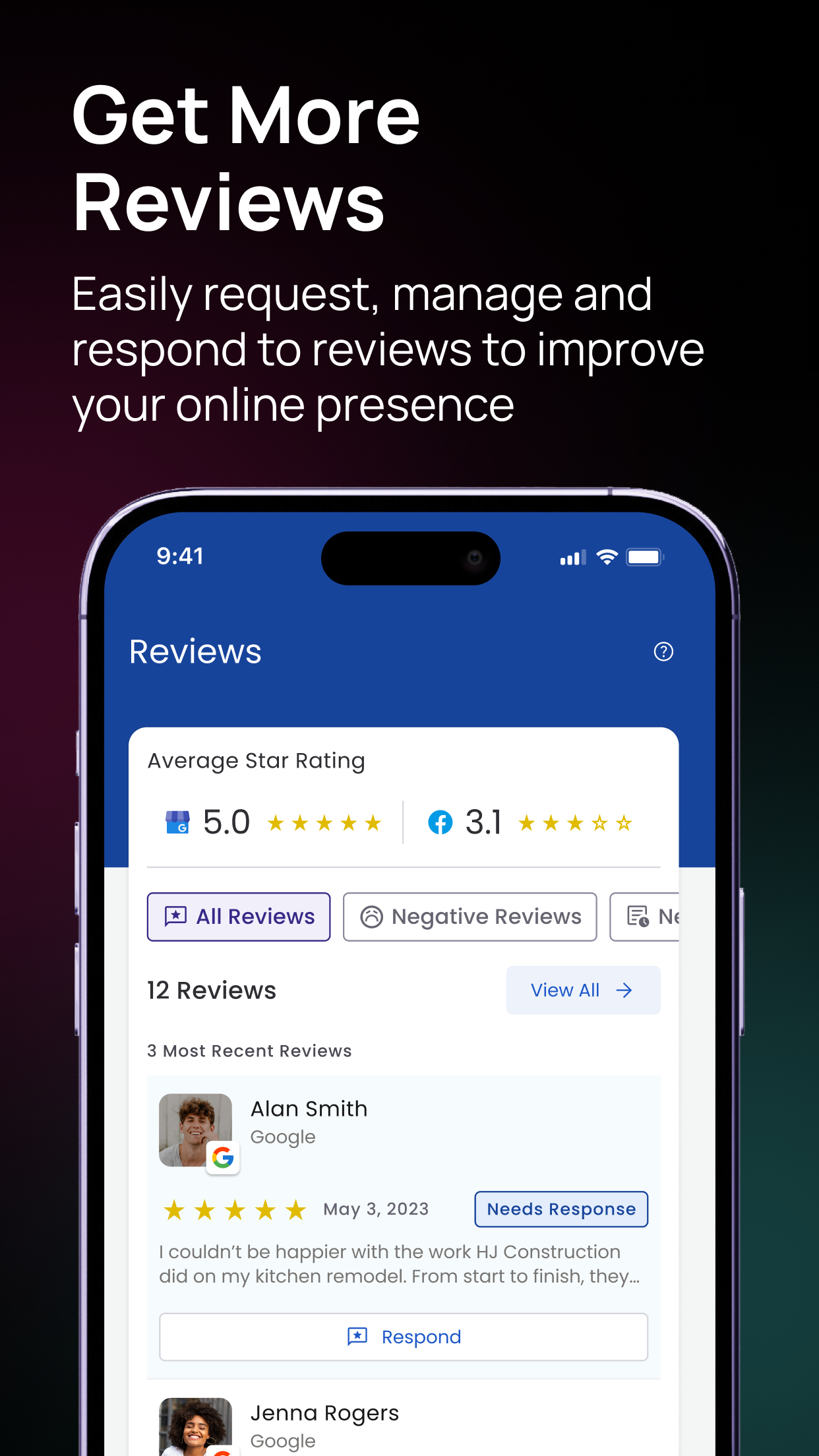
There is a distinction between asking for feedback and manufacturing admiration. Automation can make the request timely. The customer still decides what to say. An owner also needs to check generated content for accuracy; the software cannot know every detail of a job merely because it can produce a caption.
The machinery behind the small chores
Olly Auto brings recurring tasks together: social updates, review requests, citation maintenance, and profile monitoring. GBP Guardian focuses on Google Business Profile, including edit detection and suspension alerts. Citation management works across more than 40 directories. It is administrative work with a sales consequence: strangers need consistent information before they can become customers.
- 01Complete the work
Owner supplies real experience - 02Request feedback
Customer supplies the verdict - 03Publish useful proof
Photos, posts, accurate details - 04Track the next inquiry
Measure calls and booked work
An editorial illustration of the workflow, not a guarantee of rankings or sales.
The managed side covers website development, hosting, ongoing SEO, profile optimization, social management, and paid advertising. Its PPC offering describes service-specific landing pages and tracked phone numbers. Local Services Ads management adds another route to customers already looking to hire. Owners can buy help doing the work as well as tools for seeing it.
Heatmaps add geography to the reporting. A business can appear prominently near its base and less often elsewhere in its service area. A map makes that unevenness easier to inspect than a solitary ranking. For franchises, the multi-location dashboard offers a central view of branch performance, while enterprise arrangements can include negotiated franchisee rates and marketing-fund programs.
Olly Olly therefore sits between specialist software and an agency. Its own site compares it with Yext; other choices include a local marketing provider or a collection of separate review, listing, and publishing tools. Its distinction is the combination of execution, automation, and a shared view of the work. Buyers should judge that combination by how reliably it operates for their business.
Three people in a glass room
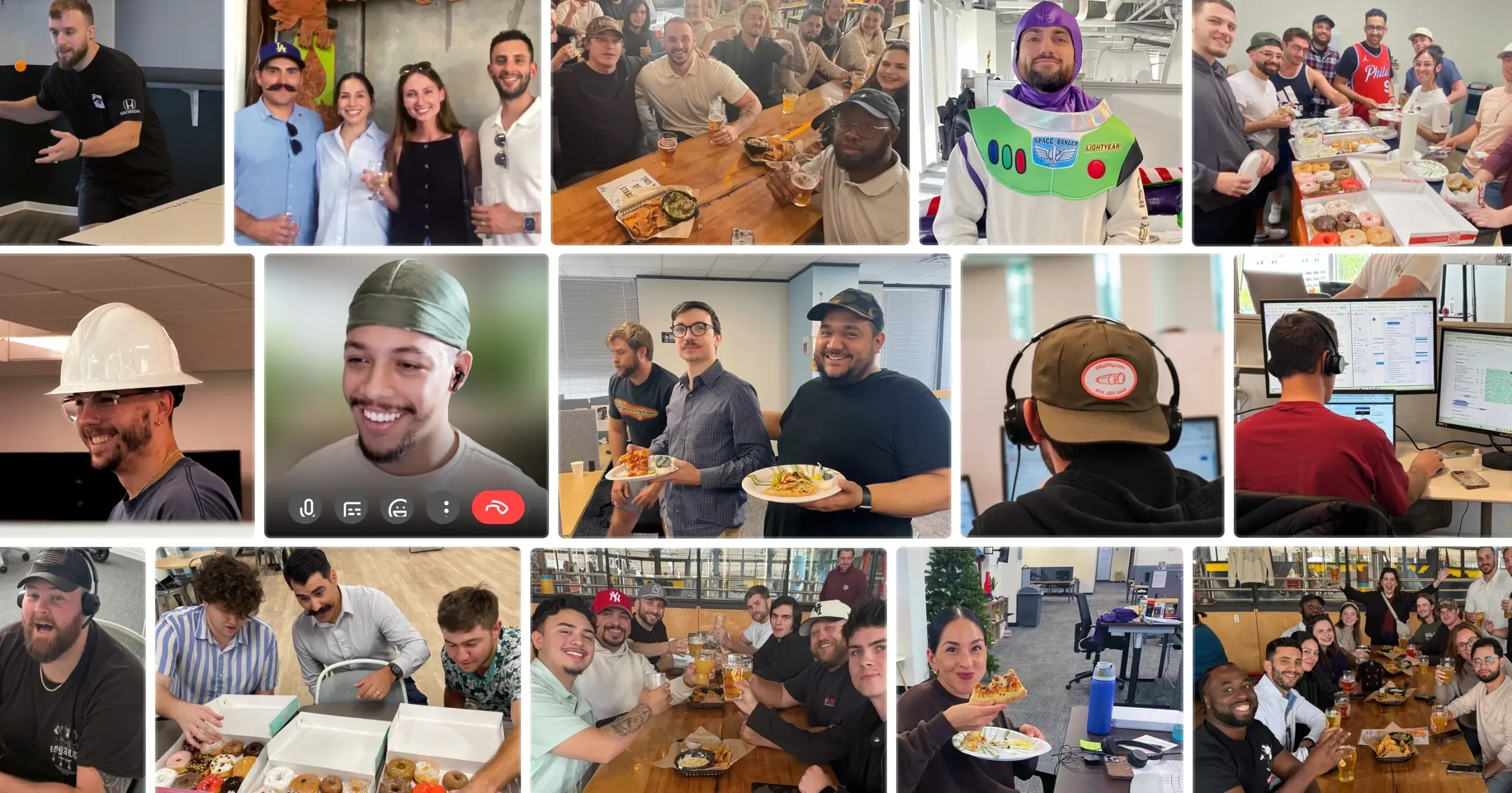
The company began in 2018 with co-founders Elisabeth Spencer and Peter LePage. In a fifth-anniversary reflection, Spencer recalled a three-person start in a WeWork glass room and a deliberate decision to avoid investors and venture capital. That gives the origin a useful scale: before the dashboards, there were three people and the business of paying for the next month.
In 2024, Olly Olly ranked No. 1,576 on the Inc. 5000. Its LinkedIn profile describes offices in Charlotte, Austin, and Phoenix, alongside a worldwide team. The careers page emphasizes accountability, curiosity, and support, with benefits including paid parental leave and a 401(k) match. These are the company’s stated commitments; a benefits list is a promise employees experience in practice.
Its 2026 product log shows the emphasis moving further toward automation: Olly Auto in January, heatmaps in March, and revised ad dashboards in July. Summer brought a text-first lead widget; fall entries describe messaging automation and social publishing improvements. Capturing an inquiry and keeping it moving are becoming part of the same product as getting noticed.
Read the price, then read the agreement
The software overview advertises a 14-day trial with no credit card required and $99 a month afterward. The same page contains a $36 monthly comparison figure. Those offers need clarification for the particular plan being purchased. Neither should be treated as a quotation for a managed website, an agency engagement, or an advertising budget.
The current terms require 30 days’ written cancellation notice and describe minimum terms whose remaining fees can become payable on early cancellation. That matters when comparing a software trial with ongoing services. Public customer feedback includes complaints about delivery, communication, results, and cancellation. Such reviews are self-selected, but the subjects are useful questions to resolve in an agreement.
Google remains an outside platform. Olly Olly’s terms describe profile services as best efforts and disclaim protection guarantees. An alert cannot ensure reinstatement; a content routine cannot ensure a ranking. The economics also depend on what happens after the call: whether the owner responds, wins the job, and earns enough margin to justify acquiring it.
Copy the routine, measure the jobs
A reader can borrow the operating logic without buying the service. Make sure listings agree. Divide paid campaigns by the services people actually seek. Ask customers for honest feedback as a routine part of finishing work. Preserve useful job photographs. Track inquiries through to booked jobs, and compare acquisition costs with the money those jobs leave behind.
That routine is most useful when a business already delivers good work but struggles to show evidence of it consistently. It has less power when the service disappoints, calls go unanswered, or the advertising budget cannot support a meaningful test. Olly Olly’s proposition ultimately earns its keep in an ordinary moment: an owner finishes a job, and the next customer can find a reason to call.