Imagine a restaurant at 5:42 on a Friday evening. The dining room is polished. The fish arrived that morning. The bartender has made a new drink involving jalapeño, which is either brave or reckless. On Instagram, the drink looks excellent. On Google, however, the restaurant closes at six. The website still shows last winter’s menu. A glowing review has no reply. The email list has not heard a word in four months.
To the owner, these are six small marketing chores. To the diner, they are one restaurant - and a confusing one.
The Forking Group exists in that gap. Founded by Genna Apfel in 2020, the New York agency was acquired by Foodie Card in July 2023. The logic of the deal was stated with unusual clarity. Jared Katz, Foodie Card’s CEO, said the point was to consolidate restaurant marketing under one roof and give a client “one voice across all media.” That is the whole proposition, stripped of the agency vocabulary.
A diner does not experience SEO, photography and SMS as departments. A diner experiences a place.The organizing idea behind the agency
The expensive space between specialists
Restaurant marketing has traditionally been purchased like a row of small appliances. A photographer makes pictures. A social manager feeds the grid. A web shop tends the site. Someone else buys ads. A listing service corrects the address. The pieces may all work, but nobody owns the space between them.
The first thing to fail is usually not creativity. It is coordination. A promotion launches before the reservation page is ready. A beautiful video attracts a hungry person to an outdated menu. An ad wins a first visit, but no useful guest data comes back to the email system. Each vendor can point to a completed task. The operator is left to explain why the room is not fuller.
Local search, directories, reputation, menu and location data, plus newer answer- and generative-engine optimization.
Branding, websites, food photography, video, social media, influencers and public relations.
Paid media, conversion work, loyalty, analytics, and behavior-based email and SMS.
The Forking Group packages its current work into those three broad systems: digital discovery, brand storytelling, and growth and revenue. Its actual menu is longer. It includes restaurant photography and videography, social account management, influencer campaigns, websites, public relations, paid media, review monitoring, menu and location management, email and text automation, events, signage and point-of-sale printing.
That last group is revealing. The agency does not stop where the screen stops. Menus, table tents and coasters sit beside search rankings and automated messages because a restaurant brand does not politely divide itself into digital and physical departments. The coaster and the Google listing are both promises made to the same guest.
The camera is not the product
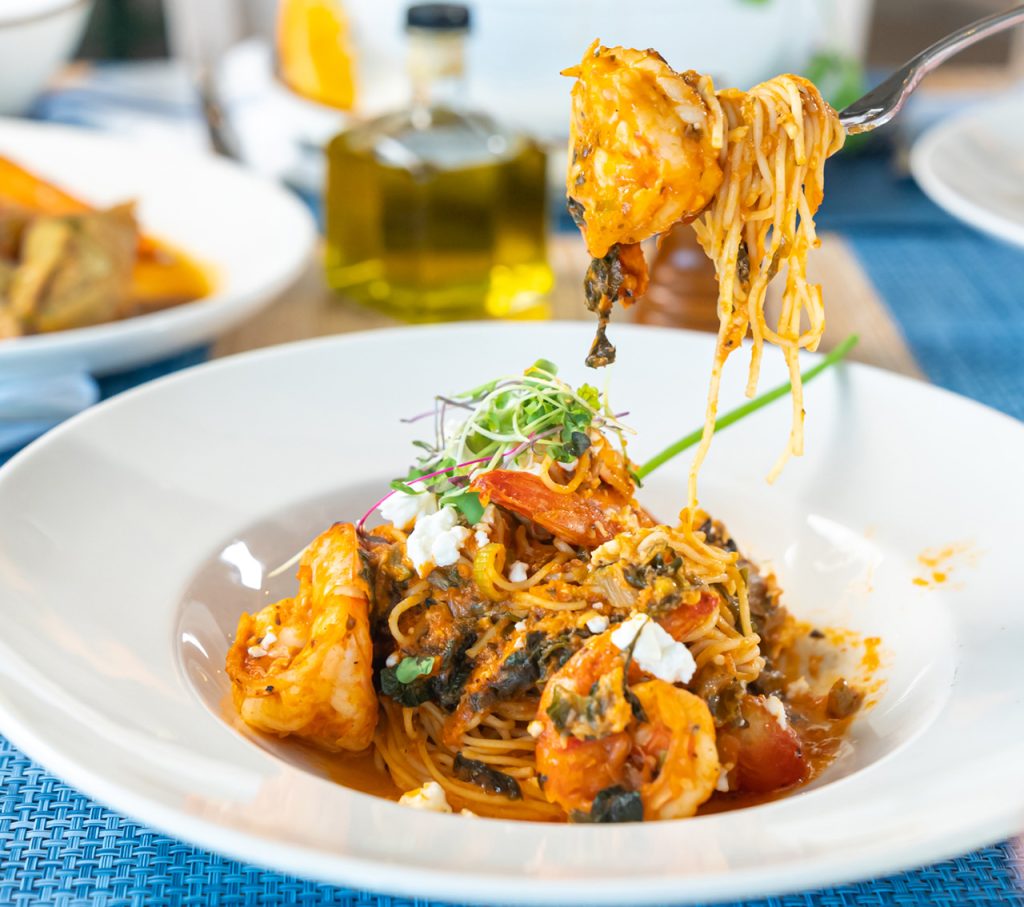
Food is unusually visual and unusually local. A picture of glossy pasta can travel around the world, but the transaction it creates must happen at a particular table, during a particular service, with an accurate address and an available reservation. This is why restaurant marketing can look glamorous and behave like plumbing.
The Forking Group’s difference is not that it can take a picture or schedule a post. Thousands of firms can do both. Its difference is the claim that the picture should belong to a system. Social content creates attention; listings and search capture intent; the website or ordering flow converts it; email, SMS and loyalty bring the guest back. The agency says it tracks the less photogenic numbers - acquisition cost, visit frequency, average check and lifetime value - rather than allowing likes to stand in for revenue.
The useful loop
Its natural customer is therefore not every business that needs a logo. It is the operator with a real location, a marketing budget and enough capacity to serve the demand being generated. Independent restaurants and hospitality groups are the center of gravity; multi-unit brands make the coordination problem larger and the one-roof pitch more valuable. The agency’s site now says the underlying framework can also serve professional-services and lifestyle brands nationwide, but hospitality remains the source of its specificity.
What it costs - and what it cannot promise
There is no public general rate card. The one concrete offer comes through Dining Alliance: members are shown no setup fee and savings of up to 12.5 percent on monthly pricing. Everything else is scoped to needs, budgets and growth goals. This is a services business, not a self-serve software product; the buyer is paying for people to diagnose, create, coordinate and measure.
Up to this much off monthly pricing
Dining Alliance advertises the benefit to its members, along with no setup fee. It is a partner offer, not a universal public price.
The trade-off follows. Consolidation reduces handoffs, but it also concentrates responsibility. It works when the agency can reach the restaurant’s data, listings, website, creative calendar and decision-makers. It works when the operator can identify the real commercial goal - lunch traffic, private events, repeat visits, a new opening - and handle the customers a campaign produces. It becomes less persuasive for a tiny venue that only needs an occasional photo shoot, a company with a capable in-house growth team, or an operation whose service problems make more attention actively dangerous.
The copyable part is ownership
An operator does not have to hire The Forking Group to borrow its best idea. The lesson is to stop organizing marketing by channel and start organizing it by guest movement. Give one person ownership of each handoff.
- Audit the facts. Compare hours, menus, addresses, links and reservation paths everywhere a guest can find them.
- Name the action. Decide whether a campaign should create a booking, an order, a visit, an inquiry or a repeat purchase.
- Connect the asset. Every photograph and post should lead somewhere current, fast and measurable.
- Capture the return. Build a permission-based reason to speak to a guest after the first transaction.
- Measure the dining-room number. Track reservations, orders, visit frequency and check size before celebrating reach.
The model also explains what changed in the agency’s own language. The 2024 announcement described an omni-channel restaurant agency. The current presentation is more architectural: machine-readable discovery, connected guest data, retention pipelines and AI-mediated recommendations. The vocabulary became more technical because discovery changed. Diners still use maps and search results, but they increasingly ask assistants where to eat. The old listing problem has acquired a new interface.
The clever move is not to chase every new channel. It is to keep the restaurant’s facts and story coherent enough to survive the next one.The practical takeaway
Where the fork lands
The Forking Group sits between two familiar alternatives. On one side is the generalist agency, rich in channel expertise but liable to learn hospitality on the client’s time. On the other is the improvised in-house network - a freelancer here, a manager there, and an owner forwarding passwords at midnight. The Forking Group sells category knowledge and a single accountable system.
Broad category experience, but hospitality operations may be learned from scratch.
Close to the restaurant, but coordination depends on the operator.
Deep at one job - listings, email or social - with handoffs left elsewhere.
Hospitality-focused execution across discovery, creative and retention.
Foodie Card’s acquisition made sense because both businesses depend on a network of restaurants and the repeated choice to visit one. The parent brought an existing relationship with independent operators; the agency added the machinery for helping those operators get found, chosen and remembered. The exact financial results are not public, so grand conclusions would be theatre. The structural fit is visible enough.
Back at our imaginary restaurant, it is nearly six. The jalapeño drink is selling. The useful victory is not that the photograph received attention. It is that the hours were right, the menu matched, the reservation worked, and the guest who ordered it can be invited back. One restaurant. One voice. Fewer dropped batons.