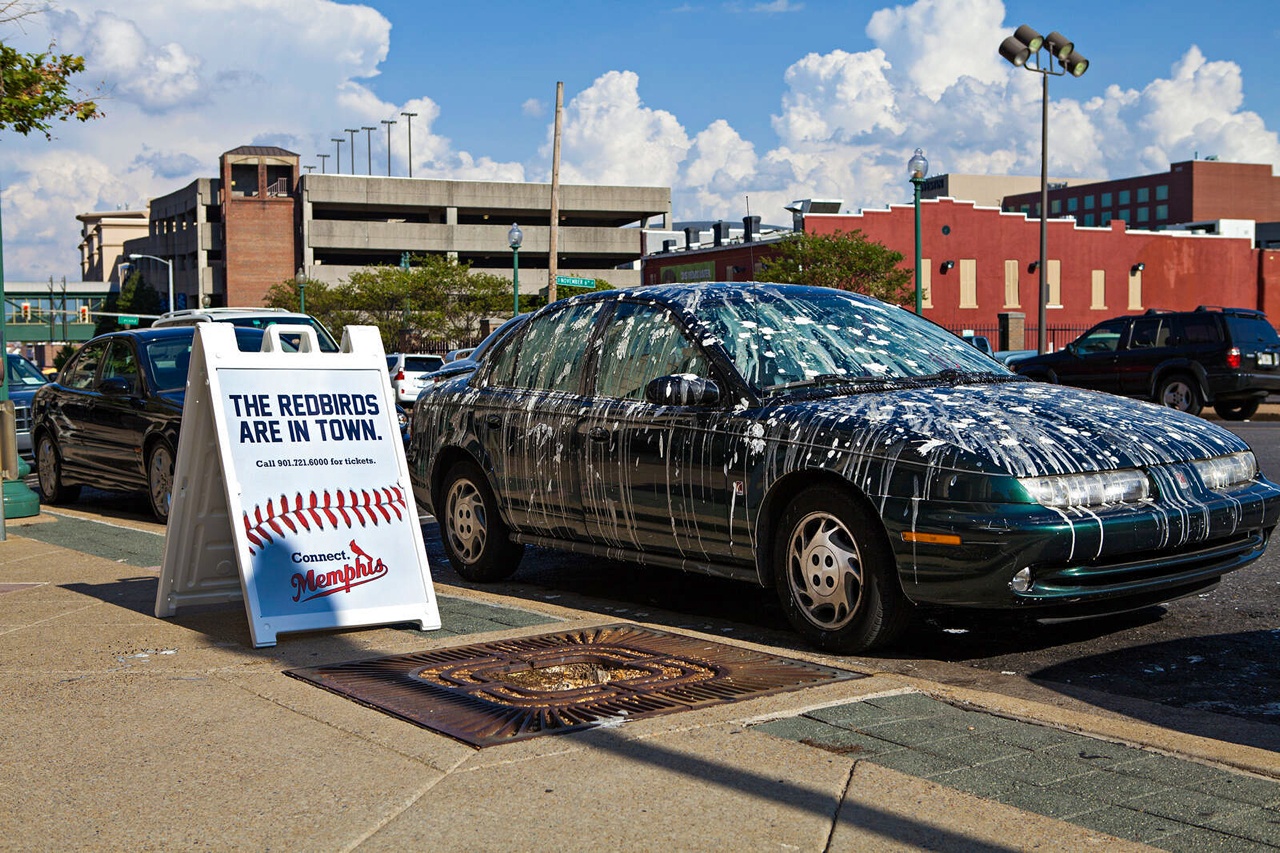
The car is having a terrible day. Parked on a Memphis sidewalk, it is covered in simulated bird droppings. Beside it stands a sign: “The Redbirds Are In Town.” A baseball team has arrived, apparently in considerable numbers. Archer, the agency behind the stunt, says the vehicle belonged to its head of production. There are easier ways to announce a season. Few make the announcement quite so difficult to walk past.
- Archer combines brand strategy, creative, media and digital development.
- Employees became its owners through an ESOP in 2022.
- Its recurring move: turn an abstract promise into something people can experience.
The car provides a useful introduction to a company whose service list could otherwise sound like every other advertising agency’s. Branding. Campaigns. Websites. Media. What matters is how those pieces are used. Here, a familiar baseball name became a physical joke, the street became the medium, and the audience supplied the punch line. The production was inseparable from the idea.
The people making the work bought the shop
Archer began as Ward Archer & Associates in 1952. In 1991 it acquired John Malmo Advertising and became Archer Malmo. The family sold the business to agency executives in 2001. Then, in June 2022, those owners transferred the entire company to its 140 employees through an Employee Stock Ownership Plan.
That sequence gives the independence claim some substance. An ESOP is a retirement arrangement through which employees earn company shares. Archer’s stated reason for the transaction was to preserve independence and share the rewards of ownership. It makes an intriguing match for a business whose main assets leave the office at the end of each working day.
“Durability is more important to us than growth and profitability.”Russ Williams, then CEO, speaking in 2014
The remark preceded employee ownership by eight years. It suggests continuity in management’s thinking, although ownership alone cannot establish whether a client gets better work. In 2023, the firm shortened its name to Archer. Rob VanGorden became CEO in June 2024; Sue Batterton followed as chief creative officer that December. The long-lived agency was changing both its sign and its leadership.
Sixty plants beat another slide deck
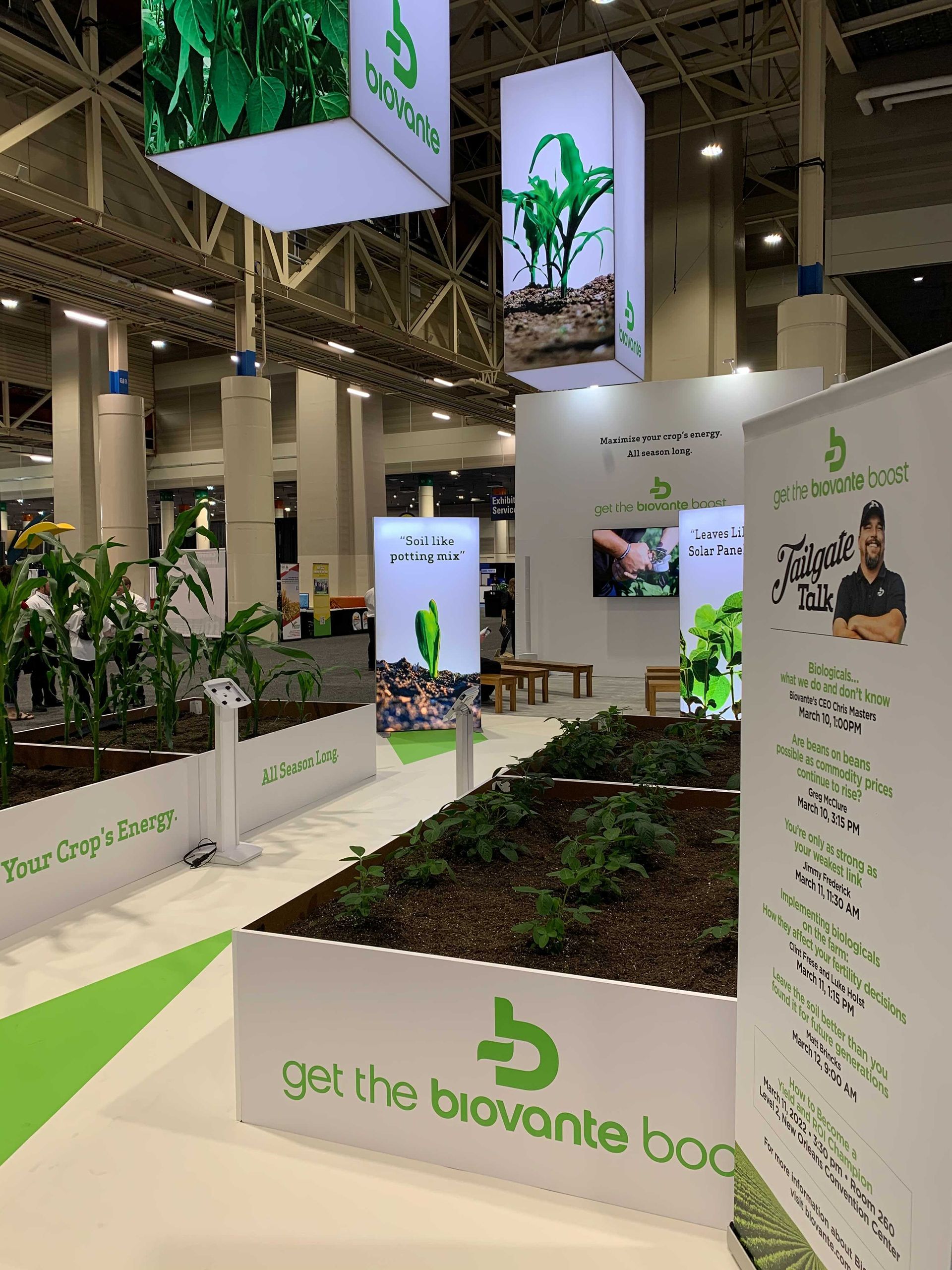
Consider Biovante, an agricultural business introducing itself at the Commodity Classic trade show. Biological crop products present a communication problem: an explanation can sound impressive while leaving the buyer unconvinced. Archer’s answer involved growing 60 corn and soybean plants itself, managing nutrients, light and timing, then transporting them to New Orleans by big rig.
Some corn stood more than six feet tall. Farmers could inspect the plants rather than imagine a field from a presentation. This was advertising with a horticultural deadline. The copyable lesson is precise: identify what your buyer needs to examine, then put it within reach. A demonstration still needs sound evidence behind it; a beautiful plant cannot, by itself, establish performance across farms and growing conditions.
This sort of work helps explain Archer’s breadth. Its customers span agriculture, retail, hospitality, pet health and healthcare. CNH Parts & Service needed to distinguish its machinery lubricants from a lookalike rival. Wind Creek needed to connect a collection of casino properties. Those assignments require different kinds of expertise, even when both begin with a question about what the customer understands.
Change the reason, change the response
For LA Fitness, the useful question concerned motivation. A mother might regard time at the gym as time taken from her family. The campaign reframed fitness as an investment in being a healthier, happier parent. Local mom influencers and a community activation carried the idea; babysitting, training and suitable classes gave it practical support.
Archer reports a 91% year-over-year increase in online memberships and a 13.5% rise in social engagement. Those are campaign case-study figures, rather than an independently isolated measure of advertising’s effect. Their value is in the connection they illustrate: the message drew on services the customer could actually use.
Smile Doctors faced a related problem. Orthodontic practices were making interchangeable service claims. Interviews, visits and social listening revealed an experience patients found unexpectedly enjoyable. Archer built a platform around that discovery. Its account reports 30,000 consultation requests while the business expanded from 30 locations to more than 200 over three years. Expansion and advertising happened together; the figures do not establish that one caused all of the other.
- 01Find the friction
- 02Make it tangible
- 03Connect the channels
- 04Measure response
Give the dog toy a speaking part
Virbac’s dental-chew campaign approached a technical product through a problem owners could smell. Archer created Mr. Squeakems, a talking dog toy, to complain about canine breath. The agency reports an 85% sales lift in two months. The creative move was to give veterinary science a familiar household grievance as its opening line. That is useful positioning advice: begin with the problem the buyer recognizes, then make room for the product explanation.

What a client is buying
Archer sells agency services: research and positioning, creative development and production, media planning and buying, public relations, and digital design and development. A client brings a business problem and commissions the work around it. The proposition is coordination: fewer gaps between the strategy, the advertisement and the experience after someone clicks.
Wind Creek illustrates that last part. Archer describes journey mapping that brought bookings, rewards and communications into a unified web ecosystem, including a Casinoverse gaming app connecting digital activity with property rewards. A memorable campaign would have limited usefulness if the booking experience remained confusing. Digital work extends the promise into the transaction.
Buyers can compare Archer with Memphis alternatives such as VML and Sullivan Branding, or hire specialists separately. Archer’s distinction combines employee ownership, broad capabilities and experience across quite different categories. That combination suits an organization with several connected marketing problems. A narrowly defined production task may call for a smaller specialist engagement. Either way, the useful brief specifies the audience, the obstacle, the deliverables and a measurable business outcome.
Back at the car, the appeal is refreshingly legible. A passerby understands the joke before reading a service description. The same discipline connects crops, gym memberships and orthodontics: give the audience a reason to care that survives contact with ordinary life. For anyone writing a marketing brief, that is a good place to begin.
Follow the work
Explore Archer’s website, the campaign portfolio, LinkedIn and Instagram. For a closer look: Biovante’s living exhibit, LA Fitness’s audience strategy and Wind Creek’s digital experience.