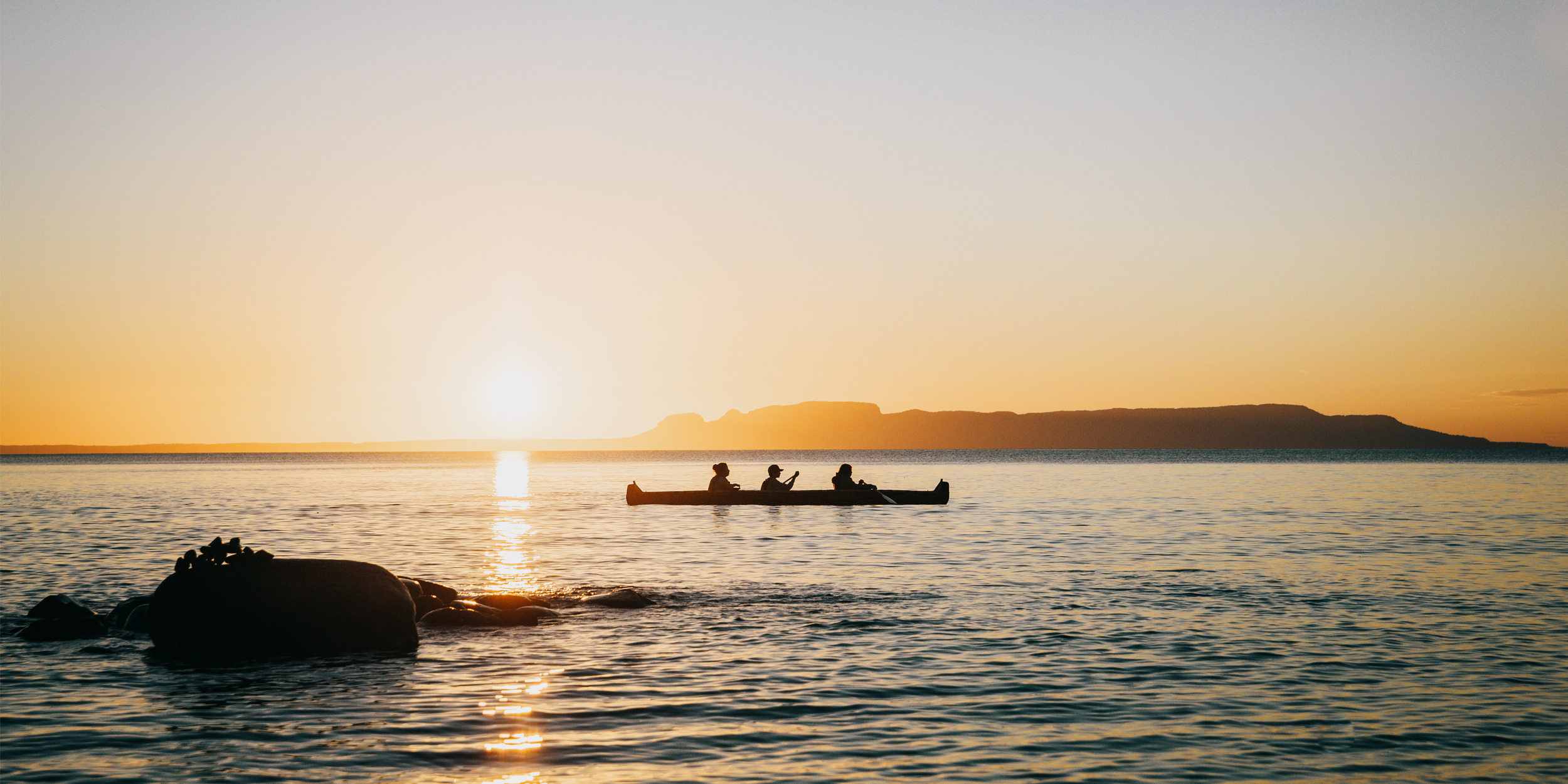
A canoe at sunset is easy to market. A province is not. Ontario is roughly one million square kilometres of cities, lakes, wineries, museums, hunting lodges, food festivals, ski hills and small operators who may never share a booking system, a budget or even a definition of their best customer. Destination Ontario's job is to make that sprawl feel like one coherent invitation - and then persuade somebody to spend money inside it.
The organization is Ontario's lead tourism marketer, a provincial agency active since 1999. It does not own Niagara Falls, run a hotel or clip a commission from every reservation. It manufactures attention, confidence and distribution. Travellers get ideas and planning help. Tourism businesses get leads they could not afford to generate alone. Regional organizations get research and a larger megaphone. The Ontario government gets an agency that can put reported visits and visitor spending beside the public dollars it uses.
The business model is public infrastructure, not venture software. Audited fiscal 2024-25 revenue was C$37.3 million: C$33.6 million from an Ontario grant, C$3.1 million from advertising sales, plus smaller amounts from travel-information sales and interest. Advertising and marketing was the largest expense at C$20.8 million. There is no funding round, founder mythology or private valuation to chase. The return is supposed to appear in Ontario's visitor economy - in rooms, meals, tickets and wages - while partner contributions stretch the campaign budget.
The product is the handoff
Look at Destination Ontario as a funnel with unusually public plumbing. Its marketing team buys and earns reach. Its consumer site turns a general urge - “maybe a fall weekend?” - into destinations, itineraries and links. Its research group studies high-value guests, tests creative and forecasts overseas return. Its international team trains travel agents, courts tour operators and helps assemble bookable Ontario products. Travel counsellors close the gap when a person wants advice from a human rather than another grid of cards.
That final handoff is the overlooked product. In fiscal 2024-25, the agency reported 18.4 million leads to tourism partners. It worked with 76 invested partners in buy-in programs, coordinated with more than 200 local and regional visitor information centres and trained 4,000 international travel agents. The individual inn or outfitter does not need its own office in Germany. It can plug into a province-level route to market.
C$10.2 million goes looking for empty rooms
The clean headline is that C$10.2 million in Ontario, Canadian and U.S. media spend was associated with 1.01 million incremental visits and C$328.1 million in estimated incremental spending. The more instructive move sat inside the calendar. Destination Ontario's fall and winter campaigns used C$2.1 million in media to encourage overnight trips during the shoulder seasons. They were credited with 424,200 total trips and C$63.7 million in tourism spending.
That is a capacity play disguised as lifestyle content. A summer lake hardly needs a pep talk. A country inn on a gray November Thursday does. Marketing where the system has empty rooms, idle tables and guides without guests creates more practical value than adding another car to a fully booked August weekend.
Goal vs. actual, 2024-25
Read the asterisk
The 2024-25 report says its research partner refined the measurement model to count multiple trips taken by an influenced traveller instead of assuming one trip per person. Destination Ontario explicitly says the higher performance was largely a methodological evolution, not a sudden burst of campaign power. The numbers are estimates from established survey methods, not receipts tied one-for-one to an ad impression.
That disclosure changes the reader's posture. The results still matter: the organization is attempting to connect media with economic behaviour, not celebrating views in isolation. But the best comparison is actual performance against targets under the stated method, not a breathless year-over-year chart that pretends the ruler stayed the same.
“The useful unit is not the impression. It is the traveller who arrives at an operator with enough intent to act.”YesPress analysis of Destination Ontario's model
What failed first
Destination Ontario's annual report is more interesting when it is unhappy. Social audience growth finished at 4.5 percent, above a 2 percent goal, but content advocacy reached only 6.4 percent against a 10 percent target. The agency cited three shifts: it halted posts on X because of platform changes, Facebook's organic reach declined and Instagram moved harder toward Reels and video.
Social advocacy miss
Distribution rules changed faster than the content plan. The response is to monitor the mix and adapt formats, not keep publishing into yesterday's feed.
Trip-planning miss
Travel services created 32,638 trips against a 37,500 goal amid fewer operating days, staffing pressure, weather, geopolitical events and changing preferences.
The planned travel-services fix is admirably unromantic: push resources toward higher-yield channels, expand roaming ambassadors and consider new visitor channels. In other words, change the service footprint when the customer changes their route. The organization also built U.S. pulse studies after political sentiment became a travel variable. When exchange rate emerged as the strongest driver of intent, a 2025 campaign displayed the favourable daily U.S.-to-Canadian conversion on billboards. Research did not stay in a slide deck; it changed the ad.
Make water a character, not a feature
For international audiences, Destination Ontario has to escape the generic wilderness problem. Lakes, trees and nice dinners are not proprietary. Its second National Geographic partnership, Water Crafters, found a more human frame: people whose work and rituals are shaped by freshwater, across art, culture, wellness, food and drink. The campaign ran in the U.K., Germany, Australia and France and reported 23.5 million impressions, 4.8 million video views, 147,500 clicks and an average page dwell time of three minutes and 11 seconds.
The playful version of this idea appeared earlier in Germany, where an Ontario promotion showed up in a high-end furniture retailer. Fatboy lampshades, outdoor pillows and hammocks carried Toronto and Ontario branding. It is a peculiar place to encounter a province, which is precisely why it had a chance to be remembered. The 2023-24 campaign reported 8.5 million contacts and an estimated 182 passenger bookings.
By 2026, the borrowed context was baseball. A multi-year Toronto Blue Jays agreement made Destination Ontario the presenting partner of Rogers Centre Ballpark Tours, linking a major Toronto attraction with prompts to explore farther. AccessNow, meanwhile, brought accessibility expertise and lived-experience connections into staff learning, inclusive content and visitor service. These partnerships do different jobs: one borrows passion; the other improves who can confidently participate.
What a smaller marketer can steal
First, sell the bundle before the item. Ontario's regions and operators become more legible when one campaign supplies a shared reason to travel, then lets partners prove the details. Second, aim spend at a constraint: empty shoulder-season inventory, an under-known region or a market where trade partners can actually book the product. Third, pre-test the creative. Destination Ontario compared two international concepts for appeal, uniqueness, clarity and relevance before developing one territory.
Fourth, create a handoff metric. A view is not a visit, but a click to an operator, a trip plan, a trained agent or a newly packaged itinerary is at least closer to commerce. Fifth, publish the miss and name the external shift. “Instagram changed” is not an excuse unless the next resource decision changes too. Finally, disclose when attribution math changes. Trust compounds when readers can see both the result and the ruler.
Where it fits
Destination Ontario sits between the national brand of Destination Canada and the regional or city organizations that know their own inventory. It also competes for attention with every other province, state, airline, booking platform and creator whispering “go here next.” Its advantage is not frictionless checkout. It is official reach plus a network: public funding, local facts, international trade relationships, a media desk, thousands of visual assets and human travel counsellors.
That model has obvious limits. Public attribution will always invite scrutiny. Partner quality varies. A province can inspire demand but cannot repair a sold-out train, an inaccessible venue or a weak operator experience with better copy. And the organization depends on collaboration among parties with different priorities. Remove the common measurement, reliable inventory or willingness to link out, and the growth loop becomes a mood board.
Still, Destination Ontario offers a useful answer to a hard marketing question: how do you sell something no single company owns? Build the shared story. Pool the expensive capabilities. Route attention as close as possible to a transaction. Count the result. Then put the asterisk where everyone can see it.