A theme park and a country inn would appear to have little to discuss. One can turn a queue into an engineering project. The other may consider a second breakfast sitting an ambitious expansion. Mark Jaronski has worked on the marketing of both. His career keeps returning to the same transaction: someone chooses to leave home, and somewhere else gets the chance to make a living by welcoming them.
There is a pleasing tension in that work. The customer wants escape. The person selling it needs a plan. A vacation is allowed to feel spontaneous, even when an elaborate arrangement of advertising, transport, accommodation and local knowledge has helped it happen. Jaronski’s working life has unfolded on the organized side of that bargain, where a good story must eventually persuade someone to book.
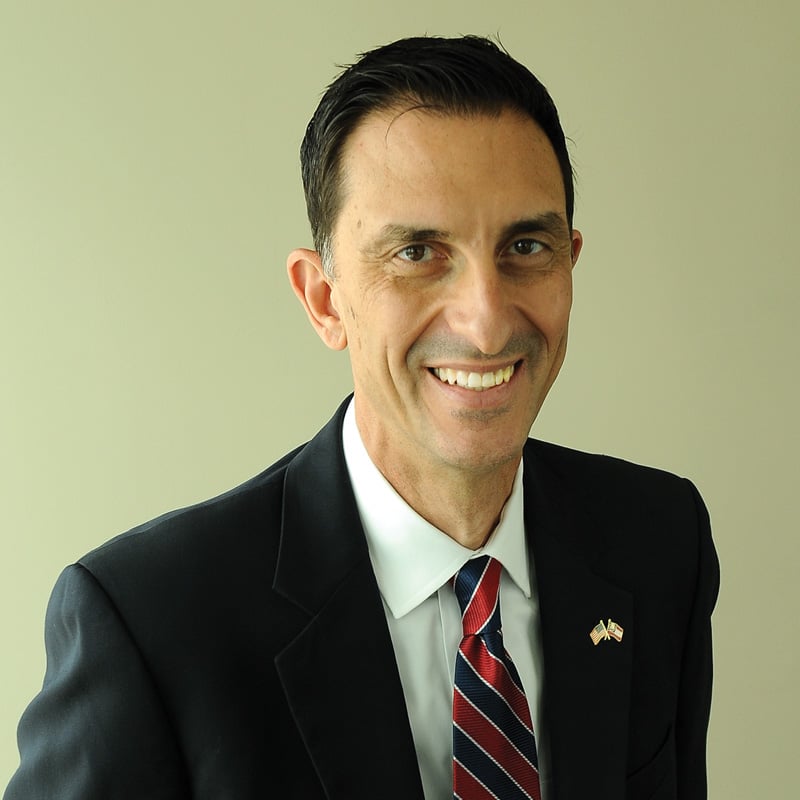
In August 2025, he became chief executive officer of Paradise Advertising & Marketing. The Florida agency brought in a leader whose earlier employers included The Walt Disney Company, Visit Orlando, Select Registry and the Georgia Department of Economic Development. The destinations changed in size and character. The relationship between an invitation and its economic consequences remained.
His new job also placed him on the other side of a familiar table. After leading a state tourism office, he would lead an agency serving travel clients. Public officials, destination organizations and hotel operators each have their own pressures. A career across those settings gives him direct experience of how differently the same request can sound: bring us visitors, and make the investment count.
From the Mouse to the innkeeper
Jaronski joined Disney in 1994. His responsibilities there included theme-park brand management, cruise-line public relations and external communications for Disney’s worldwide parks and resorts. Those jobs place communication close to the experience being sold. A ship, a park and a resort need more than a memorable description; travelers also need enough confidence in the proposition to commit time and money.
He belonged to the leadership team involved in establishing Disney Cruise Line during its first five years. That was a particular kind of assignment: explain a family cruising offer from a company already associated with family holidays on land. The familiar brand could help, but a different way of traveling still needed its own introduction. Recognition and understanding are related pleasures. They are seldom interchangeable.
One of the more revealing details in his own recollections is his gratitude for Disney’s leaders. In a public comment about Randy Garfield, he credited the people under whom he developed professionally. He also described his career as moving in several directions rather than following a simple upward path. It is a useful way to read a résumé that crosses corporate communications, destination promotion, association management and government.
At Visit Orlando, where he served as vice president of global communications, the subject widened from an individual brand to a destination. An entire place has many owners of the story. The hotel, the attraction and the restaurant all want their piece of the visitor’s attention. Destination marketing has to make those separate interests legible as a trip someone might actually take.
Then came a change of scale. In January 2016, Select Registry named him CEO of a collection of more than 320 independent bed-and-breakfasts, inns and boutique hotels across North America. The organization’s membership depended on an unannounced, 200-point inspection. Here, the marketing promise had a practical foundation: independent properties could share a quality standard while retaining their individual personalities.
By October that year, Cedar Manor Hotel & Restaurant in northwest England had joined as Select Registry’s first European property in roughly two decades. The expansion involved a partnership with InnConsultancy to develop the UK and Ireland. A small hotel could therefore participate in an international marketing proposition without becoming a chain hotel. The attraction was precisely its independence, made easier for a distant traveler to recognize.
That chapter makes the career more interesting than a sequence of larger job titles. Promoting a portfolio of inns asks a different question from promoting a Disney park. How do you make the reassurance collective while keeping the experience personal? A guest may want to discover somewhere singular. Few guests wish to discover, after arrival, that the charming photographs were doing all the work.
Georgia, considered as a portfolio
Georgia announced Jaronski’s appointment to lead Explore Georgia in June 2020. The job made him responsible for attracting travelers to a state with cities, small towns, coastline and mountains. It also brought him into a public organization whose decisions mattered to businesses far beyond its own offices. A tourism campaign can end at a booking page. Its consequences continue down the street.
His account of the “Ready. Set. Georgia.” campaign, launched in spring 2021, put traveler sentiment at the center of the strategy. The team concentrated initially on Metro Atlanta and the Southeast, then extended its attention into border-state markets. Florida offered a particular seasonal opportunity. The approach began with the people most likely to consider the trip, rather than treating every possible traveler as equally ready to buy.
In explaining Georgia’s variety, he compared its destinations to a balanced investment portfolio. Different experiences appeal to different interests at different times of year. That analogy carries a marketer’s discipline into the landscape: the coast, mountains and cities are assets whose usefulness changes with the customer’s circumstances. It is also a reminder that an appealing place can have several selling seasons.
His public presentations kept moving the conversation toward economic development. At the University of Georgia’s inaugural hospitality and tourism summit in 2022, he drew attention to the business impact that can disappear behind the pleasure of travel. The keynote’s title, “Tourism as Economic Development,” left little room for mistaking the subject. The beach photograph might get people through the door. The employment question belongs in the room.
“Because our industry is not a widget industry”Mark Jaronski / UGA hospitality summit, 2022
The following year, he connected tourism growth to the need for skilled hospitality workers and the university’s role in preparing them. This is the less photogenic part of the destination promise. More visitors create demands on the people serving them. A successful invitation has to be followed by an experience that works, and that requires training, careers and enough capable hands to deliver it.
His responsibilities expanded in 2023 when he became the department’s chief marketing officer. That remit extended beyond tourism to marketing and communications across the industries the department sought to attract and grow. By 2024, his work also included co-leading the Georgia Tourism Foundation board alongside the statewide tourism director. The job connected advertising, research, business recruitment and relationships across the state.
Count the visits. Then count what follows.
The numbers during his Georgia tenure give that business argument substance. In 2023, the state reported 171 million domestic and international visitors and $43.6 billion in visitor spending. Those are measures of a statewide visitor economy, involving countless businesses and workers. They describe the environment he helped market; they do not turn its collective output into one executive’s personal score.
For calendar year 2024, Georgia reported 174.2 million visitors, $45.2 billion in direct visitor spending and $82 billion in total economic impact. The last two figures answer different questions. Direct spending records purchases made by travelers. Total impact includes the wider economic effects of that activity. Adding them together would count part of the same story twice, which is an expensive way to improve a headline.
The 2024 results also included $5.1 billion in state and local tax revenue and 470,570 supported jobs. Those measures make the destination marketer’s constituency considerably larger than the people browsing holiday ideas. Tourism reaches businesses, employees and public finances. The visitor may remember dinner and the view. The community has reasons to remember the transaction as well.
Jaronski’s own explanation of the Georgia years emphasized changes in goals, strategies, investments, staffing, agencies and market priorities. In October 2025, after moving to Paradise, he wrote: “Change can’t happen without change.” The line is almost stubbornly plain. Its force comes from the list that precedes it. New results, in his telling, required altering how the organization operated.
The state’s figures have continued to advance. Results released in September 2026 put 2025 visitor spending at $46.2 billion and total economic impact at $84.1 billion. That reporting period includes months after Jaronski left state government. It belongs to Georgia’s continuing story, with its own leadership and industry participants. The relevant personal story is what he carried from that work into his next organization.
Paradise needs people behind the promise
His arrival at Paradise was a leadership transition within an existing business. Co-owner Barbara Karasek moved into the chief marketing officer role, while Rudy Webb remained president. Jaronski’s appointment placed him alongside people already responsible for the agency’s relationships and direction. Leading the next stage meant working with that accumulated knowledge, rather than treating the company as a blank page with an attractive name.
In his first published message as CEO, he emphasized listening to the team and to clients and partners. He described travel’s ability to connect friends, families and communities, while tying the agency’s work to client growth. There is a practical compatibility between those aims. The experience has to matter to the traveler if the marketing is going to matter to the destination.
A November 2025 message offered a more personal account of that connection. He wrote about colleagues becoming lifelong friends and travel creating time with family and friends. The business he leads depends on journeys, but his description gave those journeys a familiar human purpose. People leave their routines to spend time together. The itinerary provides the arrangements; companionship supplies much of the reason.
A 2026 assignment for Discover Crystal River gives the community side a concrete shape. Paradise was selected to create a digital experience for an Eco Compliant Partner Program. The work connected visitors with environmental stewardship, education and participating businesses. For a destination built around waterways and wildlife, what travelers do once they arrive is part of what the destination must consider when inviting them.
By September 2026, the agency had also appointed Wendy Kerr as chief operating officer, reporting to Jaronski. Her remit covered workflow, project operations and the systems and resources supporting growth. It is the backstage labor behind the visible campaign: assignments need owners, teams need workable processes, and ideas need a route to completion. Even a persuasive invitation has to survive a project schedule.
The shape of Jaronski’s career suggests why that combination holds his attention. He has worked where the experience is tightly designed, where independent properties share a standard, and where a state must coordinate many destinations. Each setting brings a different arrangement of people behind the promise. His present task gathers those lessons into an agency serving clients with their own communities to answer to.
A traveler can judge a holiday by a single afternoon. The people promoting it have to think about what comes before and after: the decision to go, the quality of the welcome, the businesses sustained by the visit. Jaronski has built a career across that longer chain. Getting away remains the pleasurable part. Making it worthwhile for the place receiving you is the work.