The useful thing about a marketing stunt is that it leaves nowhere for taste to hide. Years ago, at a music festival in Chapel Hill, Dave Marcello tried a tear-away flyer with a promise in large type: free kittens. The confession arrived below it: just kidding, free music. People responded. Marcello later remembered it as one of the best-converting experiments he ran for BoomboxFM, the music-discovery startup he co-founded. He also knew the joke had a ceiling. A flyer can charm a passerby. It cannot carry a company.
That distinction between a flash of attention and a repeatable system runs through Marcello's career. He has marketed big-brand sponsorships, bootstrapped products for independent musicians, built an enterprise sales arm, retrained teams to use paid acquisition, and given youth-sports software a name for the category it wanted to occupy. The settings keep changing. The question stays nearly the same: what turns a bright idea into behavior that repeats?
Today Marcello is chief marketing officer at PlayMetrics, the Durham-area software company that brings registration, schedules, payments, coaching, communication, and operations into one platform. It is software for the work that happens before the lights come on and after the last family drives away. Marcello's achievement has been to make that backstage labor feel like the main event.
The glamour acquired a timesheet
His route there began in the conspicuous part of sports. After college, Marcello joined a lifestyle marketing agency that managed sponsorships for large brands. His own career record describes client accounts producing more than $4 million in agency revenue and teams spread across disciplines. There were major events, corporate logos, and long days. By about 29, he had decided that working 16 hours a day for a week around the Super Bowl had lost some of its perfume.
He began helping small companies on the side. Smaller budgets made the assignments less specialized and more educational. A client might need a website, customer acquisition, guerrilla marketing, research, brand language, or all of them before lunch. Marcello has said that this stretch changed him from a general marketer into what he calls a creative marketer. The adjective does not mean waiting for a muse. It means making judgment useful.
“Marketing is a mixture of art and science.”Dave Marcello
He is unusually willing to leave the argument unresolved. Measurement matters. So does the choice to depart from it. In one split test he discussed, the result was effectively even. His team picked the version that finished slightly lower because its idea fit the promotions they planned to run. Data provided evidence, not absolution. A dashboard can say what happened. It cannot accept responsibility for what a company ought to say next.
A stranger, a spare room, and 5,500 signups
Marcello met musician and product builder Mike Hoy in an online forum. Hoy had a small music project. Marcello sent ideas; they tried a few; early traction appeared. The project became BoomboxFM, an email service for discovering independent music. Its premise was delightfully unfashionable. While streaming platforms competed to own every waking second, BoomboxFM sent listeners a box of downloadable tracks in their inbox.
One of the first 300 people to sign up happened to be an editor at Lifehacker. A front-page post followed. In one day, 5,500 new users arrived. Marcello felt the thrill and the alarm simultaneously. A crowd had appeared, but the founders still did not know whether they had a business or a reliable way to acquire customers. Applause is wonderfully loud and financially noncommittal.
Marcello and Hoy kept experimenting. They used referrals, paid ads, email, publicity, interviews, and, yes, deceitful kittens. Google AdWords was the last channel Marcello tried because he assumed it would be too expensive. It became their most productive. At the company's height, he said, BoomboxFM acquired a user for 32 cents. His portfolio records more than 100,000 users in eight months and a six-figure seed round.
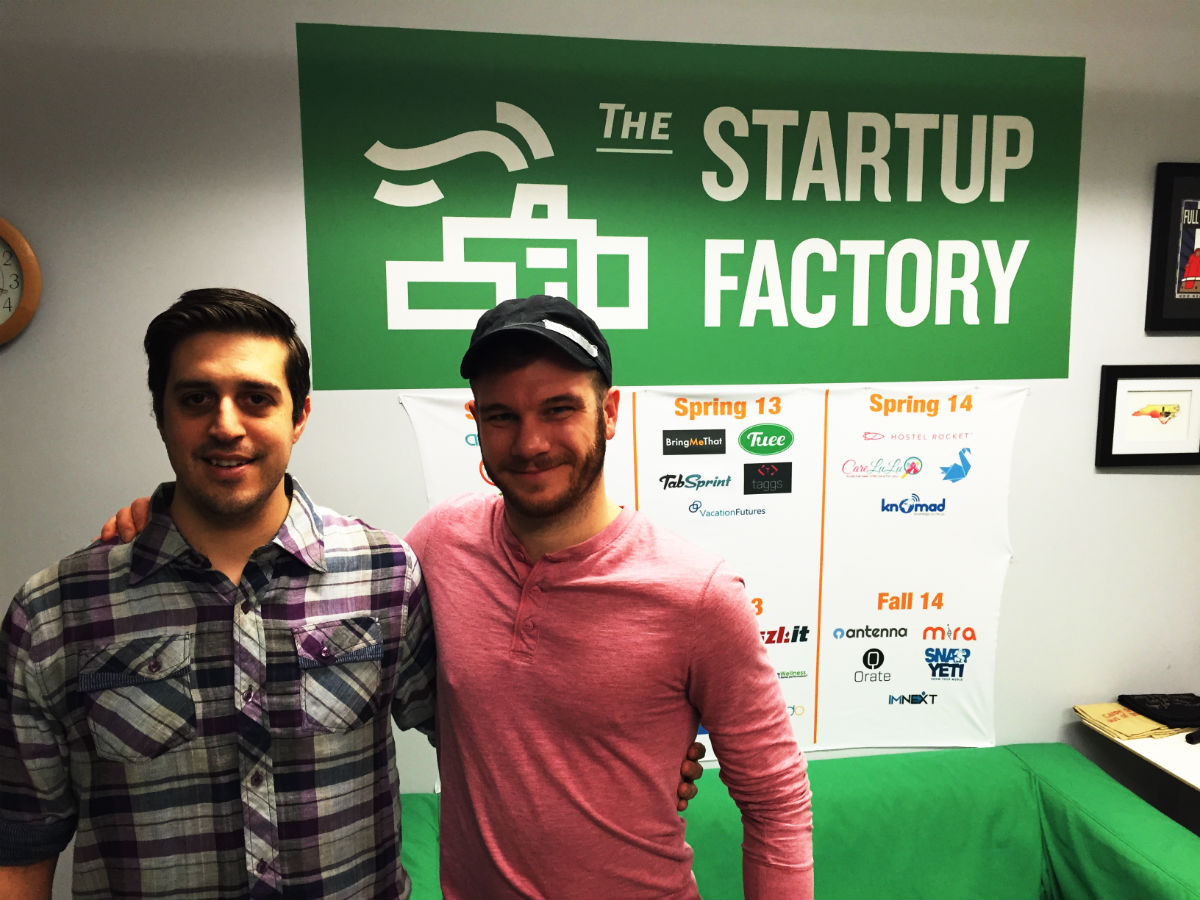
The partnership also required a more personal bet. After meeting Hoy only once in person, Marcello moved from New York to Durham for The Startup Factory accelerator. Hoy's family put him up in their home. For three months, Marcello filled gaps in his marketing toolkit while the founders worked on the company. It is a fine startup tableau: two people, imperfect information, a borrowed room, and a growth target.
BoomboxFM did not become the lasting business they hoped for, but it sharpened Marcello's approach. Testing widely was not indecision; it was a method of elimination. He compared the search to drilling for oil in 30 places. Most holes were supposed to be dry. The point was to stop admiring the shovel and locate the reserve.
Learning to sell the listening
The music thread continued. Marcello joined Audiokite Research, which sold fan feedback and data analysis to artists and labels. Its founder had built the product; Marcello took on growth, content, partnerships, and the commercial language around it. The company initially served musicians, then developed an enterprise offer for larger clients. Projects worth roughly $15,000 helped expose a larger opportunity. A partnership with ReverbNation led to an acquisition.
At ReverbNation, Marcello encountered a mature product with a young marketing function. The company had grown from a technical proposition, and its language leaned toward features. He changed ads and messaging, introduced more disciplined acquisition experiments, and used traffic to run split tests quickly. He also brought musicians into the office, asked them to complete tasks, and watched where they became confused. Analytics explained how visitors arrived. A moving mouse revealed what happened to their confidence.
There is a pleasing consistency in this work. BoomboxFM listened for a music fan's taste. Audiokite turned listening into a service. ReverbNation observed artists using a product. In each case, Marcello's work sat between what people did and what a company said about it.
The phrase that made the room nervous
PlayMetrics began as an experiment inside the ReverbNation orbit. The earliest product focused on performance testing for youth club soccer. Its builders soon noticed a wider and less photogenic problem: clubs needed to behave like businesses, but their daily work was scattered across tools. Scheduling lived here, communication there, practice plans somewhere else, and payments in the place everyone hoped was accurate.
Marcello spent months on research and messaging. The language he reached for was “Club Operating System.” It made colleagues uneasy. Operating system sounded like something sold to technologists, not soccer directors. Yet the unease was evidence that the phrase did real work. It named a larger idea than team management or registration software. It described the connective tissue.
The first public push paired a trade-show debut with paid search. In the campaign's opening two weeks, PlayMetrics received 45 demo requests. The number was modest beside a consumer signup spike and much more meaningful. A demo request from a club operator carried intent, context, and a calendar full of problems.
BoomboxFM tests an email-first path for independent music discovery and enters a Durham accelerator.
Audiokite is acquired by ReverbNation, where Marcello takes on progressively larger marketing roles.
Marcello begins serving as PlayMetrics CMO and builds the brand around a unified Club Operating System.
PlayMetrics combines with Stack Sports, acquires SportsEngine assets, and focuses the portfolio on youth-sports operations.
Over time, the category caught up with the phrase. PlayMetrics expanded beyond its early soccer focus. In 2025 it merged with Stack Sports in a deal backed by Genstar Capital. In May 2026, it acquired substantially all of SportsEngine's assets, adding products for clubs, leagues, tournaments, studios, video, and volleyball competition management. That August, the company announced several divestitures to concentrate the combined portfolio around one connected operations platform.
Mergers supply scale and complexity in equal measure. The marketing problem does not disappear when a company grows; it acquires more nouns. Marcello's old instinct remains relevant: resist the pile of features, find the idea that can hold them together, and keep checking whether actual people recognize their work in the description.
The operator becomes the protagonist
Marcello's recent writing shifts the emphasis from software to the person using it. He argues that running a youth-sports organization is a craft, requiring judgment, discipline, taste, and attention to details that families may never see. The platform's job, in his phrasing, is to amplify good operators without pretending to replace their judgment.
It is a revealing ambition for someone who has spent years measuring acquisition. The essential variable is not a click, a campaign, or even the software. It is the club leader deciding how to retain staff, handle budgets, communicate with parents, and keep an organization moving when the schedule behaves like weather.
“The platform exists to amplify good ones, not replace the judgment it takes to be one.”Dave Marcello on youth-sports operators
His public persona still enjoys a wink. Marcello calls himself a hip-hop head, a terrible golfer, and a worse surfer. An earlier side project was a WordPress plugin that interrupted writers at the publish button to ask whether their post was actually good enough. The humor is not decoration. It is another form of pressure applied at the useful moment.
The free-kittens flyer and the Club Operating System sound like opposite ends of marketing. One is a gag on a lamppost; the other is category language for an expanding software company. They share a discipline. Each asks for attention in words the audience can grasp. Then reality gets a vote.
Marcello's career has accumulated exits, titles, and larger canvases. Its more interesting measure is the refinement of his subject. First he learned to attract an audience. Then to study it. Then to organize a company around what that audience was truly trying to do. The scoreboard was never only the signup count. It was whether the idea could keep working after everyone had torn off the last tab.