Before a child can take a corner kick, somebody has to collect a payment, check a roster, and tell twelve families which field to find. Youth sports has a second game running underneath the visible one. Its players are administrators, volunteer coaches, and parents. Its equipment is the registration form. Stack Sports built a business around that less photogenic contest.
Founded as Blue Star Sports in 2016, it assembled businesses spanning registration, recruiting, camps, race timing, and media. In 2025, it combined with PlayMetrics. During 2026, the combined business bought more sports software while selling activities around the edges. Getting bigger now involves choosing what to leave behind.
- Registration, payments, rosters, and messages are the core work.
- Stack and PlayMetrics combined in 2025; Genstar is majority owner.
- In 2026, the business bought SportsEngine assets and sold several non-core operations.
The volunteer is the customer
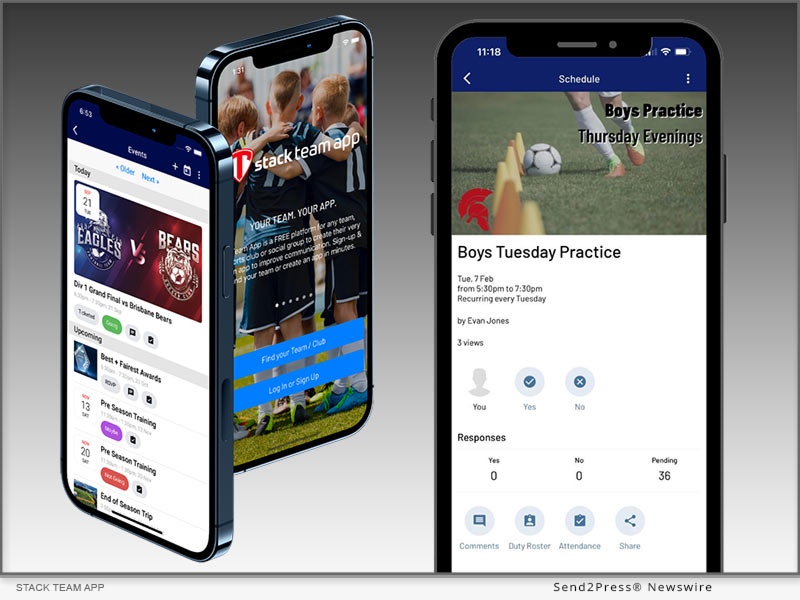
You encounter Stack through the job you need done. Sports Connect supplies websites, registration, payments, reporting, and team management. Stack Team App handles schedules, messages, member access, and attendance. PlayMetrics brings financial, operational, coaching, and communication tools together for clubs, leagues, tournaments, and governing bodies. The buyer might run a state association; the person tapping the screen might be a parent outside practice.
The buyer needs dependable membership information. The coach needs Saturday’s attendance. Software must serve both without making the volunteer become an IT department.
The Delaware Youth Soccer Association’s 2023 Stack Team App partnership made the proposition concrete: affiliated clubs gained communication, scheduling, attendance, availability, and live-score tools. This was distribution through a governing body, reaching the people doing the local work. Stack’s expertise lies in those nested relationships, where national rules meet a decidedly local game.
A shopping list becomes a company
Founder Robert “Rob” Wechsler came from payments, having co-founded Century Payments and CPA Inc. That background helps explain why moving money sits so close to the center of this sports company. Registration is both an administrative event and a transaction. Solve one, and you are standing beside the other.
By May 2018, Blue Star had completed 25 acquisitions and adopted the Stack Sports name, borrowed from the STACK media business it had purchased the previous year. The rebrand announced an ambition to turn separate businesses into a coordinated platform.
There was real money behind the assembly. In August 2019, Stack paid $45 million for Blue Sombrero and Affinity Sports, according to DICK’S Sporting Goods’ regulatory filing. Sports Connect launched that November on the acquired products’ foundations. Here was an acquisition with a visible operational destination: existing registration and association technology became the base of a named offering.
+ Affinity SportsSports Connect
Launched November 2019
Follow the checkout
The business model has several doors. Software licensing and service arrangements support organizational products. Payment processing generates fees as registrations move through the system. Stack Team App takes another route: its core service is free, funded primarily by advertising, with optional charges for ad removal and payment transactions.
For a club, the useful cost question is therefore bigger than the subscription. It includes processing, transaction charges, optional services, and who absorbs each charge. Team App’s official support says there are no mandatory setup or usage fees for its core platform. Its store transactions and advertising controls can cost extra.
A published Sports Connect pricing FAQ describes a $3 service fee per transaction for a particular post-acquisition arrangement, including recurring installments and offline registrations. Treat that as a specific published arrangement, rather than a universal current quote. count checkouts and installments before estimating a season’s software bill.
Stack’s homepage reports more than $1 billion in annual payment volume. That is money processed, not company revenue. The distinction matters: a platform can handle substantial registration spending while earning only the fees associated with those transactions.
Annual payments processed, as reported by Stack.
Transaction volume ≠ company revenue.
The bet changed in 2025
The June 2025 combination put PlayMetrics CEO Michael Doernberg in charge of the combined organization. Stack CEO Jeff Young moved to a board-advisory role, and Genstar Capital became the majority owner. The announcement described customers seeking a cohesive platform for daily operations.
What followed gives the rationale teeth. In December 2025, PlayMetrics sold Student Sports, the business behind Elite 11 and Area Code Baseball. Its stated purpose was to concentrate on the youth sports operations platform. A celebrated athlete-development property could still sit outside the work management wanted to prioritize.
By August 2026, announced divestitures also included Stack Athlete by CaptainU, RaceWire, GetMeRegistered, TeamInn, camps, and regional road-race timing businesses. Student Sports and Steva had already been sold. Separately, Stack said it paused uniform operations after the 2025 season. These are documented changes of scope; calling them evidence that every departing business failed would go further than the record supports.
Doernberg described the review as deciding where the most value is for customers.
The consequence is useful for anyone reading an old Stack product list: familiar brands and services may now belong elsewhere. A portfolio diagram can outlive the portfolio it describes.
Buy the work. Sell the distractions.
The strategy still allows large purchases. On May 1, 2026, PlayMetrics completed its acquisition of substantially all SportsEngine assets from Versant, including software and payments products. SportsEngine, long an alternative in this market, became part of the combined business. The dividing line is the type of work being acquired, rather than an aversion to acquisitions.
Outside alternatives include TeamSnap ONE and LeagueApps, both of which offer registration, payments, scheduling, and communication. So a checklist of features will only tell a buyer so much. Stack’s distinguishing case is its history serving governing bodies and local organizations, now joined to PlayMetrics and SportsEngine. Buyers still have to examine the particular product they will actually use.
The lesson worth copying is a purchasing habit: start with one complete journey. Register a family, take its payment, validate the roster, change the schedule, and notify the coach. Ask a volunteer to perform it. If separate systems still require repeated entry or manual reconciliation, the promised connection has not reached the person who needs it.
A broad platform is most useful when an organization has connected operational needs and enough administrative complexity to justify a transition. A small team needing only a calendar and messages may prefer a lighter tool. Software also cannot supply missing field space or make participation affordable by itself. Stack’s most credible promise begins with the work it can actually remove: fewer administrative obstacles between a willing player and the game.
Stack Sports · Sports Connect · PlayMetrics · Company news