A car can travel hundreds of miles and still leave someone stranded. The customer gets the keys. The driver gets the problem of reaching the next job. For Zarif Haque, who founded Draiver in 2013, that awkward interval was familiar territory. He had run automotive businesses himself. Moving vehicles meant coordinating people, and coordinating people meant a remarkable amount of work that never appeared in the photograph of the car.
Years later, with three children playing youth sports, he encountered another version of the same irritation. Finding someone suitable to coach them was harder than it ought to have been. A family wanted a lesson. An athlete had a skill to teach. Between them lay scheduling, trust, payment and paperwork. The ball, at least, was ready.
Haque now leads The Good Game, the Lawrence, Kansas, company he founded in 2023. His move from vehicle delivery to sports looks like a change of subject. Follow the administrative trail and a connection appears: he keeps building businesses around the arrangements people must make before the thing they actually want can happen.
The apprenticeship was on the lot
His earlier work included an independent agency role at Hertz, general management at The Selection Corp, used car management at Briggs Auto Group and training and productivity work at Lewis Toyota. Sales, hiring and operations were part of his working vocabulary long before a software platform became his product. He also studied at the University of Kansas, listing attendance from 1999 to 2002.
That background helps explain the starting point. Haque’s problem was immediate and practical: his own automotive operations needed vehicles moved from one place to another. Every move required drivers to be organized. Repeat the task across a day’s business and a simple request became a scheduling exercise. The inconvenience belonged to the operator before it became an opportunity for the founder.
There is a useful humility built into that origin. A dealership can have desirable stock, willing customers and an agreeable price, yet still need somebody to fetch a car. The commercial promise is made at the desk; its fulfillment may depend on a person standing in another parking lot. Haque chose to work on that distance between the promise and the delivery.
Three years between founding and launch
Draiver’s founding date was 2013; its launch followed in 2016. Kevin Burke was a fellow founder. By January 2020, the business reported $2.625 million raised and 19 employees. Its investors included Tim Barton and Brian McClendon, bringing connections to freight logistics and digital mapping into the company’s orbit.
The dates are worth pausing over. Software businesses are often narrated as sudden discoveries, preferably with a dramatic weekend somewhere near the beginning. Here, the interval between formation and launch occupies three years. Getting a vehicle delivered involves software, labor and responsibility for an expensive asset. A good interface cannot make the other two disappear.
During the next stage, Draiver paired logistics software with a marketplace of independent drivers. Customers could get vehicles moved while the platform handled the information surrounding the movement. The physical work remained stubbornly physical. Someone still needed to collect the vehicle, drive it and complete the handover. Technology’s assignment was to make those steps fit together.
By June 2023, the company said it was moving an average of 6,000 vehicles a day. Its services had extended into Canada, Mexico and Brazil, with software serving additional international markets. Those were company-reported figures at that moment, a measure of how far a founder’s own operational irritation had traveled.
His advice to other founders also emphasized hiring and service. He described support for both clients and independent contractor drivers as a foundation of Draiver’s business. That pairing is significant in a marketplace: the person buying the movement and the person performing it each need a reason to return. Haque treated the driver’s experience as part of the operating model, alongside the product the customer purchased.
A foreign market can be an education
Mexico gave Haque more than another destination. Working with used car business Kavak exposed him to operations and local challenges that changed how he saw the trade he already knew. An established industry can teach an operator its habits so thoroughly that those habits begin to look inevitable. Another market offers the useful inconvenience of proving otherwise.
His public advice on international expansion was practical: work with established partners, hire people who understand the local market, and adapt the service to local needs. Draiver hired country general managers in Mexico and Brazil. The underlying problem could cross borders; local knowledge still had to make the crossing worthwhile.
This is a revealing combination in a founder. Haque wanted a repeatable system, while acknowledging that repetition required adjustment. Penske and Budget were among the industry relationships he pointed to when explaining expansion. Distribution and credibility came through people and institutions as well as through the software. A platform, inconveniently for anyone hoping otherwise, still has to make friends.
The Kavak relationship eventually produced a change in leadership. In December 2023, Federico Ranero announced that he was becoming Draiver’s CEO and thanked Haque for continuing as chairman. By May 2024, Haque was publicly identified as executive chairman. The operator who had started with his own delivery problem had moved out of the chief executive’s seat.
The customer is carrying a sports bag
The next business began at home. His children’s sports participation brought him into a market where finding and booking expertise felt fragmented. The Good Game connected families with sports experts, including college athletes and former players. A parent could look for a suitable service; someone with a skill could offer it.
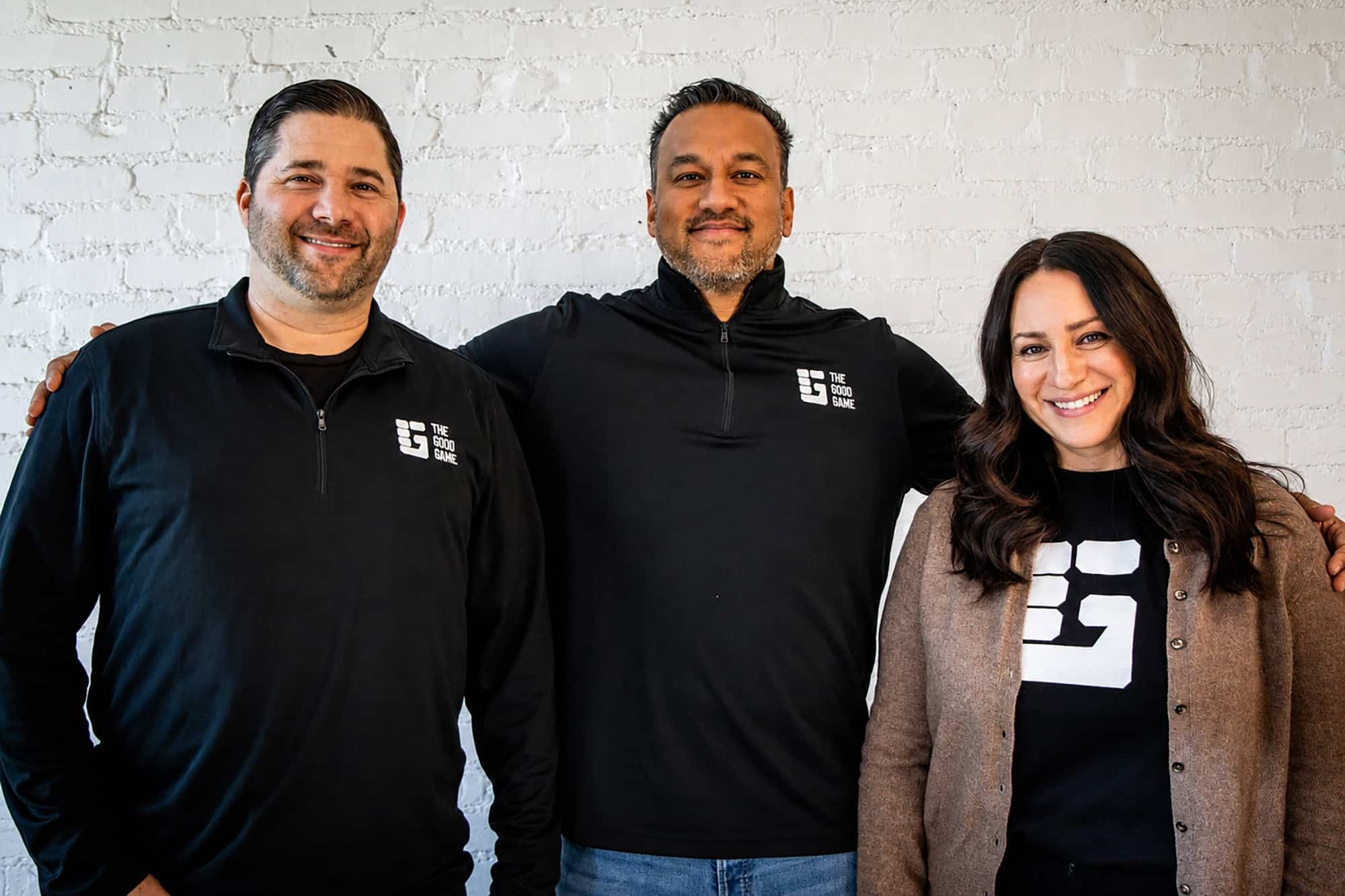
There is an appealing closeness to this model. The athlete a child watches from the stands may also be someone who can teach a lesson. For the family, admiration becomes access to instruction. For the athlete, expertise becomes paid work. Haque’s early emphasis was on employment opportunities built around skills, with the platform organizing the transaction.
“The real customer is the buyer, the parent.”
Zarif Haque, January 2026
That sentence locates the product’s center of gravity. The parent has to reconcile a child’s interest with a calendar, a location and a booking process. Athletic prestige may attract attention. An available session at a workable time gets booked. Haque’s stated priority was putting those choices together in one app.
The comparison with his previous business is useful precisely because the customers are different. A fleet operator has vehicles to coordinate; a parent has a household’s schedule. Each needs confidence that an arrangement will hold. Neither benefits much from being sent elsewhere to finish the paperwork after finding the service they wanted.
A passport for staying in the game
The Good Game’s Clear2Join passport extends the idea beyond finding a coach. It gives a person a reusable registration and participation profile, storing required forms, waivers and documentation. The intended benefit is straightforward: a new event should not require a family to reconstruct the same administrative identity from scratch.
Two businesses, a shared sequence. An editorial comparison of Haque’s vehicle logistics and sports marketplace work.
The company’s wider design treats the same individual as someone who might attend an event, join a clinic, work a session or support a program. Organizations encounter these activities as separate tasks. A person experiences them as parts of one life. Haque’s business puts the reusable profile at that junction.
It is a more expansive ambition than a directory of trainers. A directory helps answer who is available. A shared registration system tries to make the next interaction easier too. Its usefulness grows when another organization accepts what the person has already completed. The ambition depends on acceptance across the sports world, one relationship at a time.
The home crowd becomes a proving ground
For Haque, Kansas provided an especially personal early partner. A June 2026 announcement named The Good Game the exclusive lessons, camps and clinics app for Kansas Athletics. He described himself as a lifelong Jayhawk fan. The university he had attended was now a customer and collaborator.
The announcement described an already completed Bill Self Holiday Camp and earlier events involving Kansas men’s basketball and baseball. These gave the proposition a concrete setting: a family arriving for a camp, a student athlete meeting younger players, an organizer handling the work around them. The promise could be tested in the ordinary business of running an event.
August brought a partnership with the Kansas State High School Activities Association. Its network included 348 senior high schools and 408 middle and junior high schools. The first phase included verified background checks for registered athletic officials. It was a specific operational use, with camps, clinics, lessons and staffing part of the wider partnership.
The distinction matters to the story of the founder. Partnerships create places where his system can be used; participants still have to use it. The work ahead consists of many individual registrations and bookings, each mundane enough to escape attention when it goes well. That is familiar ground for someone whose first platform dealt with getting cars to the right place.
Haque can bring some levity to this administrative territory. In a 2023 conversation, he admitted that “speaking slowly is not one of my virtues.” His subjects may be forms and logistics, but his delivery need not share their reputation. From the car lot to the sideline, he has kept returning to the small arrangements that consume people’s days. The reward he is pursuing is a pleasantly ordinary moment: the arrangements are finished, and everybody can get on with it.