Daniel Cowen was sleeping on an air mattress when a rather promising career opportunity presented itself. His friend Maxwell Bogue had been working on a device that pushed plastic through a heated tip, allowing a person to draw an object into existence. Cowen had already left corporate law and tried software entrepreneurship. Here was something he could hold. His verdict was brisk: “This is the next Crayola.” A guest arriving with that level of enthusiasm is probably worth the inconvenience of an inflatable bed.
The pen became 3Doodler. Cowen helped bring it to market alongside Bogue and Peter Dilworth, then took on the work of building a company around it. The familiar version of this story is about an invention and a crowdfunding campaign. Cowen’s part becomes more interesting once the applause subsides. A creative tool needs people to understand it, try it, keep using it, and find a reason to buy the next box of material. Those are questions a launch video can only begin to answer.
A solicitor with an exit plan
Before the plastic, there were transactions. Cowen graduated from Pembroke College, Oxford, in 2003 with a BA in Oriental Studies. He trained at Slaughter and May, moved to Hong Kong with the firm in 2007, and subsequently joined Latham & Watkins in 2010. His legal work included corporate transactions and cross-border project finance. These were occupations in which the documents mattered a great deal, and the finished object generally belonged to someone else.
His first ventures had a different relationship with paperwork. With Davin Sufer, he co-founded Last Night Never Happened, an iPhone app designed to remove embarrassing social posts. Then came Echo Labs and Echoer, a location-based social app. The progression has a pleasing comic rhythm: first help people erase what they said, then help them discover what everybody nearby was saying. Both ideas dealt with the awkward distance between a person and the information surrounding them.
The conversation before the object
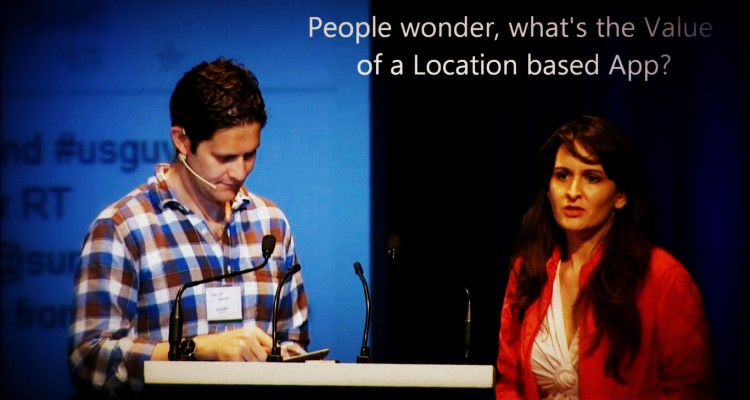
Echoer launched in Canada in February 2012. Its proposition was local and immediate: see thoughts, discoveries, and events around you while they were still relevant. The app had won the Google People’s Choice Award at LeWeb in 2011. Cowen was learning to explain an unfamiliar product in terms of a familiar irritation. Old recommendations were stale; nearby conversations were hard to find. Here was an interface intended to make those conversations visible.
The software years also offer a small, useful portrait of his tastes. Asked about favourite apps in 2012, he praised a predictive keyboard for saving time, a synchronised sticky-note application for keeping work accessible, and a Twitter client for using colour to make information easier to scan. These were practical preferences. Beneath the novelty of a new application, he was interested in whether a design helped somebody do something. That concern would travel rather well from a phone screen to a pen.
A printer makes a mistake
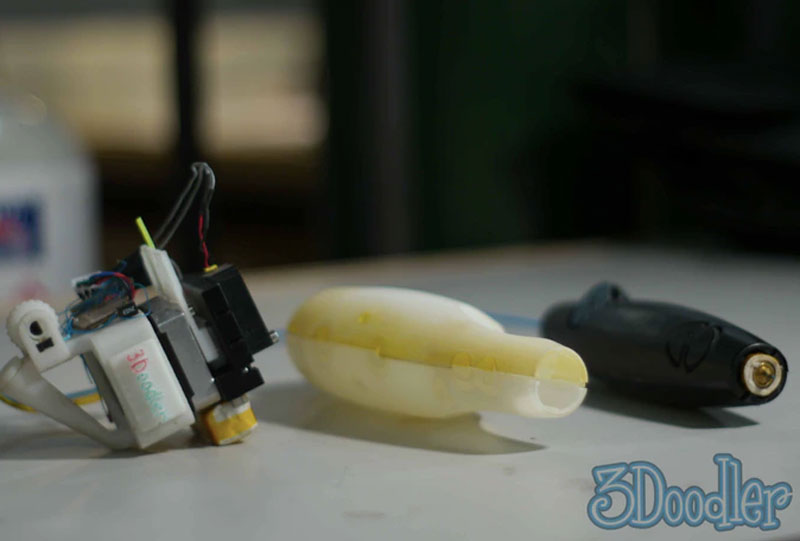
The original 3Doodler idea belonged to a particular frustration. At the Artisan’s Asylum makerspace in Somerville, Massachusetts, Bogue and Dilworth had a 3D print fail after a long run. They wondered whether they could remove the print head and fill the missing part by hand. An early prototype acquired the affectionate name “teacup.” It was ungainly, but the possibility was visible: a machine component could become a drawing instrument.
Cowen’s contribution was helping that possibility find an audience. He and Bogue had met years earlier in Hong Kong. By the time the prototype needed a launch, Cowen had experience trying to turn a technical proposition into something strangers would understand. The roles matter. The pen came from engineering work by Bogue and Dilworth; the business also required somebody to organise the invitation. Cowen had an appetite for that second problem, and a memorable way of describing its potential.
Thirty thousand dollars, then the inbox
The 2013 Kickstarter campaign asked for $30,000. It brought in roughly $2.34 million, with more than 26,000 backers. A target that had seemed adequate suddenly looked like a small footnote to the result. By September, Cowen was demonstrating the device at Berlin’s IFA electronics show, with the company working through the practical business of turning those early orders into physical pens.
During the first burst of attention, his language was more measured than the funding graph. “The priority is on delivering,” he said. Production partners had been selected with expansion in mind, and later backers were offered later delivery batches. The detail is revealing. Rapid demand can flatter a founder while making a factory schedule distinctly less flattering. Cowen was already talking about dates, quantities, and promises. The opportunity arrived attached to an obligation, with thousands of names in the queue.
Figures rounded; this shows campaign pledges, not company revenue.
The customer gets a vote
The product evolved. Announced at CES in January 2015, 3Doodler 2.0 weighed 50 grams and was less than a quarter the size of its predecessor. The company had also worked with the MoMA Design Store on a window display in 2014. A pen that needed explaining could now be shown through the objects people made with it. The work did some of the talking.
Cowen helped create that conversation personally. Artist Rachel Goldsmith posted her first pen-made piece on Twitter; he contacted her about making work for the MoMA store window. Goldsmith and fellow artist Louis DeRosa later worked with the founders on materials, product testing, and demonstrations. This was a particularly sensible response to a new medium. The people using it had knowledge the people selling it needed. An artist finding an unexpected texture or technique could make the product more intelligible than another page of specifications.
There was a professional branch, too. The 2016 3Doodler PRO offered adjustable settings and materials intended for design work. Cowen described interest from architects who wanted to make a gesture in the air and have a structure remain behind. A sketch ordinarily suggests a thing. Here, the sketch could become part of the thing itself. The appeal was easy to grasp, even if acquiring a steady hand still required practice.
“The priority is on delivering.”
Daniel Cowen, February 2013
A classroom has different questions
Children presented another design brief. When 3Doodler Start arrived in 2016, it came with a project book, and optional DoodleBlocks helped young users form pieces in moulds. Cowen talked about reducing the distance between receiving the pen and making something satisfying. A blank page can intimidate an adult; a blank third dimension is asking quite a lot of a child. The examples and forms gave the first attempt somewhere to begin.
Teachers were already discovering their own uses. A Wisconsin classroom recreated its hometown. A physics teacher used a model to explore circuitry. In 2019, Cowen described a deliberate move toward education, where demand had emerged before the company had fully designed a buying experience for schools. The hardware alone would not complete that job. Teachers needed lesson plans, purchasing arrangements, and materials that fitted a classroom rather than a birthday present.
The company responded with learning packs and teacher kits. Its Office Depot partnership also placed a pen within the retailer’s Juku education range in 2019. There was a commercial calendar to learn: education purchases clustered in different months from holiday shopping. This is where Cowen’s career looks less like an escape from professional discipline and more like a change in its application. He still had to understand the transaction. This time, he could also see what a student might build after it.
- 2013A pen for early backers
- 2016Start for children; PRO for designers
- 2019Learning packs for classrooms
- 2025Candy announced for families
The work behind the bright plastic
The operating work was not always cheerful. In mid-2018, the company cut a quarter of its team. Cowen has described both the difficulty of making those decisions and the responsibility of keeping the remaining colleagues confident in the business. A company associated with play still had the ordinary, serious obligations of an employer. The colourful objects did not simplify those decisions.
His stated interests as a leader include developing colleagues, reconsidering supply chains, and researching products before release. That is a less photogenic list than drawing a miniature tower, but it makes sense of his position. A founder can be attracted by a spectacular demonstration and still spend much of his useful working life arranging the conditions under which it can be repeated. Cowen seems comfortable discussing that part. He has also urged would-be entrepreneurs to notice what they are learning and to find mentors and colleagues who can help them through difficult stretches.
Eventually, somebody draws dessert
The later product direction supplies an enjoyable turn. A March 2025 announcement introduced 3Doodler Candy, intended for children and families, following the company’s Chef product. Instead of plastic, the proposed creations used candy capsules. Cowen’s explanation centred on adapting the earlier tool for younger makers. After years spent encouraging people to draw objects, the company was offering the prospect of drawing something they could eat. It is an unusually literal way to make a product more inviting.
Away from launch announcements, there are quieter details. Cowen has spoken about missing London’s green parks after living abroad. An early conference biography listed collecting special-edition Swatch watches among his interests. There is something fitting about that combination: a fondness for an orderly patch of grass and for small, designed objects that reward a closer look. Neither detail explains a business. Both help put a person back into its account.
The air mattress belongs near the beginning because it catches him between careers, close enough to a friend’s experiment to recognise a possibility. The years afterwards give that moment its substance. His work has involved finding artists, listening to teachers, organising production, and making choices that an exuberant launch could never settle in advance. A pen can leave the page in a second. Giving it somewhere useful to go takes considerably longer.
Follow the line
Talks, interviews, and the things people make.