Ben Ye could build a software company. Finding the next note on a piano was another matter. In 2013, learning alongside his son, the Tsinghua electronics graduate tried following the teaching materials himself. He had to read the notation, locate the corresponding keys and persuade his fingers to cooperate. Half a tune could leave him sweating. The piano had acquired an adult beginner with an unusually consequential response to a difficult lesson: perhaps someone should build a better way in.
His son’s lack of enthusiasm made the question harder to dismiss. Ye loved music, liked singing and regretted having missed the chance to learn an instrument as a child. Now the opportunity was in the house, and enjoying it seemed to require an extended negotiation with the instruction book. An engineer might reasonably wonder why the instructions were so far from the buttons.
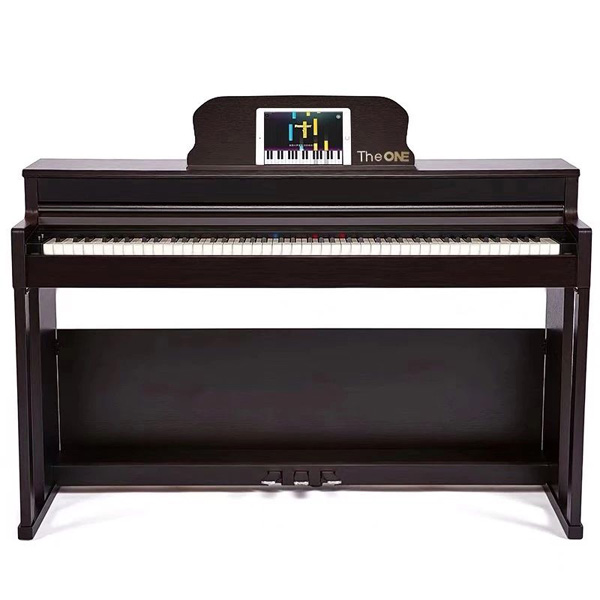
The company that grew from that experience, The ONE Music Group, put illuminated guidance above piano keys and connected the instrument to an app. Its co-founder and CEO is also known as Ye Bin, or 叶滨. His particular interest has endured through changes in products and technology: what makes someone want to continue?
A career before the keyboard
Ye arrived at music education with a substantial working life behind him. He founded V2 Technology in 1999, working in web-conferencing software. In 2007 came Haibao.com, a fashion website acquired by CBS Interactive in 2011. Between those ventures and the piano business, he joined Zero2IPO Group as a managing director in 2010. His investment experience included Ganji and Hoolai Games.
That sequence gave him experience on both sides of a startup conversation. He knew what it meant to propose a business and what it meant to assess someone else’s. His bachelor’s and master’s degrees in electronic engineering supplied another vocabulary. A musical instrument would ask him to use those backgrounds together while learning an unfamiliar trade.
There is something pleasingly untidy about the route. Conferencing, fashion and piano lessons rarely occupy adjacent shelves. For Ye, they belonged to the same career. The piano venture would give his fondness for music a very practical outlet, with keyboards to make, lessons to organize and customers to serve.
V2 Technology
Haibao.com
Zero2IPO
The ONE
A light where the finger goes
In an early interview, Ye explained why the piano appealed to him. A key produces a defined pitch. A newcomer can therefore make a recognizable sound without first learning how to coax the right note from a string. He described the instrument as easy to begin and difficult to master. The product would concentrate on making that beginning inviting, while lessons could support the longer journey.
The attraction of illuminated keys is easy to understand. A beginner looking from a printed note to a long row of black and white keys has a translation job to perform. A light points to a location. It gives the next action a visible address. The idea carries an implicit wager: a little early pleasure might persuade someone to tolerate the difficulties still ahead.
Ye was also clear about the amount of company hidden inside the instrument. Hardware was one part. Software had to work across mobile systems. Educational content had to give the learner something useful to do. Ecommerce had to get the finished product into a home. Four kinds of expertise were sharing a piano stool.
“Our goal is to help people play their first song in just a few minutes.”
Ben Ye · North American launch, 2015
Two teams, several languages
Getting engineers and music educators to work together proved difficult. Ye recruited people from the Central Conservatory of Music, but assembling the relevant qualifications did not immediately produce a common way of talking. In his account, the two groups initially struggled to communicate. Someone had to translate between the people who understood the lesson and the people who could make the software respond.
The first prototype emerged at the end of 2013. Its appearance was familiar; the combination of software and a light strip supplied the difference. Behind that fairly ordinary exterior lay a question familiar to anyone who has worked across disciplines: when two specialists say something works, do they mean the same thing?
The early team also gave itself a less glamorous assignment. Before selling its own instrument, it sold existing digital pianos online. That exercise taught it about packaging, shipping, customer conversations and returns. The delivery carton had lessons to offer, too. A customer’s introduction to a musical instrument begins before the first note.
Chopin in the office
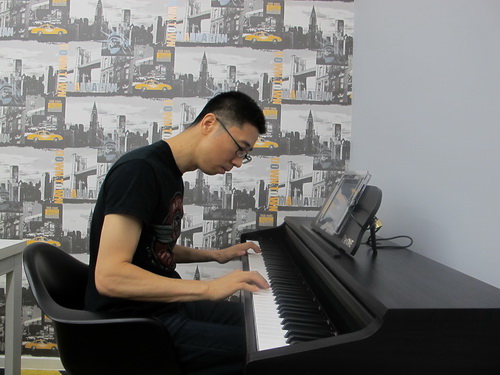
In 2015, Ye sat down at a piano during an interview and played a Chopin nocturne. The performance was described as somewhat awkward, but the rhythm came through. It is a useful scene to keep beside the photographs of a founder with folded arms. Here was someone testing his own argument with his own fingers.
He called himself a down-to-earth idealist. The phrase allows room for the pleasure of playing and the less romantic business of deciding what to build. He said his investor experience made him examine a project from outside himself: would it have a chance if another person attempted it, and would he want to fund it?
The story also had an investor’s hesitation. Kai-Fu Lee initially questioned the size of the piano opportunity, although he backed Ye. An existing relationship could get a hearing for an unusual proposal. The proposal still needed an instrument that people wanted to use. Ye had chosen a business in which a demonstration could involve sitting down and making music.
The piano already in the room
The ONE Smart Piano reached the market in 2014. A North American launch announcement followed in July 2015, pairing the upright instrument with a lighter keyboard. That announcement put Ye’s ambition in plain language: help people reach a first song quickly. The modest unit of progress was a song, rather than an examination result or a certificate.
Expansion also brought a different customer into view: someone who already owned a piano. Selling that household another instrument was an expensive way to offer a new learning experience. The Piano Hi-Lite addressed the problem with a strip that could sit above an existing 88-key keyboard and provide illuminated guidance. Ye said the company had identified owners who wanted its instruction without replacing their pianos.
By February 2019, he was presenting Panda AI practice alongside a change to the Xiaoyezi Music Education brand. The new offering combined a light strip and an app, with practice feedback among its functions. The company’s work now extended across smart instruments, online practice and offline education. The original problem had spread across several moments in a learner’s day.
Keeping the teacher in the picture
Recognizing a wrong note is one task. Helping a player decide what a piece should sound like is another, and Ye has drawn a boundary around what technology should attempt. In a 2023 interview, he argued that good teachers guide artistic expression. Different accomplished performers can interpret the same music differently. The teacher helps a child find a style, rather than merely arrive at an approved answer.
That distinction matters to the story of a founder who began by wanting the piano to feel more approachable. Removing a difficulty from the entrance leaves a great deal of music beyond it. A light can locate a key. The player still has something to say.
His international ambitions introduced further differences. In 2022, Ye described expansion overseas as a learning process for himself and his team. He contrasted the emphasis on grading and technique he encountered among Chinese customers with a stronger concern for enjoyment among customers abroad. He wanted the company to develop its overseas operations, with North America a particular focus. A familiar instrument could carry quite different expectations into different homes.
The same question, in English
By his 2024 podcast appearance, Ye was discussing accompaniment and singing as an inviting route for adult learners. He also returned to the balance between something that feels like a toy and something that supports serious instruction. After years of instruments, classrooms and practice products, that balance remained an active design question. Making the beginning enjoyable had never settled every question about what should happen next.
In November 2025, he took the discussion into English learning at the GET2025 education conference. Alongside the piano business, his team had developed Ciwei English. He described using AI and gamification to adjust the level of challenge within learning activities. His account reached back to his own schooldays in Hefei, where an experimental English class used speaking and participation in ways he remembered with pleasure.
The shift in subject has a recognizable connection to the piano. Both require repeated use; both can become an accumulation of exercises whose purpose grows distant. Ye’s interest is in keeping the activity itself inviting enough for people to continue. The founder who struggled to find notes beside his son is still considering the beginner’s experience. Somewhere between wanting to play and being able to play, there is an afternoon to get through. He has made a considerable career out of taking that afternoon seriously.
Follow the conversation
- The ONE website ↗
- Ben Ye on LinkedIn ↗
- The ONE on YouTube ↗
- 2024 conversation · Chinese audio ↗
- 2015 interview · Chinese ↗
- 2022 interview · Chinese ↗
- 2025 talk · Chinese ↗
- Tsinghua alumni profile · Chinese ↗
- Aspen fellowship biography ↗
- 2015 launch announcement ↗
- The early product conversation · Chinese ↗
- 2019 practice launch · Chinese ↗
- Piano Hi-Lite explained ↗
- 2023 conversation · Chinese PDF ↗