The first lesson in piano is often a lesson in waiting. The instrument is there, polished and imposing. The beginner is told that one day, after scales and note names and a great many dutiful afternoons, there will be a song. Ben Ye saw this distance at home. His son found piano lessons painful, and other children around the family seemed to feel the same. Ye, a technology entrepreneur who regretted missing music lessons as a child, began asking a question that would become a company: what if the first song came sooner?
- The ONE sells connected pianos, keyboards and drums whose lights work with learning apps.
- Its audience spans first-time players at home, teachers, studios and school classrooms.
- The founder says the team spent about RMB 2 million before its first prototype and sold fewer than 100 pianos in its first online month.
- The useful test: can a guided first song become independent musicianship?
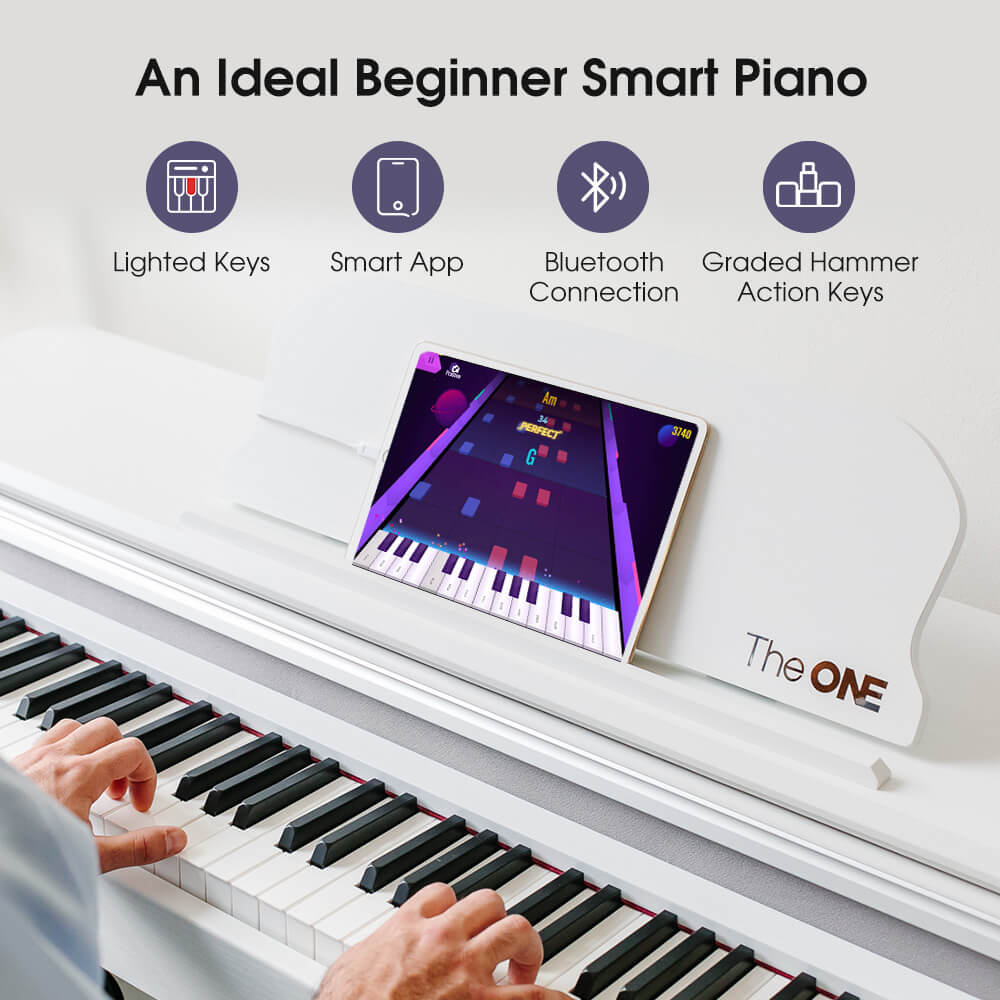
The ONE Music Group's answer was to put instructions where a novice looks: on the instrument. A strip of LEDs marks the next piano keys. An app supplies songs, lessons, games and feedback. The learner presses a real key and hears a real note. It sounds obvious once assembled. So do most good shortcuts. The trick is that the shortcut changes the first five minutes without changing the fact that piano is hard.
Five beginners and a shop full of ordinary pianos
Ye and co-founder He Yusha started Xiaoyezi, the company behind The ONE, in 2013. Ye's account of its early days is unusually concrete. The founding team had five people; only one had learned piano as a child. All five took lessons to experience the frustrations they hoped to solve. They also opened an online store selling ordinary digital pianos from another manufacturer. It moved only a few units some months, but it taught them what a sleek prototype could not: how to pack a heavy instrument, ship it, handle returns and talk to buyers who had just spent serious money.
The team spent roughly RMB 2 million of Ye's own money before the first prototype, by his recollection. Their small office and limited hardware staff forced a practical division of labor: decide what the instrument must do, then work with suppliers capable of making it. The early piano went through about ten iterations before its 2014 launch. It was an Apple MFi-certified digital piano, but the certification was a means. The commercial idea was that a phone or tablet could make a piano feel less like a piece of furniture and more like a patient tutor.
Early unit figures are Ye's retrospective account, not audited sales data.
Its opening was hardly a viral triumph. Ye said fewer than 100 units sold in the first month online. He recalled roughly 200 in the next, then 400, then 800. Those numbers matter less as a growth chart than as a description of feedback arriving at a survivable speed. Some people who had reserved a piano but held back payment later bought one after seeing it in the market. The first thing that failed, in other words, was instant conviction. The answer was time, an actual product, and evidence from other buyers.
“Our goal is to help people play their first song in just a few minutes.”Ben Ye, at the 2015 North American launch
A note you can find before you can read it
The method is a three-part loop: choose a song or lesson on a screen, follow the light to a key, and get immediate feedback from the app. It removes a common beginner's bottleneck - translating a mark on a staff into a place under a finger. The company's 88-key PLAY home piano adds graded hammer action, so a novice can practice on a keyboard with a more piano-like touch. The compact COLOR keyboard trades that furniture-scale feel for price, portability and a 61-key range. The Sing model adds chord accompaniment for people who would rather sing a song now than master one by next spring.
That pairing of instrument and app is the distinction. A conventional digital piano may connect to teaching software; an app-only course can listen through a phone. The ONE designs the guidance into the hardware itself. It also sells the hardware directly, through dealers and wholesale channels, while optional lesson and music purchases extend the relationship beyond checkout. Its price guide, checked in September 2026, listed starting prices of $149 for COLOR, $799 for PLAY and $1,199 for TOP2. These are advertised entry prices, before the chosen bundle, tax or extra content.
The sheet-music catalog is part of the machine, too. The company signed agreements with Hal Leonard and Alfred Music. A light can tell a finger where to go; a recognizable song gives the finger a reason to return. That sounds like a small distinction until you remember how many expensive instruments become household ornaments.
The classroom, then the drum kit
The ONE moved from one learner on a sofa to groups of learners in studios and schools. It reported adoption by more than 4,000 piano studios or music schools worldwide by 2016. That historical company figure should be read as a snapshot, not a present count. The Lang Lang International Music Foundation offers a more recent measure: for the 2025-26 school year, it reported 16 active ONE Labs in the US and UK. Its classroom system includes 88-key smart pianos and 40 beginner modules covering theory, reading, rhythm and games. Here, the lights give a teacher a way to start a group together, rather than replace the teacher.
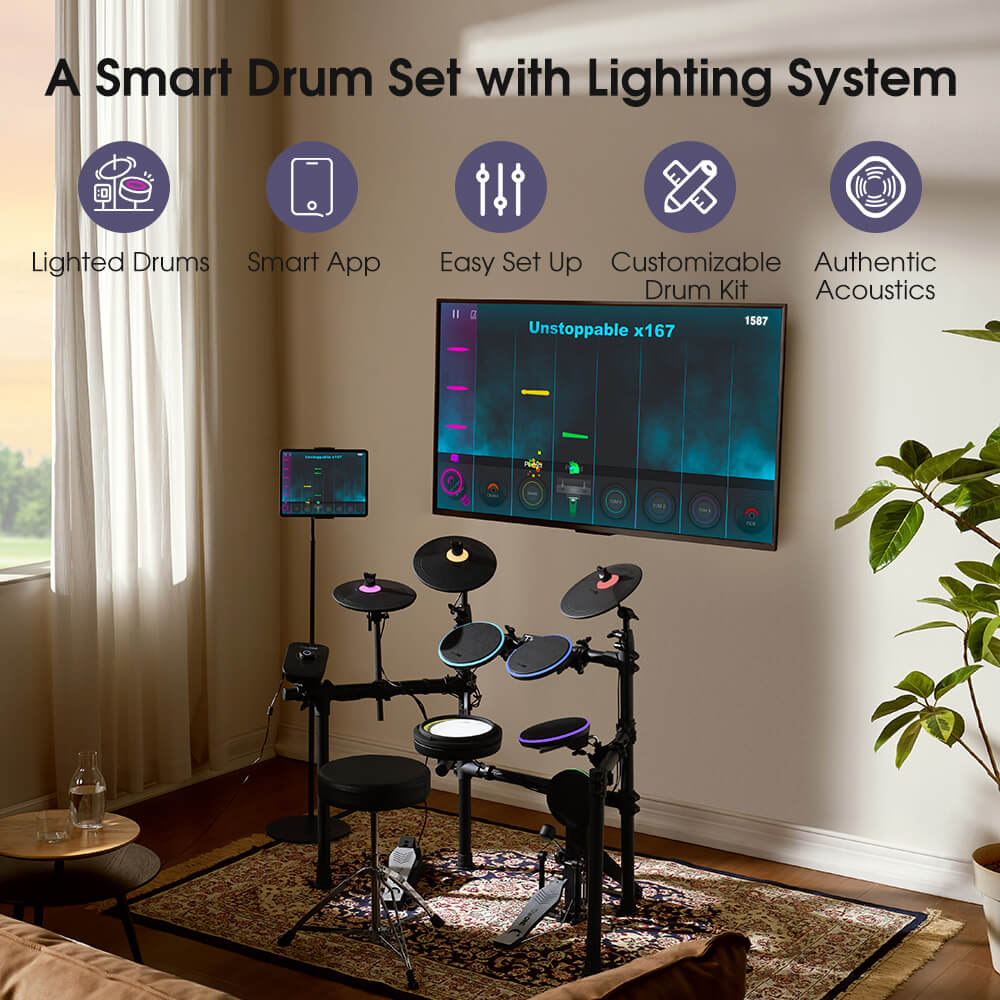
Then came the same idea with a different sound. InstaDrum launched in 2021, followed by Polaris electronic drums in 2023. LEDs on the drum and cymbal surfaces indicate what to strike while an app handles lessons and feedback. The copyable design principle is broader than piano: put the next instruction on the tool itself, then let software handle the sequence and response. The difficult part is building both halves well enough that a user still wants the instrument after the novelty of the lights fades.
That is where the company's promise meets its honest limit. An Engadget reviewer found the Smart Piano easy to follow but worried that pattern learning could outrun understanding: playing a tune is not the same as reading one. The concern is fair. A beginner who wants to perform one song next weekend might find the lights liberating. A student preparing to read unfamiliar scores must eventually look up from them. The best use of The ONE is as a bridge to deliberate practice, with the lights reduced as fluency grows and a teacher involved when technique or interpretation demands one.
The ONE's real business, then, is the gap between purchase and participation. Traditional piano makers know how to make an instrument. Lesson apps know how to make a screen feel rewarding. This company joined the two at the precise moment most beginners are tempted to quit: before the first song sounds like a song. Its founder first watched a child resist practice, then asked his team to learn the thing they were selling. That sequence remains more useful than any slogan. To teach a new skill, begin with the moment the learner leaves.