The least glamorous job in robotics may be watching a robot work. It rolls out a policy, nudges a drawer, hunts for an object, pauses with the inscrutable dignity of a household appliance, and eventually does something that must be classified as success or failure. A human watches. A human records the verdict. A human resets the scene. Then everybody does it again.
Lucy Cai knew this loop intimately. During her robotics research at MIT, she worked on getting a humanoid to find objects around a room. A single rollout could mean half an hour of watching it open drawers, followed by spreadsheet duty and the physical comedy of closing every drawer and putting every object back. Now multiply that ritual across policies, labs, machines and thousands of episodes. The future, it turns out, can involve a remarkable amount of tidying.
Cai and Claire Mao decided the loop should become software. Their San Francisco company, Instance, is starting with a success detector for robot policies. Give it a description of the task and camera footage of the rollout; it returns a verdict and a breakdown of the subtasks it saw. The larger ambition is an autonomous evaluation rig in which one machine performs, the system judges, another machine resets the environment, and the next attempt begins without a person hovering beside the spreadsheet.
The useful eyeObservation as a technical skill
Mao's biography is full of objects that need careful reading: a planetary atmosphere, a tray of simulated lunar dust, a newspaper proof, a robot video. The domains are far apart, but her role keeps returning to the same difficult act. Look closely enough to turn a complicated system into evidence another person can use.
At MIT, she studied mathematics with computer science. She also played flute in the Chamber Music Society, served on the Schwarzman College of Computing's Undergraduate Advisory Group, helped lead the Council for Math Majors, and spent enough time with crosswords and sudoku to list them among her favorite ways to unwind. It is a portrait of someone who does not see a firm border between formal systems and expressive ones. A proof, a score and a sentence all punish inattention, just in different dialects.
The newspaper dialect arrived through a wonderfully minor accident. During her first year, Mao received an email advertising The Tech's open house and a free dinner. She did not go. The email worked anyway. She joined as a copyediting prospective, initially more comfortable reading other people's work than writing her own. On production nights she moved across sections, debating choices that ranged from punctuation to whole paragraphs.
“I was no longer a mere observer of MIT life, but an active participant in shaping how the Institute is represented.”Claire Mao, reflecting on The Tech
That distinction between observer and participant became a career hinge. Mao rose to co-copy chief and then publisher of Volume 145. The job expanded from hunting stray errors to helping set direction for MIT's oldest newspaper. In her senior reflection, she wrote candidly about feeling daunted by the role and uncertain about parts of the production pipeline. Her answer was not a grand performance of certainty. It was community: editors answering messages at odd hours, colleagues challenging her, prospective staffers turning up at events.
“The people make the place,” she wrote. It is an unflashy sentence, almost suspiciously sensible. It also explains why a copy desk can prepare someone for a startup. Both are systems made of tools, deadlines and human judgment. Neither improves merely because the person in charge speaks louder.
Planets firstSoftware meets the physical world
Long before Instance, Mao had another middle-school ambition: work at NASA. In 2024, she reached it with an internship in the Exoplanet Science and Discovery Group at NASA's Jet Propulsion Laboratory. She developed the RMG-EPACRIS Adapter, a software tool built to help simulate planetary atmospheres, then used it in a study of Venus. The work brought together programming, thermochemistry and questions that refuse to fit neatly inside one discipline.
Her account of the summer also preserves the part polished résumés edit out: four national parks with other interns, movie nights and repeated encounters with potato balls. The anecdote matters because technical lives are still lives. Someone can spend the day trying to reconcile disagreements in the literature on Venusian chemistry and the evening choosing a film with friends. Serious work does not require a permanently serious face.
At the MIT Media Lab's Space Enabled Research Group, Mao also contributed to work on lightweight, low-cost lunar instruments. A paper she co-authored describes a Passive Regolith Sampler mounted on a rover wheel and a Passive Wax Thermometer whose samples change opacity with temperature. The instruments were designed under severe constraints: little mass, no surplus power and no moving parts. They were delivered aboard the Rashid-1 rover mission, though the lander did not complete its planned soft landing and the instruments never performed surface operations.
The research is a lesson in restraint. If there is no power budget, intelligence must move into the design. A perforated aluminum tray uses the wheel's own motion to collect dust. Wax becomes a thermometer. The most elegant component is the one you discover you do not need.
The companyA verdict before a platform
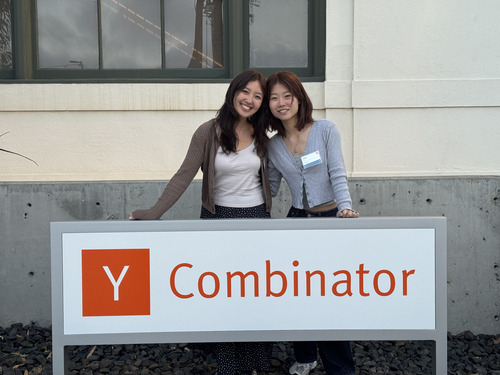
Instance did not begin with robots. In early 2026, Mao and Cai introduced a product under the same name as an AI data analyst. It was meant to let employees ask plain-language questions about company metrics and operations without waiting for an engineer to write SQL. By the company's Y Combinator launch that summer, the product had moved into robotics.
The shift looks large on the surface: databases gave way to camera feeds, business users to robotics teams. Yet the underlying question remained recognizable. How do you convert messy evidence into an answer someone can trust? In the first version, the evidence lived in tables. In the current one, it moves through a room and occasionally gets stuck on the furniture.
At launch, Instance said it had benchmarked its verifier on more than 10,000 held-out, human-labeled episodes across seven robot platforms. The product is available as a demo that accepts an uploaded or recorded video. This is deliberately narrower than the full autonomous rig Mao and Cai describe. First judge success. Later connect judgment to reset and repetition.
That sequencing is practical. Robot learning carries many grand nouns, but the immediate customer pain is expressed in verbs: watch, mark, reset, repeat. A useful founder sees the grand system and still notices which verb ruins someone's Tuesday.
Researching constrained space systems
Undergraduate work with MIT Media Lab's Space Enabled group.
Modeling atmospheres at JPL
Software development in the Exoplanet Science and Discovery Group.
Publishing the paper
Publisher of The Tech's Volume 145, after beginning on the copy desk.
Building Instance
MIT graduation, YC Summer 2026 and the robot success-detector launch.
The partnershipOld friends, new machinery
Mao and Cai have been friends since middle school. That fact appears in nearly every public introduction to Instance because it explains more than a founding date can. Cai brings deep robotics experience, including humanoid research at MIT and engineering work at SpaceX and AWS. Mao brings software, physical-systems research and the editorial-operator's instinct to turn a black box into a process people can inspect.
Their launch copy ends with an offer to visit robotics teams with sweet treats and demonstrate the product. It is a charmingly analog go-to-market move for a company pursuing autonomous evaluation. The robot may eventually reset the room. The founders will still bring dessert.
Mao's public career is young, so its neatest narratives should be treated with caution. But one pattern is already visible without embroidery. She repeatedly moves toward places where software touches reality and where observation has consequences. An atmospheric model can sharpen a scientific question. A copy edit can change how a community understands itself. A camera can supply the ground truth for a robot's next attempt.
The startup is built around a plain question with expensive consequences: did the robot actually do the thing?
For now, Instance is answering that question one rollout at a time. The broader hope is to remove people from the repetitive watching without removing human judgment from the design of the system. Mao has spent years learning that watching carefully is active work. Her company exists because, in robotics, there is too much of it for humans to do forever.