Consider a box arriving at a supermarket. Someone must open the delivery, find the right aisle and put its contents on a shelf. Long before that happens, somebody else has decided where the box belongs on a pallet. A poor decision in the warehouse becomes a small nuisance in the store. Repeat it across thousands of deliveries and the nuisance becomes a business problem. Symbotic builds robots around this unglamorous chain of consequences.
- The product: robots, storage and software working as one warehouse system.
- The buyer: retailers and distributors moving large volumes of varied goods.
- The useful idea: organize the shipment for whoever handles it next.
The expensive lesson before the robots
Rick Cohen knew grocery distribution from the inside. His family’s C&S Wholesale Grocers had tried warehouse automation in York, Pennsylvania, before Symbotic existed. The machinery improved efficiency, but the installation became too big and expensive. As Cohen later put it: “I learned what automation should not be.”
In 2007, he backed inventor John Lert’s CasePick Systems, the business that became Symbotic. Progress required eight versions of the robot and several changes of leadership. An early prototype reached a C&S warehouse in Newburgh, New York, in 2011. The origin matters because it explains the ambition: make the handling, storage and software work together, rather than leave a warehouse operator to reconcile them.
A pallet is a plan
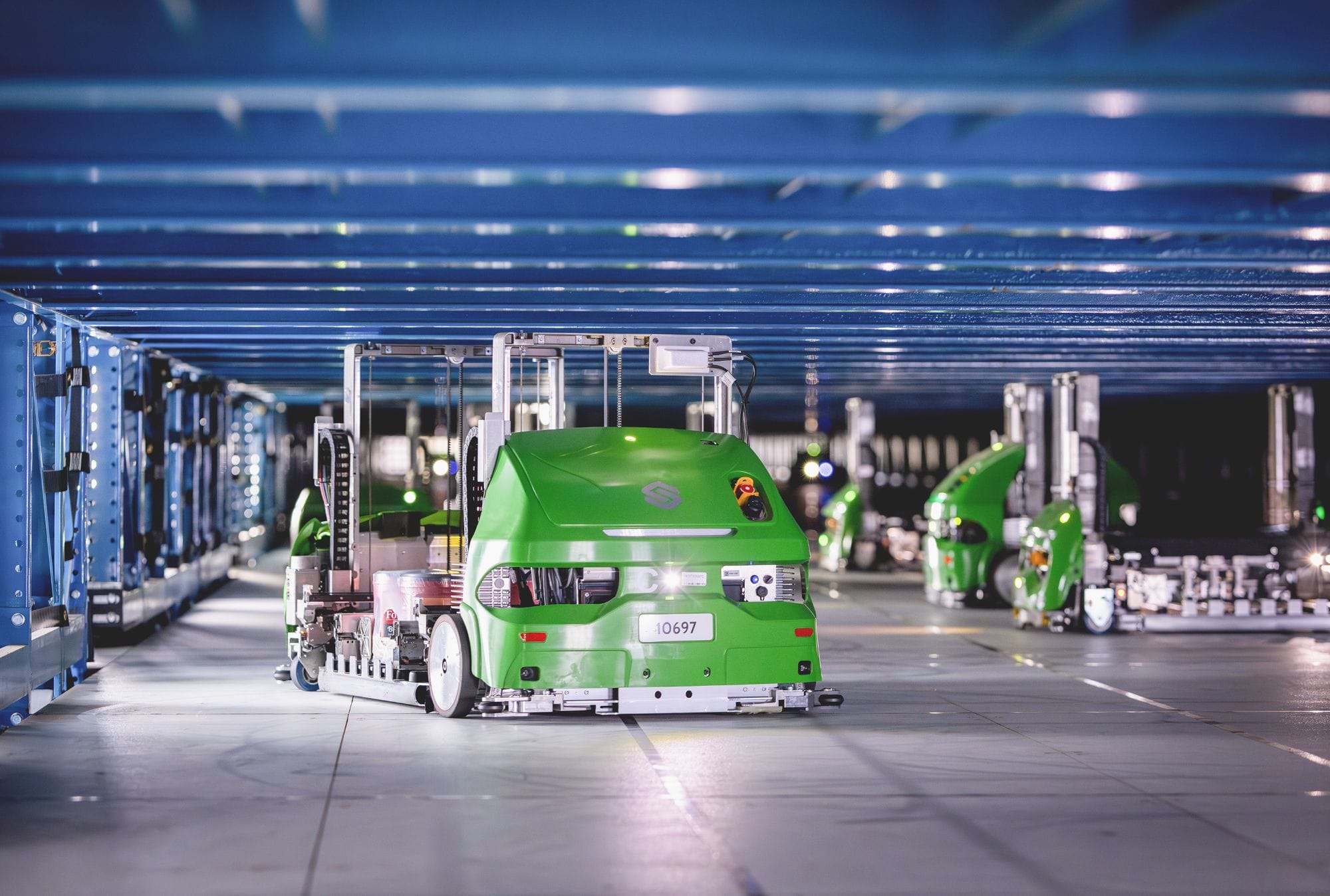
In Symbotic’s distribution system, incoming pallets are broken into individual cases. Goods are scanned, checked and sent into dense storage. Autonomous SymBots retrieve them in sequence. Robotic arms then assemble outbound pallets. Cases stay in their shipping packaging, a practical detail when the inventory contains cartons of different shapes, weights and degrees of fragility.
The software has to think about crushing, balance and the order in which products will be needed. It can incorporate the receiving store’s layout. The pallet therefore carries more than merchandise: its arrangement contains instructions for the next stretch of work. A warehouse can save a store employee a journey before the truck has left the loading dock.
- 01ScanKnow the case
- 02StoreUse the space
- 03SequencePick the order
- 04BuildThink of the store
Process diagram - conceptual, not to scale.
That combination places Symbotic among enterprise automation suppliers such as Witron, Dematic and Swisslog. Its pitch joins native-case handling, robotic movement and store-aware pallet building in an integrated system. Buyers choosing between suppliers still have to compare their actual goods, building and order patterns. “Warehouse automation” covers very different jobs.
The customer who kept saying yes
Walmart began testing Symbotic’s system in Brooksville, Florida, in 2017. By 2021, the retailer had committed to 25 regional distribution centers. In 2022, it expanded that commitment to all 42. This was a rollout built on years of work in an operating facility. A commitment to install equipment is also different from a claim that every installation is finished.
Other customers make the problem easier to picture. Associated Food Stores serves more than 500 local stores from its Farr West, Utah, distribution center. The cooperative had run short of storage and leased additional space. Symbotic’s September 2026 account of the project says automation reduced the leased real estate it needed. The customer benefit was room inside a building it already had.
The pallet’s arrangement contains instructions for the next stretch of work.Why sequencing matters
Big machines, patient money
Symbotic earns money from installing systems and from the software, support and services that follow. These are physical projects with equipment, commissioning and long customer relationships. They need patient capital. The company says more than $1 billion has gone into funding research and development.
GreenBox changes how customers can access the machinery. Created with SoftBank in 2023, the joint venture offers warehouse services. SoftBank owns 65%; Symbotic owns 35%. The launch included $100 million in initial funding and an approximately $7.5 billion contract to purchase Symbotic systems. That purchase commitment is future business, not cash already earned or venture funding for Symbotic.
The financial results deserve equally careful reading. For fiscal 2025, Symbotic reported $2.247 billion in revenue, up 26%, alongside a $91 million net loss. In fiscal third-quarter 2026, revenue reached $721 million and net income was $55 million. Growth and profit are separate questions; a profitable quarter does not rewrite an earlier annual loss.
Fiscal 2025, ended September 27, 2025. Revenue is not profit. Values use different units.
The bill came back
In November 2024, Symbotic disclosed revenue-recognition errors, including problems involving cost overruns that could not be billed to customers. It delayed its annual filing and identified material weaknesses in financial controls. Its preliminary estimate put the additional reduction to revenue and several profit measures at $30 million to $40 million versus the results released earlier that month.
The episode exposes a difficulty of industrial automation: measuring progress accurately while delivering a complicated installation. For a prospective buyer, the sensible questions concern integration, downtime, exceptions and the complete operating cost. As a practical inference, low volumes or unsuitable packaging can weaken the case for a large system. A robot’s speed cannot settle those questions.
Follow the box into the store
In January 2025, Symbotic bought Walmart’s Advanced Systems and Robotics business for $200 million at closing, with up to $350 million in contingent consideration. The related agreement includes $520 million in Walmart-funded development payments. A commitment covering 400 store pickup and delivery centers depends on achieving performance criteria. The conditions are part of the deal.
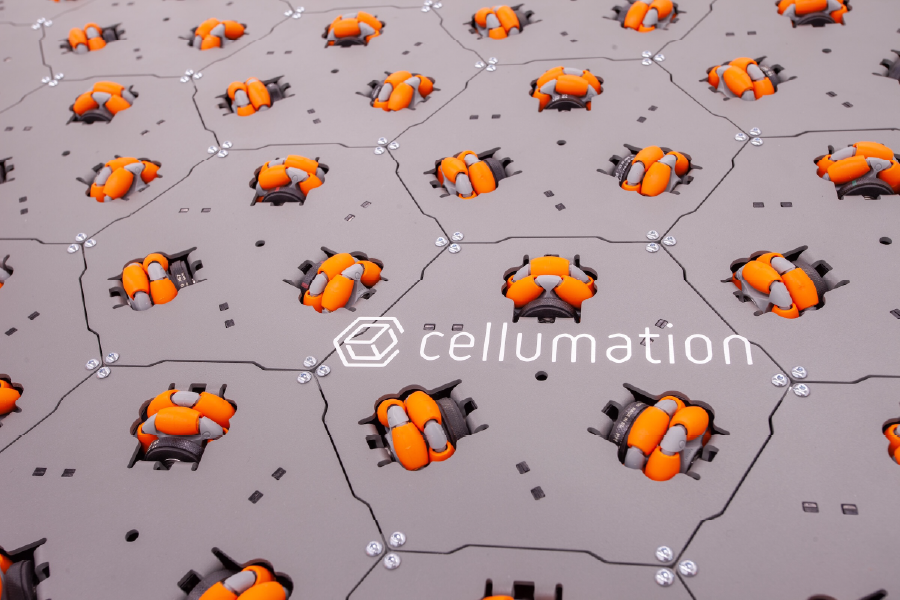
SymMicro now addresses back-of-store fulfillment. BreakPack handles quantities smaller than a full case. In October 2026, Symbotic added cellumation, whose independently controlled conveyor cells can move products in different directions. Each extends the company’s attention to another awkward handoff.
There is a useful habit here for businesses without a robotics budget: inspect what happens immediately after your task is complete. Does someone have to sort, rearrange or repeat your work? Symbotic’s proposition makes that question physical. The box is still the same box. Put it in a better sequence, and the next person has less to do.