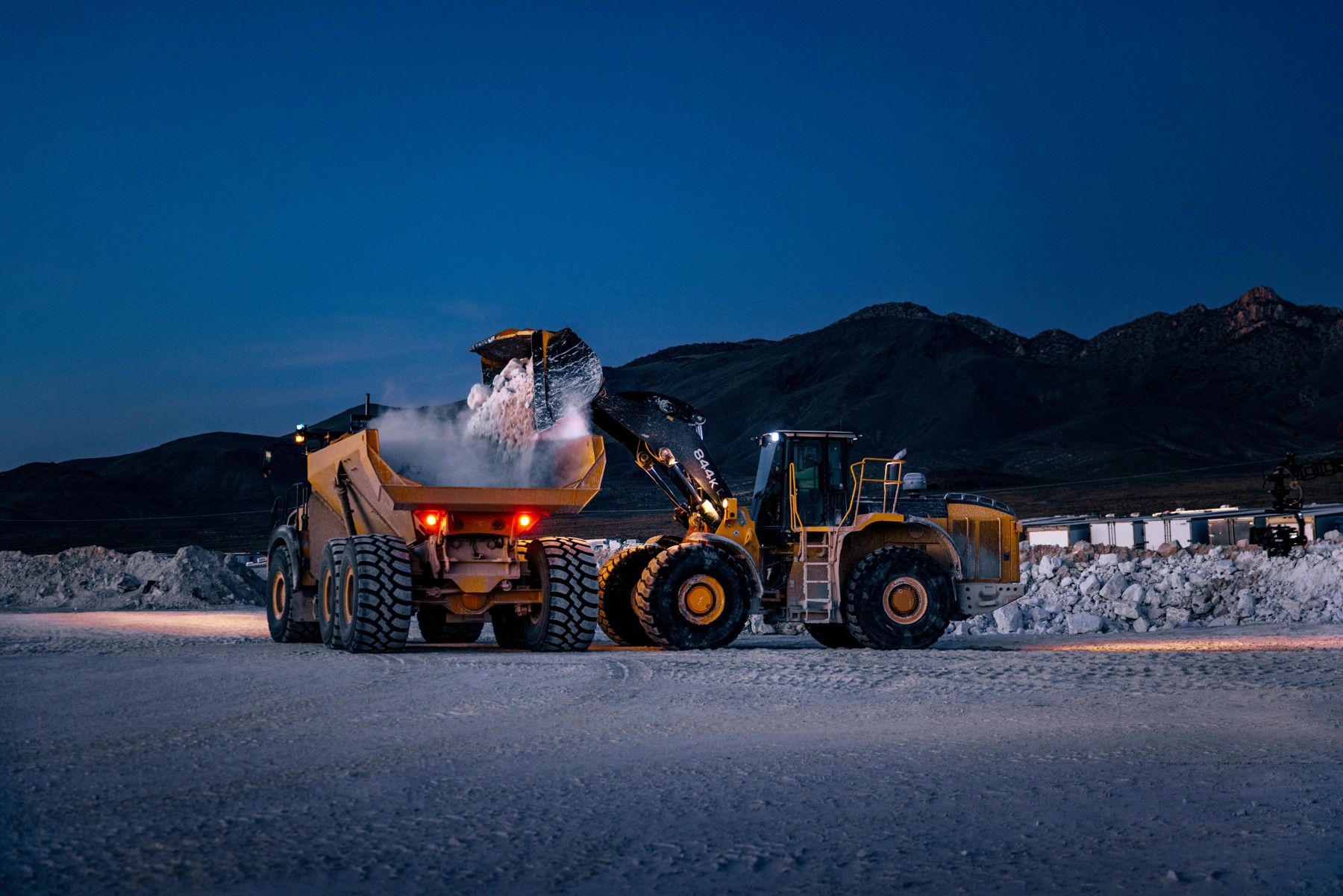
At Heidelberg Materials’ Lake Bridgeport quarry in Texas, the revealing detail is the badge on the truck. Some say Caterpillar. Others say Komatsu. Underneath those different names, the vehicles share a driving system from Pronto. For a quarry operator, that is a consequential arrangement: buying autonomy need not mean buying an entirely new fleet.
By January 2026, Pronto reported that this mixed fleet had carried more than two million tons of limestone in under eight months. The work involved Caterpillar 775G trucks and Komatsu HD605 models. Rock went from one place to another, repeatedly. In the self-driving business, repetition turns out to be a rather useful feature.
- Retrofit existing haul trucks, including mixed brands.
- Teach a route by driving it; dispatch from a phone.
- Match the sensors to the mine, weather, and truck.
The company builds an autonomous haulage system, or AHS, for mines and quarries. It retrofits trucks with the hardware and software needed to drive themselves within an industrial site. Its customers need material moved, shifts covered, and people kept away from hazards. A truck with an empty cab is useful only if the rest of that operation keeps working.
02A smaller world to learn
Pronto began in 2018 with Anthony Levandowski and Ognen Stojanovski. Its early pitch concerned highway trucking: a camera-based driver-assistance product called CoPilot. Announced at $4,999 per truck, it was intended to handle steering, braking, and acceleration while a human remained responsible. That historical price belongs to CoPilot, not today’s mining system.
The company also publicized a coast-to-coast drive in a Toyota Prius, saying the journey required no driver input. It was an attention-grabbing demonstration. Yet the commercial business that emerged centered on a much more bounded task: moving loads around industrial property.
That shift offers a useful way to think about automation. A quarry still contains dust, changing surfaces, heavy equipment, and people. But its work has identifiable destinations and a customer who can organize the site. The inference is straightforward: narrowing the task can make a machine more useful before it becomes universally capable.
The early highway ambition did not become Pronto’s defining business. Its current identity rests on off-road deployments. The instructive question for another founder is whether the same technology solves a more valuable problem inside a smaller operating area.
“True scalability in the aggregates industry requires the ability to automate the iron you already own.”Anthony Levandowski · Pronto CEO · January 2026
03One drive becomes a route
Pronto describes an unusually approachable setup. An operator drives the desired haul route once; the software learns it. Authorized staff then dispatch trucks onto saved routes through a smartphone app. The interface includes fleet locations, truck metrics, and source-and-destination selection. A familiar device becomes a doorway into some very unfamiliar machinery.
The autonomy sits inside a larger arrangement. Drive-by-wire equipment actuates the vehicle. Site rules define behavior. Manually operated equipment gets all-stop controls, and Pronto describes lightweight Rover transponders for coordination between human-driven and autonomous machines. Removing the driver from a cab still leaves people responsible for the workplace.
Wireless connectivity is another prerequisite. Pronto launched Pollen Mobile to provide private LTE networks for sites where ordinary connectivity is inadequate. That detail is easy to overlook in a software pitch. A quarry’s network, operating rules, and maintenance habits belong in the purchasing decision alongside the driving system.
04Keep the iron. Change the economics.
Alternatives include Caterpillar’s Command for hauling and Komatsu’s FrontRunner. Pronto sells a retrofit proposition spanning equipment from different manufacturers. For the buyer, retrofitting protects a prior investment. The intended gains come from steadier utilization, fewer interruptions, and less exposure to dangerous work. Smooth driving may also reduce fuel use and tire wear. Those are operating benefits to measure at a particular site, rather than percentages to assume from a sales presentation.
Pronto’s Bell Trucks America partnership has described subscription pricing with limited upfront costs. The business combines a hardware retrofit, autonomy software, and deployment support; its Komatsu collaboration also opens a dealer channel. The relevant economic unit is a working truck moving material, with installation and site preparation included in the calculation.
Heidelberg’s commitment supplies a clearer signal than a speculative valuation. In February 2025, the companies announced an agreement for more than 100 trucks over three years, across more than a dozen sites in North America, Europe, and Asia-Pacific. That figure describes an agreed rollout, rather than proof that every truck is already running.
The sequence matters: a Bridgeport pilot in 2023, a Lake Bridgeport deployment announced in 2024, then a global agreement. Another operator can copy the purchasing discipline: prove a route, check production results, and expand with evidence. Another startup can copy the sales lesson: solve one customer’s operating problem well enough that its other sites become prospects.
05The camera company adds more eyes
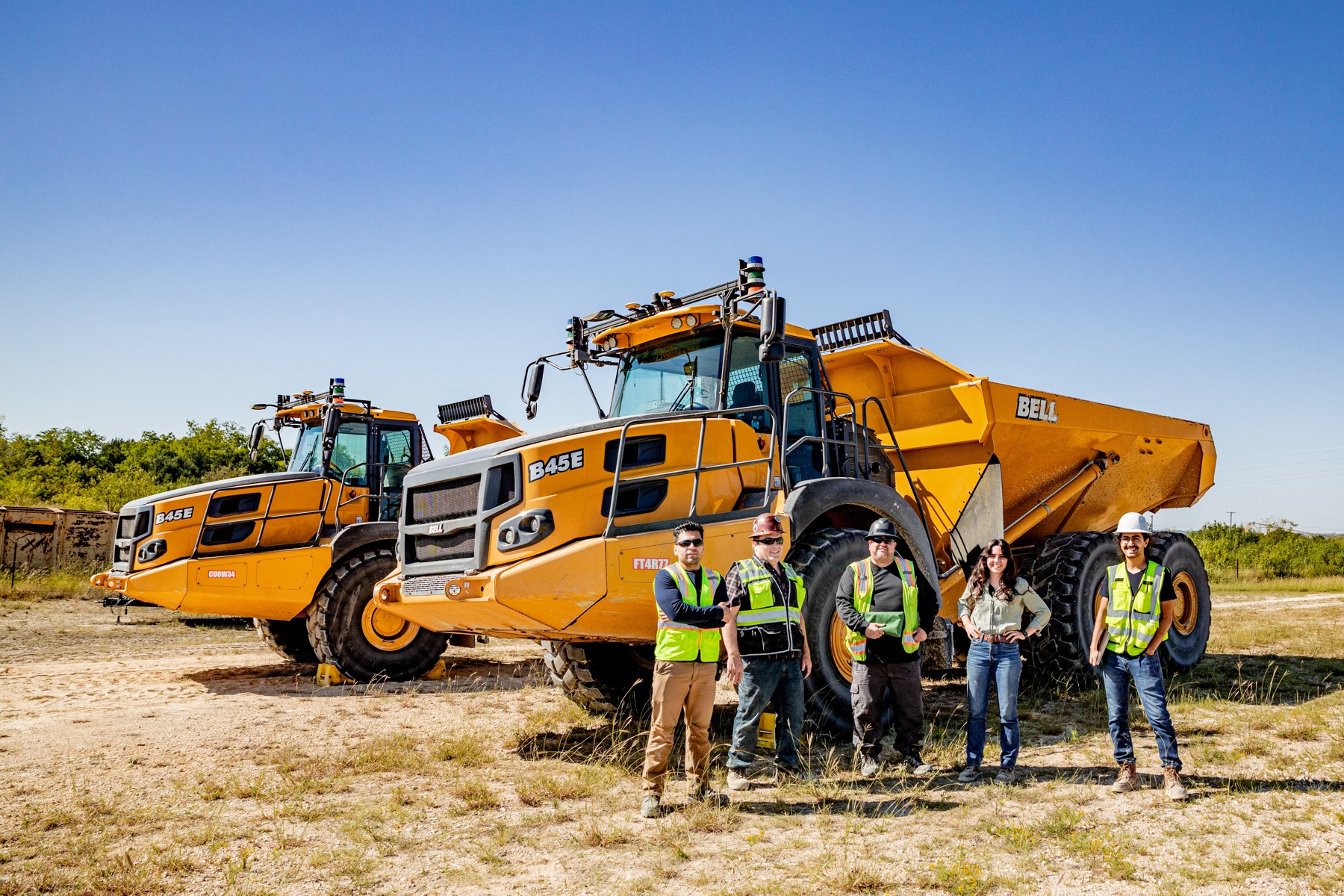
In July 2025, Pronto acquired SafeAI, bringing a multi-sensor offering into its portfolio. In February 2026, it announced AHS Vision, VLR, and VLR 360 editions. Vision serves the quarry proposition; the newer editions add lidar and radar for more demanding mining environments.
Pronto’s explanation is refreshingly physical. A much larger hauler needs more detection distance, and dust, fog, and snow can defeat optical perception. The company explicitly acknowledges those camera limits. Adding sensors changes the cost and complexity, but it also changes the conditions the system is designed to handle.
This is the useful correction to the original simplicity story. A repeatable quarry route and an ultra-class truck in a deep pit present different requirements. Buyers need an operating envelope matched to visibility, braking, traffic, and weather. Camera-based success in Texas does not settle the design of every mine.
In April 2026, Pronto announced that Travis Kalanick’s Atoms had completed its acquisition of the company, making it the technology core of Atoms Mining. Later that month, Pronto announced planned Heidelberg deployments at Mitchell, Indiana, and Servtex, Texas. In July, a memorandum of understanding with Hitachi Construction Machinery added another equipment relationship, with open mine automation as its aim.
Pronto now occupies the space between equipment makers and the operators of existing fleets. Komatsu is both a machinery supplier and a distribution partner. Hitachi is a prospective collaborator under an MoU. The company’s proposition depends on making those relationships work around the customer’s equipment. The little badge on the front of the truck should leave room for a choice about who drives it.