nasa-jpl
(13)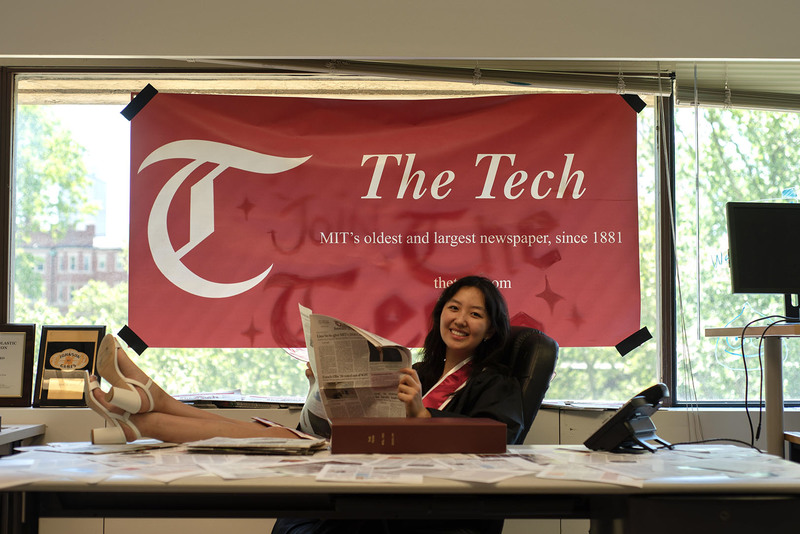
Claire Mao Has a Robot Problem: Humans Keep Babysitting Them
Before Claire Mao built software to judge whether robots had done their jobs, she learned to model atmospheres, test lunar hardware, and mind the commas at MIT's student newspaper. Instance is the latest expression of the same instinct: make difficult work easier to see.

Alex Ruber Kept Pivoting Until a Tiny Daily Ritual Caught Fire
After NASA, Apple, a music app, an AI shopping engine, and months in “pivot hell,” the Candle co-founder found his signal in one-minute acts of attention.

SeekOps Inc.
SeekOps is an Austin-based climate-technology company that mounts a NASA-derived laser methane sensor, the SeekIR, onto enterprise-grade drones to detect, locate, quantify, and report methane emissions for energy, renewable natural gas, and waste operators. Spun out of NASA's Jet Propulsion Laboratory in 2017, its drone-agnostic Leak Detection and Quantification (LDAQ) systems help operators meet regulatory frameworks such as OGMP 2.0, EPA rules, and the EU Methane Regulation, and have been deployed onshore and offshore for majors including bp, Shell, TotalEnergies, and Equinor.
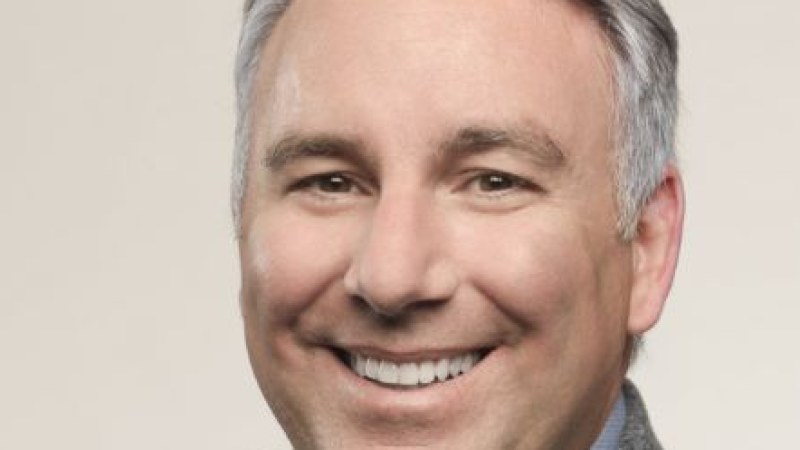
Michael Speranza
Michael Speranza is the CEO of Kantata, the professional services automation software company formed in 2022 from the merger of Mavenlink and Kimble Applications. A Rensselaer-trained electrical engineer who began his career at NASA's Jet Propulsion Laboratory before pivoting to Deloitte Consulting and then a two-decade run inside private equity backed software companies, Speranza has specialized in scaling mid-market B2B software firms from roughly $100 million toward $1 billion in revenue.
Jason Andringa
Jason Andringa is the third-generation president and CEO of Vermeer Corporation, the Pella, Iowa manufacturer of industrial and agricultural equipment founded by his grandfather Gary Vermeer in 1948. A mechanical engineer who once worked at NASA's Jet Propulsion Laboratory before joining the family business in 2005, he took the top job in 2015 and led the roughly 4,400-employee company through a devastating 2018 tornado and the pandemic, growing it stronger while staying, in his words, oriented to the long term.

Matter Intelligence
Matter Intelligence is a remote sensing and AI company building the world's first sub-meter hyperspectral and thermal satellite sensors paired with a foundational 'Large World Model' that lets machines understand the physical world at a molecular level. Founded by former NASA JPL engineers, the El Segundo startup emerged from stealth in October 2024 with $12M in seed funding to deploy sensors across satellites, drones, and aircraft for agriculture, defense, energy, and environmental monitoring.

Arash Jafari
Arash Jafari is the CEO and co-founder of Clearpol, a San Francisco healthtech company that builds AI to help post-acute and long-term care providers manage regulatory compliance and clinical risk. A former NASA JPL and Langley engineer, he traded interplanetary robotics simulations and severe-weather prediction for one of healthcare's least glamorous frontiers: the survey deficiency. Clearpol's AI now acts as a 'co-pilot' for skilled nursing facilities, drafting Plans of Correction, monitoring clinical data, and flagging regulatory risk before it escalates - trusted by 900+ facilities, with 3,000+ Plans of Correction written.
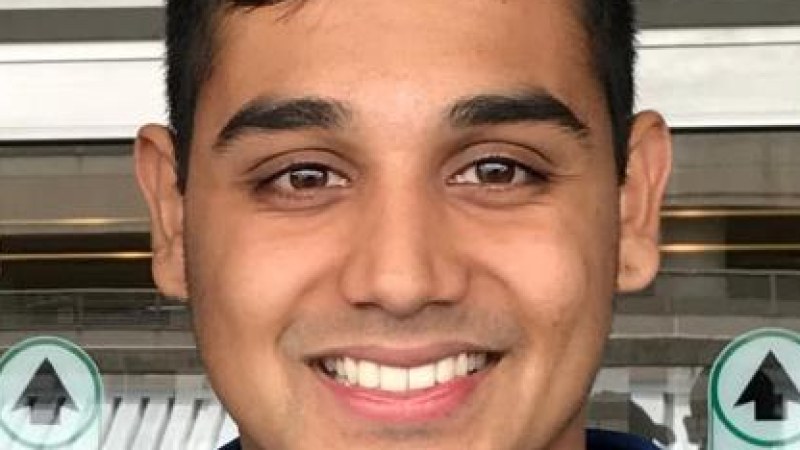
Bhairav Mehta
Bhairav Mehta is the co-founder and CEO of CharacterQuilt, a San Francisco AI company that builds computer-use agents to run enterprise marketing campaigns. A 2x Y Combinator founder, he traded a near-finished MIT PhD in deep learning and robotics - and a research resume spanning NASA's Jet Propulsion Laboratory, NVIDIA, and Mila - for the messier business of getting software to do real marketing work. CharacterQuilt interviews real buyers, distills them into AI personas that predict pain points, and then lets agents operate the existing marketing stack. His pitch: campaigns that once took three agencies, ten tools, and six weeks now ship in an hour.
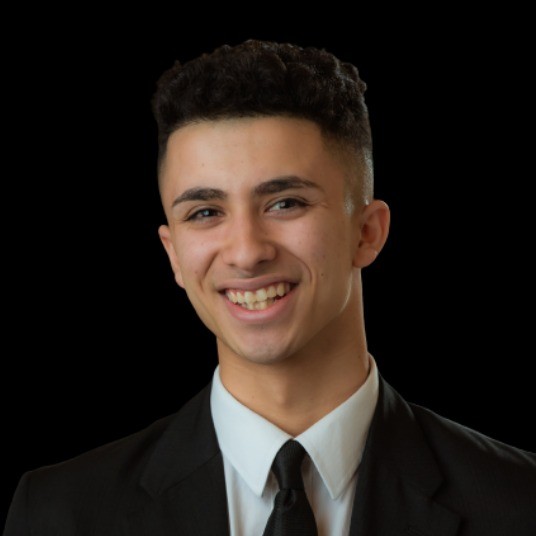
Jacob Rodriguez
Jacob Rodriguez is the founder and CEO of Oligo Space, a Hawthorne, California aerospace startup automating the design and manufacturing of large multi-orbit satellites. A first-generation college student who won a full scholarship to MIT and interned at NASA's Jet Propulsion Laboratory, he left school early as a 2024 Thiel Fellow to build a manufacturing-in-the-loop foundation model for spacecraft production. Oligo plans to fly its first satellite, Chimera-1, on SpaceX's Transporter-15 mission in 2026.
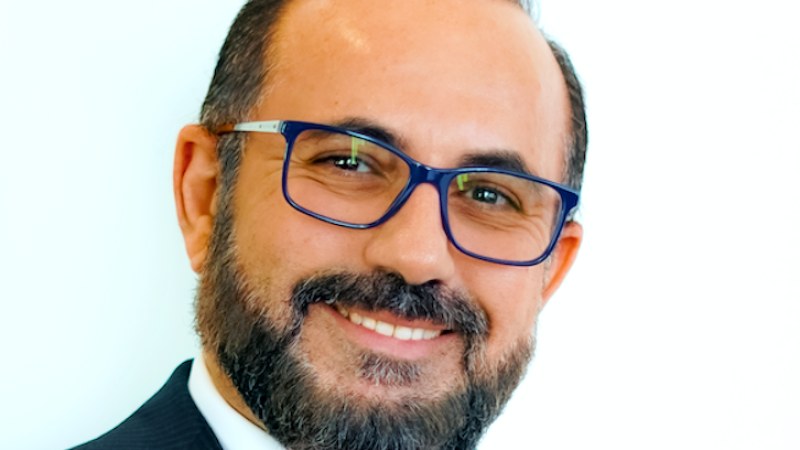
AJ Abdallat
AJ Abdallat is the founder, chairman and CEO of BeyondAI (formerly Beyond Limits), a Glendale, California enterprise AI company that commercializes cognitive artificial intelligence born inside NASA's Jet Propulsion Laboratory and Caltech. A serial entrepreneur who spent more than a decade incubating Caltech/JPL spinouts, Abdallat built Beyond Limits around the idea that AI which guided the Mars Rovers and Voyager probes through deep space can run mission-critical industrial operations on Earth - in energy, utilities, manufacturing and healthcare - while explaining the reasoning behind every decision.
BeyondAI
BeyondAI (formerly Beyond Limits) is an industrial and enterprise AI company born from technology developed at Caltech's NASA Jet Propulsion Laboratory. Founded in 2014, it builds hybrid, neuro-symbolic AI that pairs machine learning and generative AI with rule-based reasoning to deliver explainable, human-like decisions in high-stakes sectors such as energy, oil and gas, manufacturing, utilities and healthcare. Backed by investors including Group 42 and bp ventures, the company raised a $133M Series C in 2020 and rebranded to BeyondAI at LNG2026.
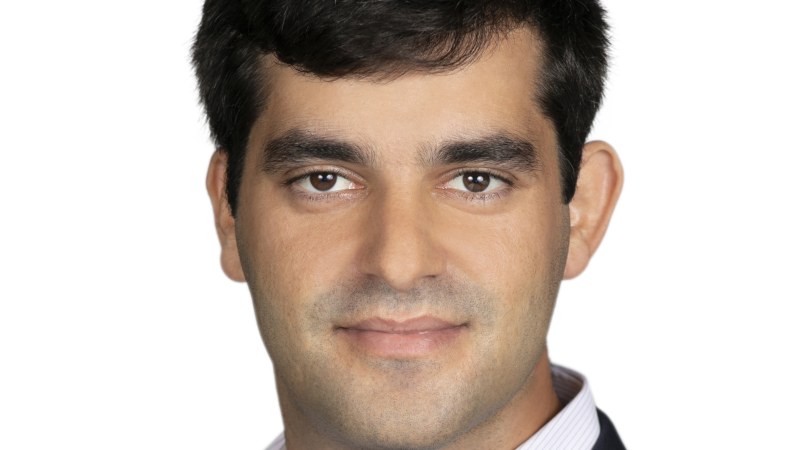
Dmitry Turbiner
Dmitry Turbiner is the founder and CEO of General Radar Corp., a Silicon Valley deep-tech company building what it calls the world's first 100% commercial AESA phased-array radar with defense-grade performance. An MIT-trained electrical engineer who designed flight-grade satellite antennas at NASA's Jet Propulsion Laboratory, Turbiner left a Stanford master's program to start the company in 2016. General Radar has raised more than $47 million across seed and Series A rounds from backers including Kleiner Perkins and Octave Ventures, and pioneered a 'Radar-as-a-Service' model that aims to deliver high-resolution, long-range threat detection in a fraction of the usual time and cost.
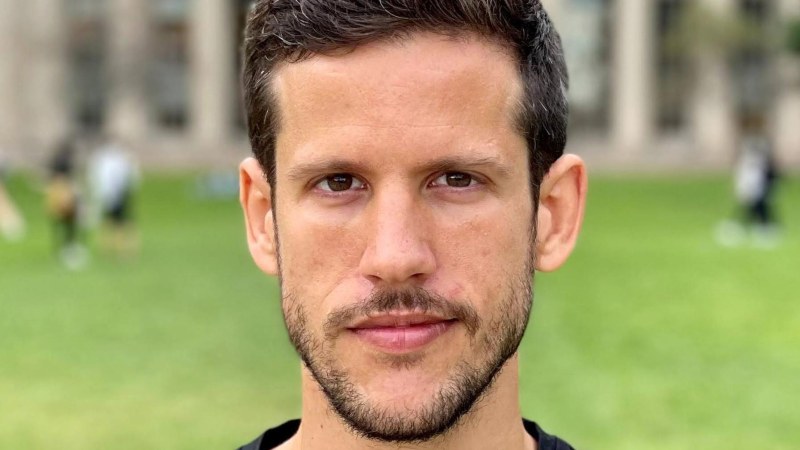
Tony Rosinol
Tony (Antoni) Rosinol is the co-founder and CEO of StackAI, the no-code platform that lets enterprises build, deploy, and govern custom AI agents. An MIT PhD in computer vision and SLAM, he created the open-source Kimera robotics system before pivoting from teaching robots to see the world to teaching agents to run the back office. He started StackAI with fellow MIT PhD Bernard Aceituno out of Y Combinator's Winter 2023 batch, raised nearly $20M, and in May 2026 sold the company to Asana for $75M, where the founders now build toward an operating system for human-agent teams.