Profile · Enterprise AI
AJ Abdallat
He took the intelligence that guided the Mars Rovers through the dark and aimed it at something just as unforgiving: an oil refinery on a Tuesday.
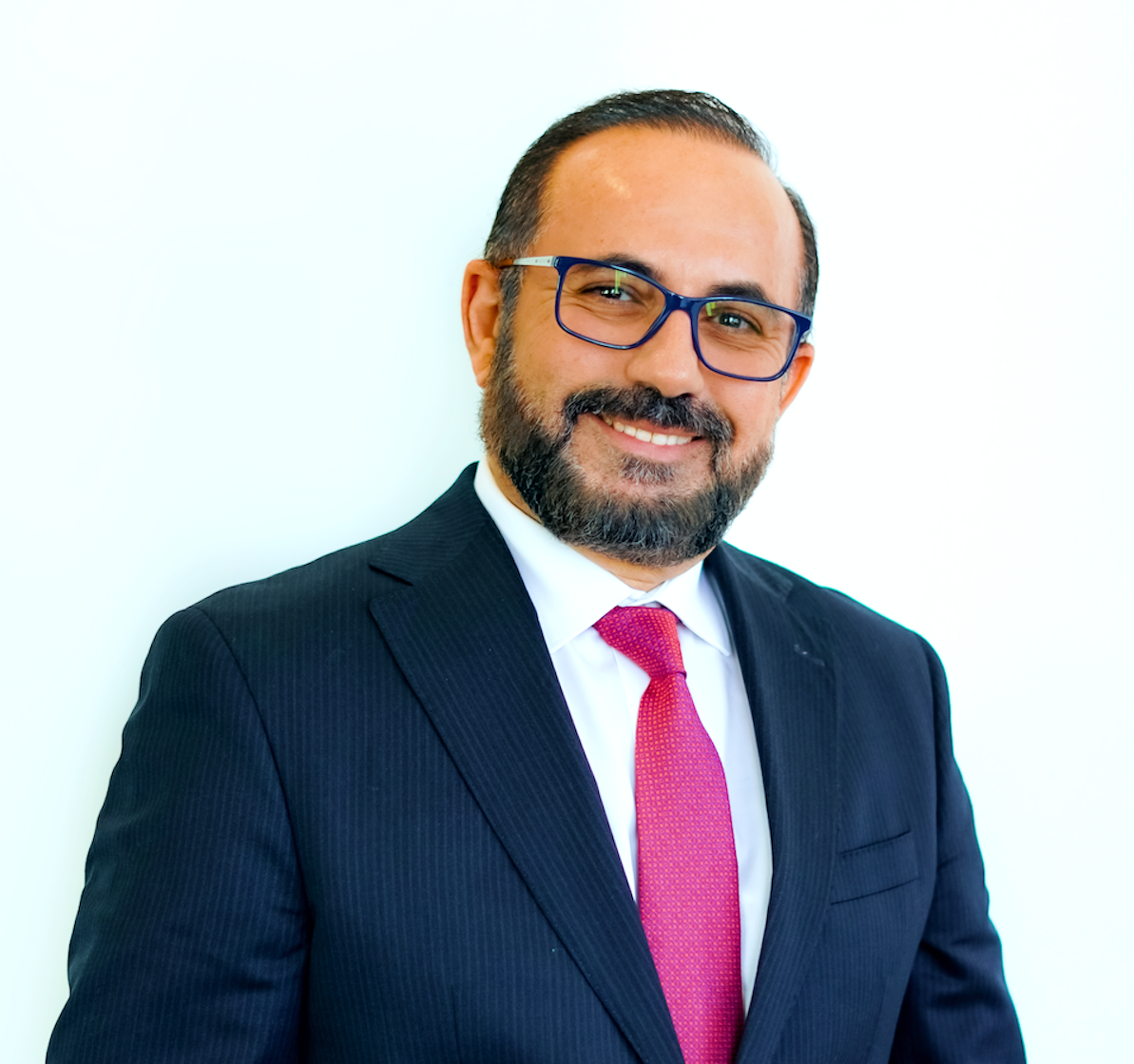
He took the intelligence that guided the Mars Rovers through the dark and aimed it at something just as unforgiving: an oil refinery on a Tuesday.
AJ Abdallat runs BeyondAI - the company that until recently answered to the name Beyond Limits - out of Glendale, California. The job he has given himself is oddly specific: build artificial intelligence for the places where a wrong answer is expensive, dangerous, or both. Power grids. Refineries. Factory floors. Hospitals. The rooms where "the model says so" is not a good enough reason to act.
His pitch is a single sentence with teeth. Machine learning gives you a guess; symbolic AI gives you a reason. BeyondAI insists on both. The systems do not just point at an outcome - they show the chain of reasoning that got them there, in language a plant engineer can argue with. In sectors where regulators, insurers and engineers all want to know why, that audit trail is the entire product.
The bloodline is what makes the story stick. The cognitive AI at the core of the company was developed, tested and hardened on NASA missions - the Mars Rovers, the Voyager probes - where a machine had to make life-or-death calls millions of miles from the nearest human, with thin data and no second chances. Abdallat's wager is that a refinery in a bad storm is not so different from deep space. The intelligence that survived one can run the other.
Machine learning & neural networks - pattern, prediction, the statistical guess.
Encoded human expertise and rules - the logic that can show its work.
Reasoning, recommendations and explanations for high-stakes calls.
He was born in Beirut in 1968 and came to Los Angeles with his family in 1974, a six-year-old swapping one city for another. What followed reads like a lot of immigrant engineering stories until the part where it doesn't. There was Star Trek. There was Doctor Who. There was the moon landing, which he names flatly as the thing that bent his life toward engineering.
The credentials came in order: a bachelor's from UC Berkeley, a master's in engineering from the University of Missouri. Then the corporate years - Hughes Aircraft, TRW - the kind of resume that usually ends in a pension, not a startup. He left it.
From 1998 to 2011, Abdallat worked on AI projects and commercialized smart sensors in the orbit of NASA's Jet Propulsion Laboratory, managed by Caltech. He was not just adjacent to the technology - he was learning how to pry it loose from the lab and put it to work.
Across that stretch he co-founded and led a string of Caltech and JPL spinout companies, raising more than $500 million in venture and strategic money and steering several to exits. By the time he started Beyond Limits, he had already done the hard part many times: turn a federal research breakthrough into something a customer would pay for.
“Go with your gut feeling and instinct - and stay true to your vision and your values.”
The most telling Abdallat anecdote is not about technology at all. It is about nerve. He backed an oil and gas opportunity when crude was sitting at $28 a barrel - a price that had every venture capitalist in the room shaking their head. His instinct said otherwise. He was right. The customer he chased at the bottom of the market went on to become a strategic investor in Beyond Limits.
He has a rule of thumb for moments like that. If he is about 80% confident, it's good and he moves. When confidence slides toward 50%, he stops and re-evaluates. Decades in, he describes the most valuable instrument he owns not as a model or a metric but as a "great BS detector." It is the kind of line that sounds glib until you remember he sells software whose entire job is to explain how it reached a conclusion.
Reasoning through refineries, smart grids and asset reliability in conditions as hostile as the missions the tech was built for. Clients have included BP and Aramco.
Decision-grade AI for environments where downtime is measured in dollars and risk - the explainability is the safety feature.
Manufacturing, healthcare and the public sector, plus publicly available AI models released during the COVID-19 response - what he calls using AI for good.
“I watched Star Trek and Doctor Who as a boy, and was always fascinated with space from a young age.”
“In high-value, high-risk sectors such as energy, it's important that AI technologies not only provide actionable intelligence, but also explain how decisions were made.”
“Cognitive AI is a hybrid of conventional numeric AI, which includes machine learning and neural networks, and advanced symbolic AI.”
“Cognitive AI is the next step in artificial intelligence development, and it will act as a foundational stepping stone in reaching AGI.”
The ambition has not shrunk with the company. Abdallat wants BeyondAI established as a global leader in cognitive, explainable enterprise AI - across North America, Europe, Asia and the Gulf. And he keeps circling one frontier in particular: a cognitive AI chip, hardware purpose-built for reasoning, which he frames as a stepping stone toward artificial general intelligence.
It is a long way from a six-year-old watching the moon landing in a new country. Then again, he has spent a career arguing that the distance between deep space and the factory floor is shorter than anyone thinks.