Co-Founder & CEO / ControlRooms.ai
Monte Zweben
He taught NASA's computers to watch the Space Shuttle. Four companies later, he's teaching them to watch the inside of a chemical plant.
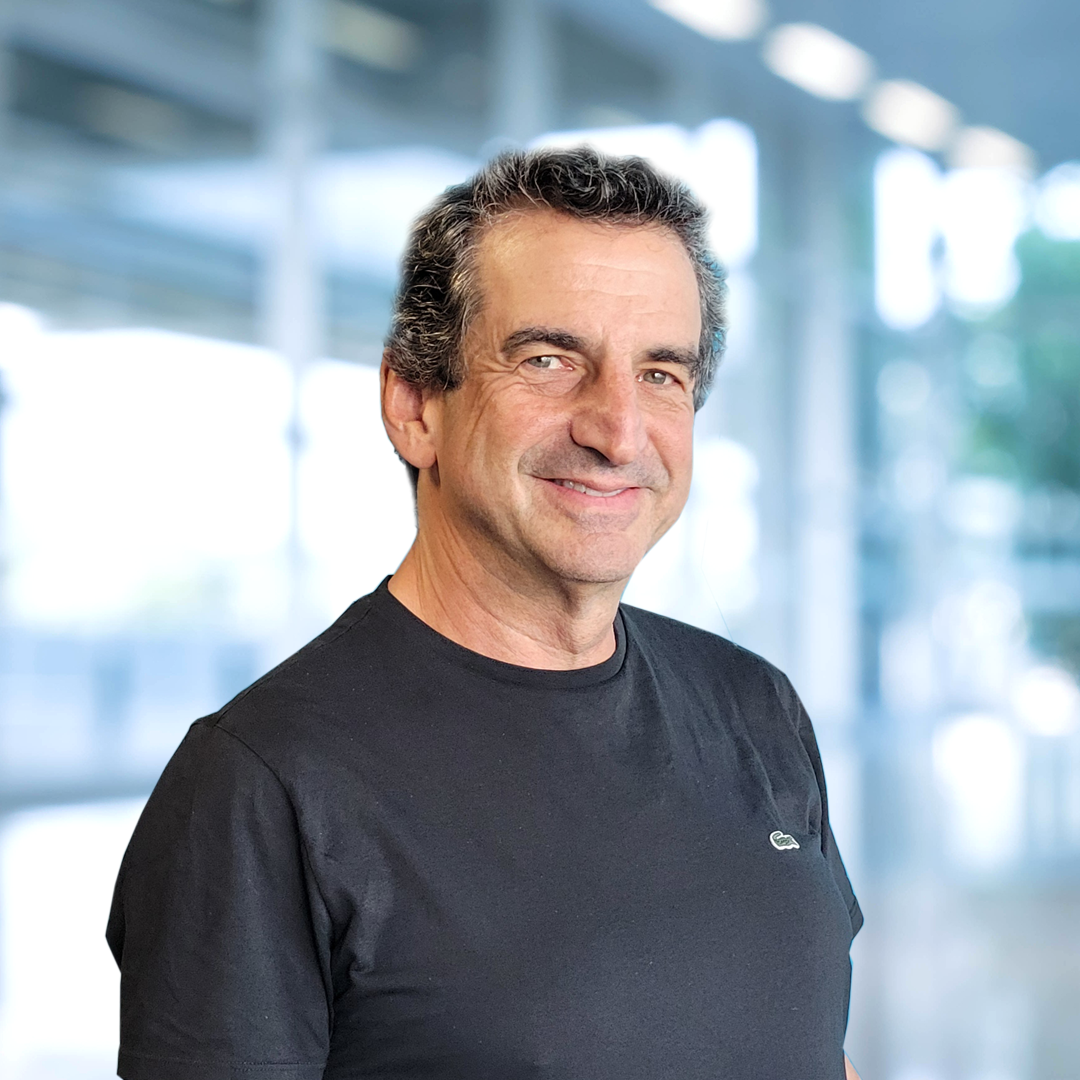
He taught NASA's computers to watch the Space Shuttle. Four companies later, he's teaching them to watch the inside of a chemical plant.
Ammonia. Polyolefins. LNG. Fertilizer feedstock. Refinery cracking units. These are not the words you expect from a software founder's keyword list, and that is exactly the point. Monte Zweben runs ControlRooms.ai, an AI troubleshooting assistant for chemical and energy plants, and his product spends its day doing something deceptively simple: listening to the firehose of sensor data that pours out of an industrial facility and noticing, early, when something is starting to go wrong.
A plant generates a heartbeat. Thousands of tags, each ticking out a temperature, a pressure, a flow rate, a vibration, second after second. Humans cannot hold all of it in their heads. Alarms pile up. By the time a console operator realizes a unit is drifting toward trouble, the trouble has often already arrived. ControlRooms.ai learns the normal rhythm of a plant and flags the anomaly while it is still a whisper - root-cause analysis, alarm suppression, early anomaly detection, the un-glamorous machinery of keeping a refinery from having a very bad day.
It is the kind of problem Zweben has chased his whole career: high stakes, real-time, data-soaked, and mostly invisible to the people who benefit from it working.
"Don't be driven by the technology. Be driven by the problem. Validate the problem with real customers very, very early."
Rewind a few decades. Zweben's first serious laboratory was NASA Ames Research Center, where he served as deputy chief of the Artificial Intelligence Branch. This was AI before AI was a marketing word - scheduling engines, expert systems, planning algorithms - and the customers were the Space Shuttle program, the Space Station, planetary rovers and the Hubble Space Telescope. He helped build the lab up from the ground, and he won the Space Act Award, NASA's recognition for work of unusual value, for his contribution to the Shuttle program.
The thread from that lab to today's control room is unbroken. Both jobs are the same job: take a complex system that absolutely cannot fail, point machine intelligence at its data, and catch the problem before it becomes the headline.
His training reads like an AI family tree. At Carnegie Mellon, where he earned his bachelor's degree, Zweben studied in the orbit of Geoffrey Hinton, Herbert Simon and Allen Newell - the people who, between them, hold a Nobel Prize, a Turing Award and a fair share of the field's founding ideas. He went on to a master's in computer science at Stanford. He later co-authored the academic textbook Intelligent Scheduling and published in Harvard Business Review, which is an unusual double - the kind of person equally comfortable in a journal and a board meeting. He sits on the Dean's Advisory Board of Carnegie Mellon's School of Computer Science, paying the lineage forward.
After NASA, Zweben became a founder and kept becoming one. First came Red Pepper Software, a supply chain optimization company he chaired and ran as CEO, applying his scheduling expertise to the messy logistics of real businesses. Red Pepper merged into PeopleSoft, where he stayed on as VP and general manager of the Manufacturing Business Unit.
Then Blue Martini Software, the e-commerce and omni-channel marketing company he founded and led. Blue Martini went public at roughly $2.9 billion about two years after launch - a number that captures both the company's promise and the altitude of the dot-com era it rode. After that came Splice Machine, which he co-founded and ran, building a real-time machine learning and SQL data platform, complete with a feature store, for companies trying to put models into production.
Across all of it, the pattern holds. He picks an operational problem with real money and real risk attached, then aims the most advanced data and AI tools of the moment at it. The technology changes - expert systems, optimization, big data, machine learning, today's generative models. The discipline does not.
"We don't think about exits. What we think about is satisfying the customer."
Four decades in, Zweben has not slowed into the elder-statesman role. In 2025 he joined AI Fund, the venture studio founded by Andrew Ng, as a venture advisor. In early 2026 he took a board seat at Haven Safety AI, a new AI-native safety intelligence platform co-founded with The AES Corporation and AI Fund and built to investigate workplace incidents faster and prevent serious injuries before they happen. His verdict on it sounds exactly like his career: "Haven is tackling one of the most important and underserved problems in enterprise operations. By embedding AI directly into safety workflows, the company is enabling organizations to learn faster to prevent incidents."
Underserved problems. Operations. Learning faster to prevent the bad thing. If you wanted a single sentence for the whole career, that would be a strong candidate. Zweben has spent his life a step ahead of the hype cycle - doing applied AI when it was unfashionable, doing big data when it was just getting fashionable, and now doing industrial and safety AI while everyone else argues about chatbots.
The keyword list tells the truest version of the story. While the rest of the industry chases consumer flash, Monte Zweben is somewhere in Austin and San Francisco, thinking about alarm suppression on a polyolefins line, plant anomaly feedback loops, and the quiet difference between a refinery that runs on Tuesday and one that does not. Glamorous? No. Important? Ask anyone who lives downwind of a chemical plant.
There is a consistency to Zweben that the resume almost hides. The companies look different - supply chain, e-commerce, databases, industrial monitoring, workplace safety - but the customer is always the operator under pressure, drowning in signals, one missed pattern away from a costly mistake. His software is the colleague who never blinks, never gets tired at hour eleven of a shift, and quietly says: look at this, now, before it gets worse.
That is a strange thing to dedicate forty years to. It is also, when you think about the Shuttle and the refinery and the factory floor, one of the most useful.
"By embedding AI directly into safety workflows, organizations learn faster to prevent incidents."