There is a pleasingly improbable line between a parking shortage at NASA’s Jet Propulsion Laboratory and a daily question shared by two people in love. Alex Ruber drew it one mobile app at a time. The engineer who once imagined a windshield guiding a driver to an open space now runs Candle, a private app designed to guide couples and close friends toward a minute of attention. The machinery changed. The instinct did not: find the friction, make the next action obvious, and let behavior settle the argument.
Ruber’s public trail begins with learning in the literal sense. During the summer after his freshman year of high school, he enrolled in a software engineering course on Udemy. By the end, he had made CryptoTip, his first mobile app. He later described the feeling as “indescribable.” The course did more than teach syntax. It gave him a direction. In 2019, that loop closed neatly when he returned to Udemy as an iOS engineering intern and worked on the company’s mobile app.
By then, he was studying computer science and applied mathematics at the University of California, San Diego. Campus photographs from that year show him talking with attendees at Triton Entrepreneur Night, where students presented young companies to mentors and investors. He had already spent time at NASA JPL in flight systems and software engineering. Aerospace supplied grandeur; an internal parking contest supplied the better anecdote.
The parking app with a windshield dream
In 2017, JPL was preparing to install sensors to help employees locate scarce parking. Its internal app competition produced two winners. Ruber’s entry, Rocket Park, was one. Judges planned to use features from the winning concepts in Android and iOS tools for the laboratory. Asked where such work might go, Ruber imagined augmented-reality tours and, eventually, heads-up displays or autonomous cars that could find and navigate to the nearest space.
“In the future, I envision augmented reality ‘heads-up display’ windshields or autonomous cars that can locate and self-navigate the driver directly to the closest open parking space.”Alex Ruber, 2017
The charming part is not that every detail arrived. It is the scale shift inside the answer. A parking nuisance became a platform for thinking about interfaces, sensors, movement, and automation. Ruber would carry that appetite into Apple, where his work spanned iOS and architecture engineering, and then into products of his own. Yet his independent apps kept returning to something more intimate than spacecraft or operating systems: the split second in which a person decides whether to continue.
A five-second audition for a song
Smores, the music-discovery app Ruber built with Andrei Patru, began on May 1, 2022. Its premise was economical: listeners often know quickly whether a song deserves more time. Smores served short, personalized snippets in a vertical feed, with controls for saving discoveries to Spotify and filtering by details such as genre, year, tempo, and key. A listener could choose previews from five to sixty seconds. By December, the founders said the app had passed 100 daily active users and recorded more than 20,000 liked tracks.
Ruber wrote openly about the sequence: observations, assumptions, an MVP, growth, and metrics. The structure reads like a young builder’s lab notebook. There is little romance in the headings and plenty in the act itself. He and Patru turned a complaint about stale recommendations into an interface, put it into strangers’ hands, and counted what happened. Smores remains available in Apple’s App Store, where it is credited as made in San Francisco by both founders.
An internal JPL contest turns scarce parking into an interface problem.
The online learner returns to the platform as an iOS engineering intern.
Music discovery is compressed into short, personalized previews.
A conversational secondhand-shopping engine enters Y Combinator.
A question game becomes a daily private space for close relationships.
The clever product they chose to leave
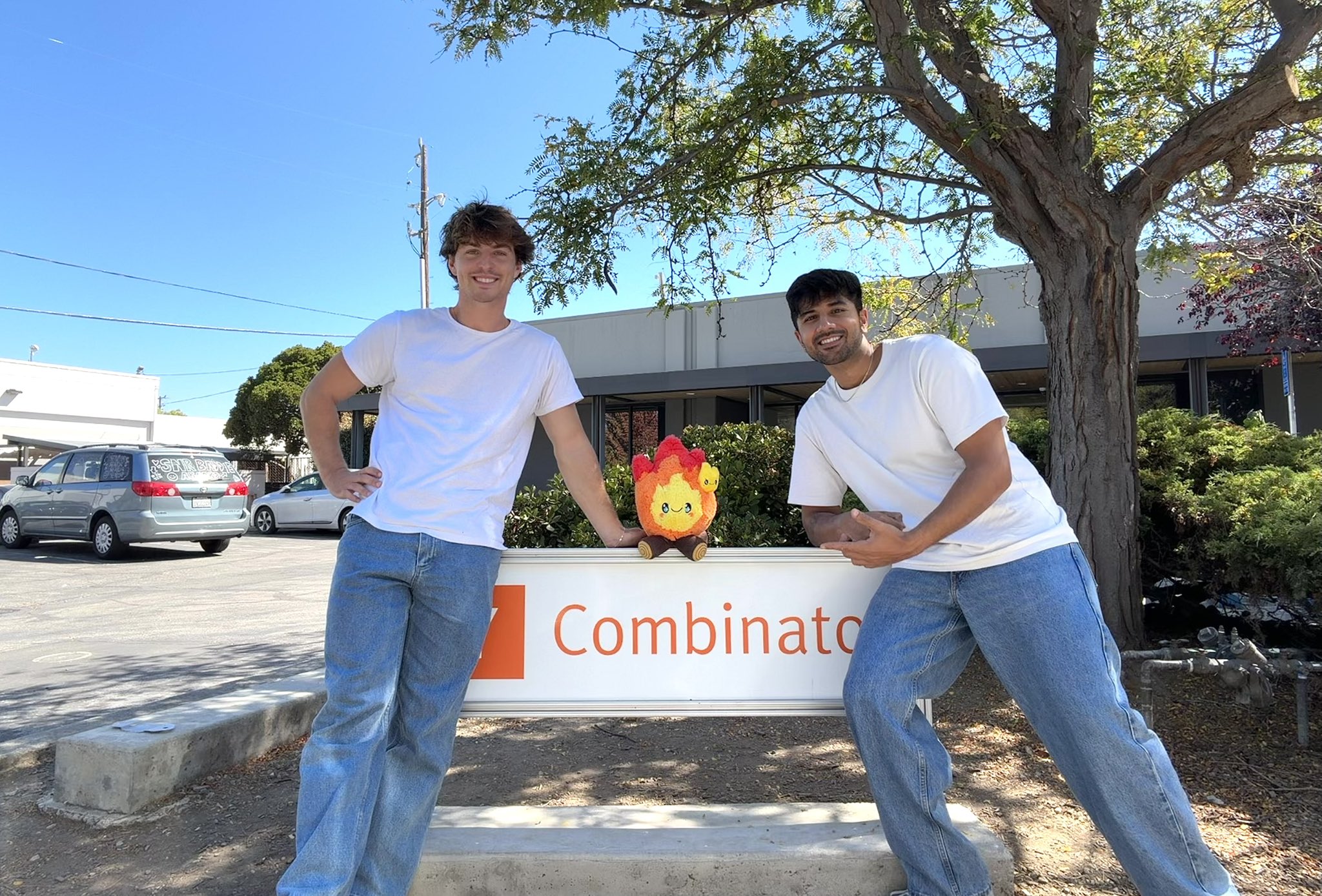
In January 2024, Ruber met Parth Chopra through Y Combinator’s co-founder matching program. Chopra brought engineering experience from Twitter and Asana. Together they built Encore, a conversational search engine for online shopping, beginning with secondhand goods. The product searched hundreds of resale sites through a single interface. It won the pair a place in Y Combinator’s Fall 2024 batch and helped them raise $2 million.
Then came the awkward result that every builder claims to welcome and few enjoy receiving: the technology worked, but its economics pointed toward a company they did not want to build. Ruber saw two plausible endgames. Encore could resemble Google Shopping, or it could become a powerful marketplace like eBay or Whatnot. Neither target felt right. “The secondhand shopping space is a tough market to begin with,” he said.
They did not dress indecision as vision. Between December 2024 and April 2025, they tested more than ten ideas across areas including fashion and sports. Ruber called the period “pivot hell.” The phrase is funny until one pictures it properly: a funded clock running, one discarded conviction after another, and no guarantee that the next prototype will produce anything except another clean little funeral.
The strain of the search began showing up in their relationships with friends and partners. That pressure supplied an honest problem. Ruber and Chopra built a swipeable deck of questions meant to start conversations with the people closest to them. It was small enough to sound almost unserious. It was also the idea people kept using.
The intern, the TikTok, and Europe
The decisive distribution moment did not arrive through an elaborate launch. An intern posted a TikTok about the prototype. The video traveled, especially in Europe. Downloads climbed and feedback arrived. The intern later became Candle’s marketing lead, a promotion that neatly preserves the real lesson: when someone finds the signal, give them a larger receiver.
What began as questions expanded into quizzes, audio and photo challenges, a shared canvas widget for notes and doodles, local date ideas, countdowns, shared albums, and streaks. Candle calls its points sparks. The metaphor earns its keep. Each interaction is deliberately slight, but the product asks users to accumulate a rhythm. Its stated promise is not transformation by Tuesday. It is presence, play, and curiosity in one-minute portions.
By September 2025, six months after launch, Candle said it had 300,000 users, including 150,000 couples. More than 250,000 were active monthly, and the daily-to-monthly activity ratio sat near 50 percent. Monthly revenue had crossed $150,000, putting annual recurring revenue above $1 million. The app used a freemium model: daily prompts, photo updates, and central games remained free, while paid access opened additional content and features.
“Most of it is free, but when users pay for extra content and features, it shows real product-market fit.”Alex Ruber on Candle’s early monetization
Social software, pointed inward
Candle’s more interesting choice is directional. Most social apps point the camera toward an audience. Candle points it toward a person already in the room, or already in your life. The familiar machinery of consumer software remains: notifications, streaks, photos, games, rewards. But the desired outcome is not reach. It is recurrence between two people.
That gives Ruber and Chopra a delicate product problem. The app has to create enough novelty to invite a return without turning connection into homework. It has to deepen without swelling. Their roadmap has included more ways to earn sparks and more “connection types,” while guarding the quick, low-pressure quality that made the question deck work. Retention over twelve, twenty-four, and thirty-six months will decide whether a ritual becomes infrastructure or merely a season.
Ruber’s hobbies, as he lists them, are soccer, surfing, art, and Formula 1. They make an oddly apt set for his working style: a team sport, balance in motion, taste, and rapid iteration under pressure. One need not turn leisure into destiny, but founders do leave clues in the margins.
The transferable lesson in his story is not the usual hymn to stubbornness. Ruber has been stubborn about building and notably unsentimental about any single build. CryptoTip, Rocket Park, Smores, Encore, the abandoned experiments, Candle: each product is an attempt to reduce uncertainty through use. The shopping engine did not become a sacred artifact because it raised money. The TikTok was not dismissed because an intern made it. Evidence could outrank hierarchy and sunk cost.
There is also a welcome modesty in Candle’s unit of change. A couple need not have a revelation. Friends need not schedule a retreat. They answer one thing, compare, perhaps laugh, and return tomorrow. After spacecraft, architecture, recommendation systems, and conversational search, Ruber’s current product asks for sixty seconds of ordinary care. The route was circuitous. The destination is almost comically human.