A messaging app has an unusually rude customer-acquisition problem. You can persuade someone to install it, admire it and rearrange their home screen around it. Then their friend sends a perfectly ordinary text, and your beautiful new application discovers that the party is taking place elsewhere. invi Labs spent its early years working on that problem. The answer it arrived at was almost comically familiar: let people send SMS.
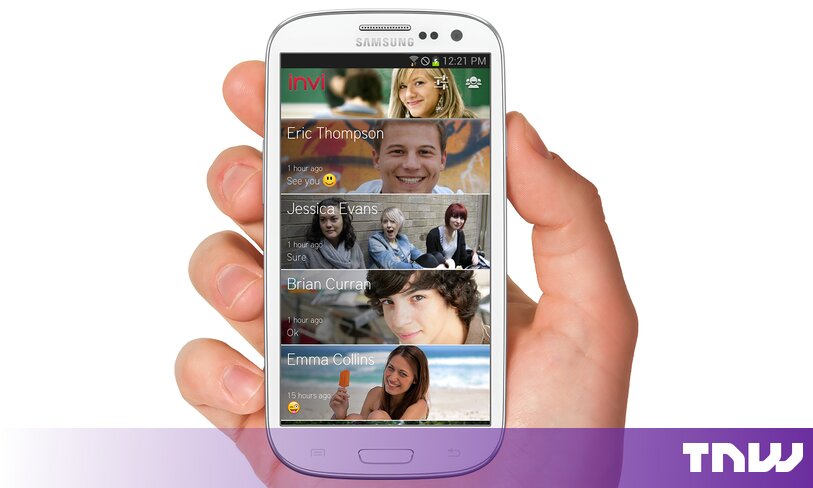
- invi made an Android texting app with instant messaging and media inside the conversation.
- Adding SMS meant a friend did not need invi for an ordinary text to arrive.
- The app was free; carrier texting and data charges still mattered.
- Google acquired the company in May 2018.
There is a useful business story here for anyone building something social. The inconvenient person may never become your customer. They may be your customer’s best friend. Design has to accommodate them anyway.
01 / The friends who stayed outside
Founded by Iddo Tal and Lior Gonnen, invi entered a market where the conversation was already distributed among competing apps. Its starting proposition was richer communication: pictures and videos could become part of the exchange rather than errands that sent people elsewhere. The company was based in Palo Alto, but its product was consumer software with international ambitions, rather than a local technology consultancy.
In June 2013, invi added SMS support to its Android messenger. A user could now text someone who had never downloaded invi, paying the regular carrier rate, while invi-to-invi messages travelled over Wi-Fi or data. That made the app useful before an entire social circle had agreed to adopt it.
“SMS is still a dominant form of communication, and our users have been asking for this type of integration, so we listened.”
Lior Gonnen, co-founder and CTO, June 2013
Gonnen’s explanation matters because it supplies a reason for the change: users asked for it. It would be too neat to declare that the original product had failed and the founders staged a dramatic conversion. The documented change is more practical. They expanded who their users could reach. A messenger’s guest list had become a product requirement.
02 / The research happened where the texting did
The founders participated in UpWest Labs’ first accelerator session. In its November 2012 account, UpWest described interviews with hundreds of teenage texters in Palo Alto. These were people who already had the habit invi hoped to improve. The research did not begin with persuading teenagers that communication was important. They had apparently reached that conclusion without assistance.
That choice of audience helps explain the company’s attention to expression. A text could carry a clip, a photograph or a reaction; a conversation could concern something happening on another service. The product question was where those things belonged on the screen. Invi wanted less interruption between discussing a piece of media and actually seeing it.
The transferable research habit is straightforward: find people who repeat the task often, then examine its interruptions. Ask what they leave the application to do, what they bring back and who must cooperate. Frequency makes a small inconvenience easier to observe. It does not automatically make that inconvenience valuable enough to support a business.
03 / A video, a game and a conversation walk into a phone
By 2015, invi’s mini apps put services such as YouTube and the puzzle game 2048 beside a chat. Users could watch and share without abandoning the conversation. The product also offered themes, voice messages and group chats of up to 100 people. It was selling a more expressive place to text, rather than a different set of friends.
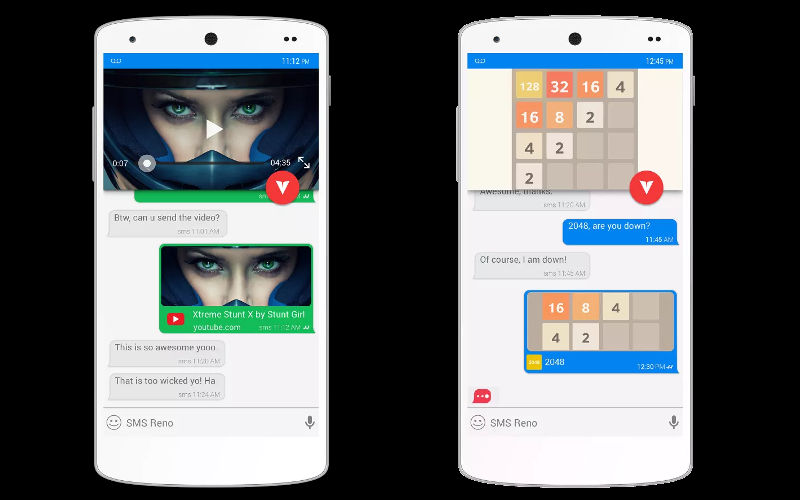
The platform made a difference. Android allowed invi to replace the SMS client; the historical iOS version could not take over that same role. Ordinary texting therefore provided an adoption bridge on Android that the iPhone version could not reproduce. The full experience was conditional, too: both parties needed invi for some richer interactions.
Compatibility gets you into the conversation. Shared software adds the extras.
Consider the difference between an SMS client and a standalone network. An SMS client competes over how you handle existing conversations. A network also needs agreement about where those conversations should happen. Invi straddled both markets. Native texting apps were alternatives for the first job; WhatsApp, Messenger, LINE and WeChat competed for the second. “Messaging” concealed two rather different purchasing decisions, even when neither involved paying for an app.
04 / The price tag said free. The plan said four dollars.
The financing bought time to pursue that ambition. A $750,000 seed announcement accompanied the 2012 launch. June 2013’s $3 million headline included the earlier seed money. Those figures should not simply be added together. In July 2015, NoCamels reported another $2 million round, led by Seven Seas Ventures.
Money from investors and money from customers answer different questions. Invi was free to use. Its public company profile later proposed generating $4 per user annually from contextual content and services, supported by an AI engine. That was an assertion about potential economics, rather than a four-dollar subscription or an audited revenue result.
A proposed revenue figure. The consumer app itself was free.
The same profile described plans for revenue-sharing arrangements that would put the app on tens of millions of phones in 2018. Read that as a distribution ambition. Preinstallation would change the adoption problem substantially: instead of competing for a download, invi could compete for attention on a device where it already lived. The public pitch is evidence of the strategy, not evidence that those installations happened.
05 / When expression crowds the keyboard
In December 2016, Android Authority highlighted invi’s meme generator, stickers and Awesome Bar. A May 2017 changelog added draggable text and stickers in its meme mode, along with per-chat ringtones. There was a clear direction to the product: give people more ways to make a message their own.
More choice also used more screen. TechJunkie’s review found the Awesome Bar busy and easy to trigger accidentally because it sat between the composition box and the keyboard’s suggestions. The review liked aspects of the app while questioning how much multimedia machinery needed to be so close to a thumb.
That criticism identifies a concrete design tension, rather than a diagnosis of the company’s fate. A tool meant to save an interruption can create a new one if the user keeps hitting it by mistake. Builders can borrow invi’s attention to context while testing the controls with equal care. A relevant suggestion still needs a place to sit.
In February 2018, Tal described Autonomous Search as a stream of conversation-relevant content presented in the Awesome Bar and Content Slider. He also wrote about the importance of building a team. This is the documented culture at its most specific: early interviews, iterative product work and a founder who publicly put team-building near the centre of his job.
06 / The company joined Google. The paper trail continued.
Google acquired invi Labs in May 2018. Later patent records provide a quieter ending to the story: Tal and Gonnen appear as inventors on messaging inventions with Google LLC named as assignee. A patent concerning emoticons, content and mood messages issued in November 2020; another concerning embedded rich media issued in June 2021.
Those records describe work on accessing media inside texting and selecting expressive content through the messaging interface. They establish a technical trail. They do not prove that a particular modern Google Messages feature came from invi, or that the startup alone explains the later app’s growth.
Invi is useful today as a case study in making a new product fit an old social habit. The SMS bridge worked within Android’s permissions and the carrier network’s rules. It could not give iOS equivalent permissions, make every friend adopt the richer features or guarantee a paying market for contextual content. Those conditions belong inside the product decision.
The question to copy is small enough to write on a sticky note: can one person benefit before everyone else agrees? Invi answered it with a technology that was already there. The internet inside a conversation was the attractive promise. An ordinary text to an ordinary friend was the way in.