The company that once helped put Angry Birds onto Android phones now wants to make the download button unnecessary. Open GetJar today and the invitation is to play: a puzzle, a quick arcade diversion, something that lives in a browser tab. For a name associated with the early mobile-app rush, it is a tidy little reversal. The old business helped people get software onto a phone. The new pitch removes the installation.
Between those two propositions lies a revealing company story. GetJar built a substantial distribution business before Apple and Google’s stores became the obvious destinations for mobile software. It attracted venture money, worked with carriers and publishers, and experimented with making paid apps free. It also discovered the vulnerability of a distributor whose competitors controlled the operating systems.
The recurring problem is practical: people want the thing an application does, and developers want people to find it. GetJar has spent different chapters of its life working on the inconvenient steps in between. Its latest chapter makes that ambition visible in a single browser window.
A testing problem with an audience attached
Ilja Laurs founded GetJar in Lithuania in 2004. Its beginnings were closer to a testing bench than a shopping mall. His software business needed to know whether applications worked across a disorderly assortment of mobile handsets. Inviting the public to download and test them supplied access to devices that one development team could not conveniently keep on its desks.
“Device fragmentation is a complete nightmare.”
Ilja Laurs, founder, in a 2010 interview

When the testing tools opened to the wider public in 2005, distribution became part of the attraction. Developers could reach people directly; consumers could find software for the phone they actually owned. GetJar’s device-detection tools helped point visitors toward a suitable version. This was useful expertise in a market where the handset model could determine whether a download was a pleasure or a waste of time.
There is a lesson here for anyone developing a service: watch for the second job customers give your product. A testing community can also be a distribution network. The important observation is what participants find valuable enough to keep doing.
2004 onward: help people find software that works on their particular phone.
Free on the shelf, paid at the front
GetJar’s early proposition had two audiences and two prices. People could download apps for free. Publishers could pay to improve their visibility, bidding for sponsored placement and paying according to the downloads it produced. The scarce commodity was a visitor’s attention. Giving away access to the catalog made the destination attractive; selling prominent positions turned some of that traffic into revenue.
That distinction explains where GetJar fitted into the market. It was a consumer destination on the surface and a distribution and marketing service underneath. A developer with a good utility or game still needed a route to customers. GetJar offered a place where people were already looking, plus tools to steer them toward compatible software.
The audience went beyond games. In a July 2010 interview, marketing chief Patrick Mork put gaming at about a quarter of traffic. Social and messaging applications, productivity tools, entertainment and lifestyle software all mattered, with tastes varying by country. A free-app marketplace could serve both someone hunting for a distraction and someone trying to make an inexpensive phone more useful.
Carrier relationships provided another route to those customers. Reliance Communications and Virgin Mobile were among GetJar’s Indian distribution partners; Sprint was another historical partner. These arrangements extended the usefulness of the catalog beyond people who happened to type its address into a browser. For developers, the appeal was access to an audience that would otherwise take time and separate commercial relationships to assemble.
Downloads of Nimbuzz through GetJar, reported by the communications app in October 2010. A historical distribution figure, not a count of today’s users.
The birds arrived. The servers buckled.
In October 2010, Rovio launched the full Android version of Angry Birds through GetJar. Demand overwhelmed the store’s servers. For a distribution company, it was a spectacularly inconvenient proof that people wanted what it was distributing. The product did its job of attracting attention; the delivery system struggled to keep up.
That episode captures a practical tension behind a much-envied launch. Securing a sought-after title can make a store a destination. It also concentrates traffic into a moment when failure is unusually visible. A partnership that delivers exactly the audience everyone hoped for can expose the weakest operational assumption in the plan.
GetJar had already passed one billion cumulative downloads that June. Nimbuzz’s own disclosure of 45 million downloads through the service later that year gives the scale a concrete customer example. Those numbers describe distribution events across the earlier platform. They should not be read as a present-day audience, or as proof that every download became a regular user.
Gold tried to make somebody else pay
In September 2011, GetJar Gold offered an unusually direct answer to the price of premium Android software: zero for the user. The launch catalog contained 50 premium, ad-free apps. GetJar paid participating developers per download and offset that expense by selling sponsored listings to other developers.
Compared with Amazon’s then-current free-app-of-the-day approach, the offer was a catalog rather than a single daily selection. The arrangement gave consumers a reason to return and publishers a way to be compensated. It also made GetJar responsible for balancing the appeal of the giveaway against the income from promotion.
The economic test is easy to describe and harder to pass. Advertising income has to cover what the platform pays out, along with the expense of running the service. Plenty of free downloads can coexist with disappointing commercial results. A founder copying the mechanism would need to measure the value of acquired customers, not simply congratulate the team on a rising download counter.
The operating system became the storefront
GetJar raised a reported $42 million in venture funding: an initial $6 million from Accel, another $11 million in 2010, then $25 million from Tiger Global and Accel in 2011. The capital supported expansion and product development. But the market was changing the value of the original advantage.
A distributor that handled many kinds of phone solved a real problem. As the mobile economy gathered around iOS and Android, the strategic problem moved. Operating-system stores increasingly owned the obvious route to software. GetJar responded with Android distribution and app discovery. Chris Dury succeeded Laurs as CEO in 2012, and Sungy Mobile acquired the US business in February 2014.
The buyer wanted capabilities in advertising, discovery and analytics. That is a different emphasis from collecting as many kinds of handset software as possible. The sequence suggests a business adapting to where demand and bargaining power had moved. It does not establish a single dramatic meeting in which everyone changed their mind.
Three rounds through 2011
February 2014
Funding and acquisition consideration measure different things. These figures are not an investor-return calculation.
The acquisition came with conditional shares as well as cash. Sungy’s later annual report recorded $4.9 million in cash consideration and said GetJar had missed the relevant 2014 performance targets, so the share earnout would not be paid. The initial $5.3 million cash announcement and possible future shares should therefore never be added up as though every component was received.
For readers assessing a deal, this is the copyable habit: separate committed cash from contingent compensation, then return to the subsequent filing. An announcement records an agreement and its possibilities. A later account can show which possibilities became money.
A browser tab is the new shopfront
GetJar announced its browser-game return in November 2025. Its current front page foregrounds games, including Slitherlink, Dot and Dot and other casual titles. The product invitation is straightforward: choose something and play without a separate app installation. The promise suits short sessions, experimentation and people who would rather try several games than commit storage to each one.
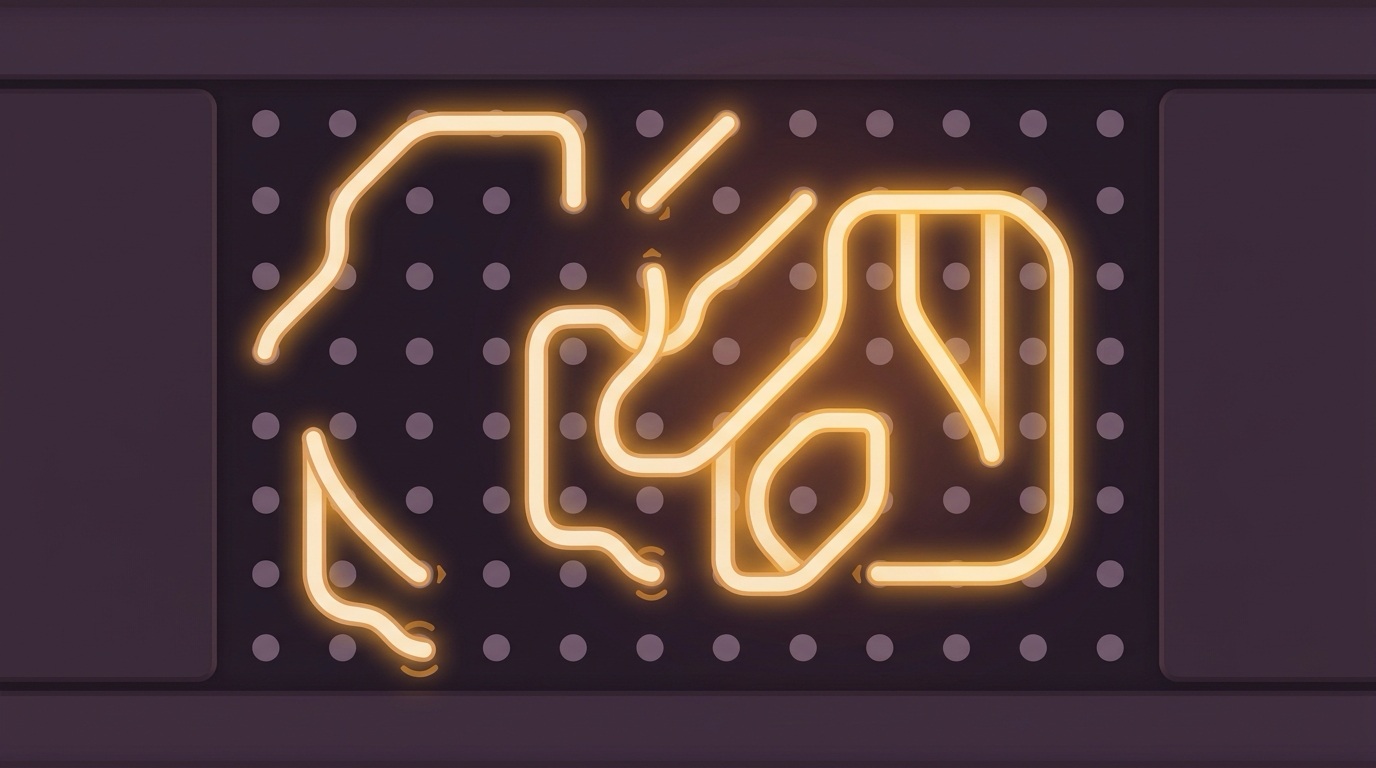
The company’s developer announcement also described publishing tools and optional features for saved progress, analytics, achievements and purchases. Its early-adopter offer promised no platform commission on microtransactions, while retaining payment-processor fees. That is a dated launch offer, not evidence that every future developer contract will carry identical terms.
The broader About page describes an ambition to support publishing and discovery across platforms, with advertising, subscriptions and sponsorships among the monetization options. For readers, the useful distinction is between that broad ambition and the gaming experience visible on the front page. The latter supplies something specific to try.
Browser distribution has established alternatives, including Poki and CrazyGames. Removing installation is therefore an entry ticket to this market, not an exclusive advantage. GetJar needs games people want, discovery that puts those games in front of suitable players, and enough reasons to return. A remembered name may win a visit; the next visit has to be earned.
The approach is also a better fit for some products than others. A quick puzzle is a natural candidate for a browser session. A game dependent on extensive offline use, demanding hardware or deep native integration needs a different assessment. Developers should test loading, controls and repeat play on their intended devices before treating an easier publishing route as a complete distribution strategy.
GetJar’s most useful idea survives those qualifications. Find the step where an interested person gives up, and make that step easier. First it was figuring out which software worked on a phone. Then it was getting noticed among other apps. Today the company is betting that, for a certain kind of player, the download can disappear altogether.
Open another tab
Explore the games, meet the platform and revisit the early app-store conversation.