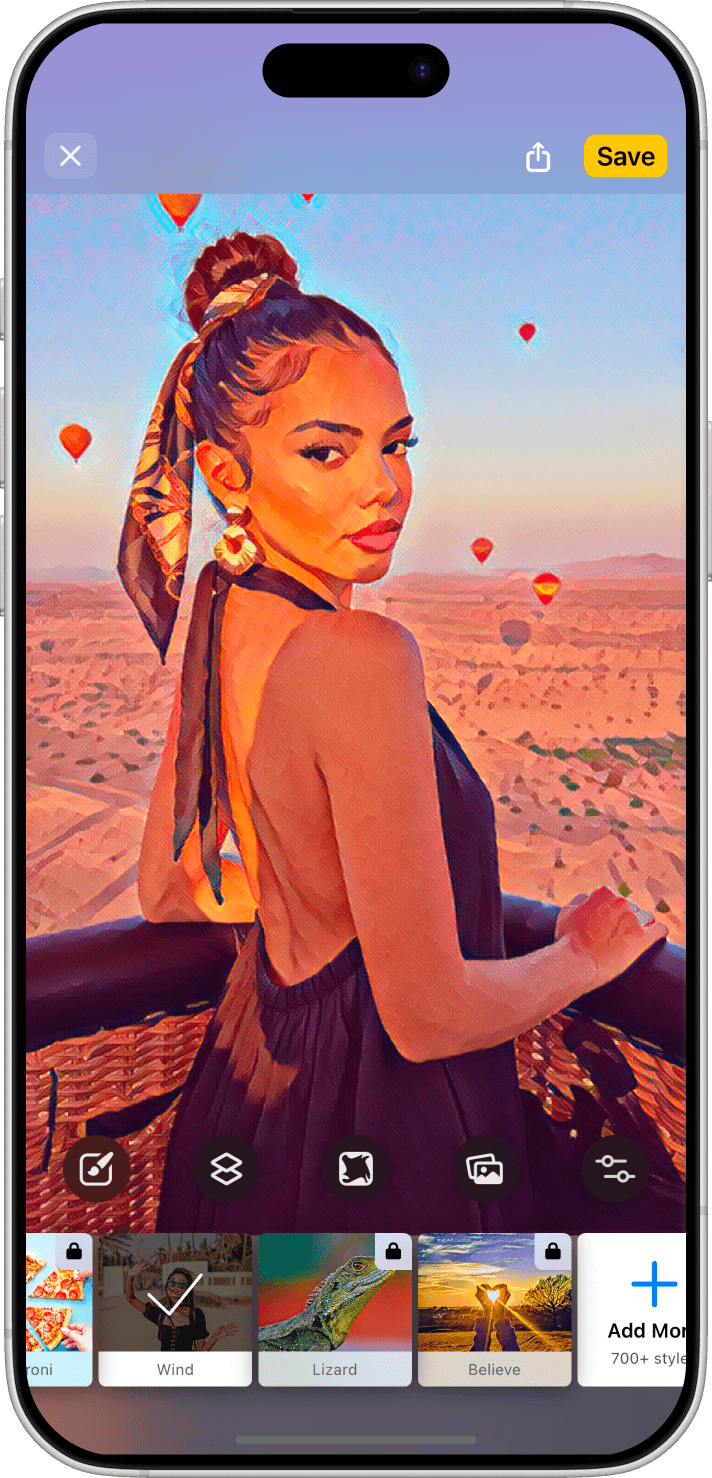
For a few weeks in the summer of 2016, a familiar photograph could have a second career. Open Prisma, choose an art style, wait a moment, and the picture of your lunch or your friend came back looking as though it belonged on a gallery wall. The effect was easy to describe and easier to pass along. In roughly two months, the app had been downloaded more than 55 million times. Its success created a practical problem: the images were being processed on servers, and the crowd was arriving faster than the machinery could comfortably serve it.
- Prisma Labs makes two consumer apps: Prisma for art-style transformations and Lensa for portrait and photo editing.
- Its first hit was a free-to-try visual trick; its second was a paid AI portrait feature inside an existing editor.
- The company raised $6 million in 2019 to grow its team and premium subscriptions.
- Its lesson is useful and awkward: remove work for the user, but account for the work and rights behind the result.
The company behind the app, Prisma Labs, had been founded that year by Andrey Usoltsev and Alexey Moiseenkov. It set out to make difficult image processing feel casual on a phone. The technical feat mattered, but the product's appeal lived in a smaller observation: almost everyone has a photograph they would like to make more interesting, and very few want to spend an afternoon learning curves, masks and layers to do it.
The first figure is a contemporary report; the second is the announced round. “Viral moments” refers to Prisma's 2016 launch and Lensa's 2022 avatar surge.
The first trick had a plumbing problem
Prisma initially sent a user's picture to the cloud to apply its neural-network effect. Demand exposed the cost of that arrangement in waiting time and server load. In August 2016, the team added offline processing, letting many edits happen on the device. Moiseenkov said at the time that older phones still performed better with server-side processing. It was a modestly revealing caveat: a button may be simple for the person touching it while remaining stubbornly complicated behind the glass.
The app worked because it offered a result with an immediate use. A stylized picture could become a profile image, a post, or a private joke. Prisma was not asking customers to learn the language of computer vision. It asked them to choose a look. Its maker says the app later topped download charts in 125 countries and won App of the Year recognition from both Apple and Google. Those claims describe a remarkable distribution moment, though a large audience and a lasting business are separate achievements.
Then the camera turned around
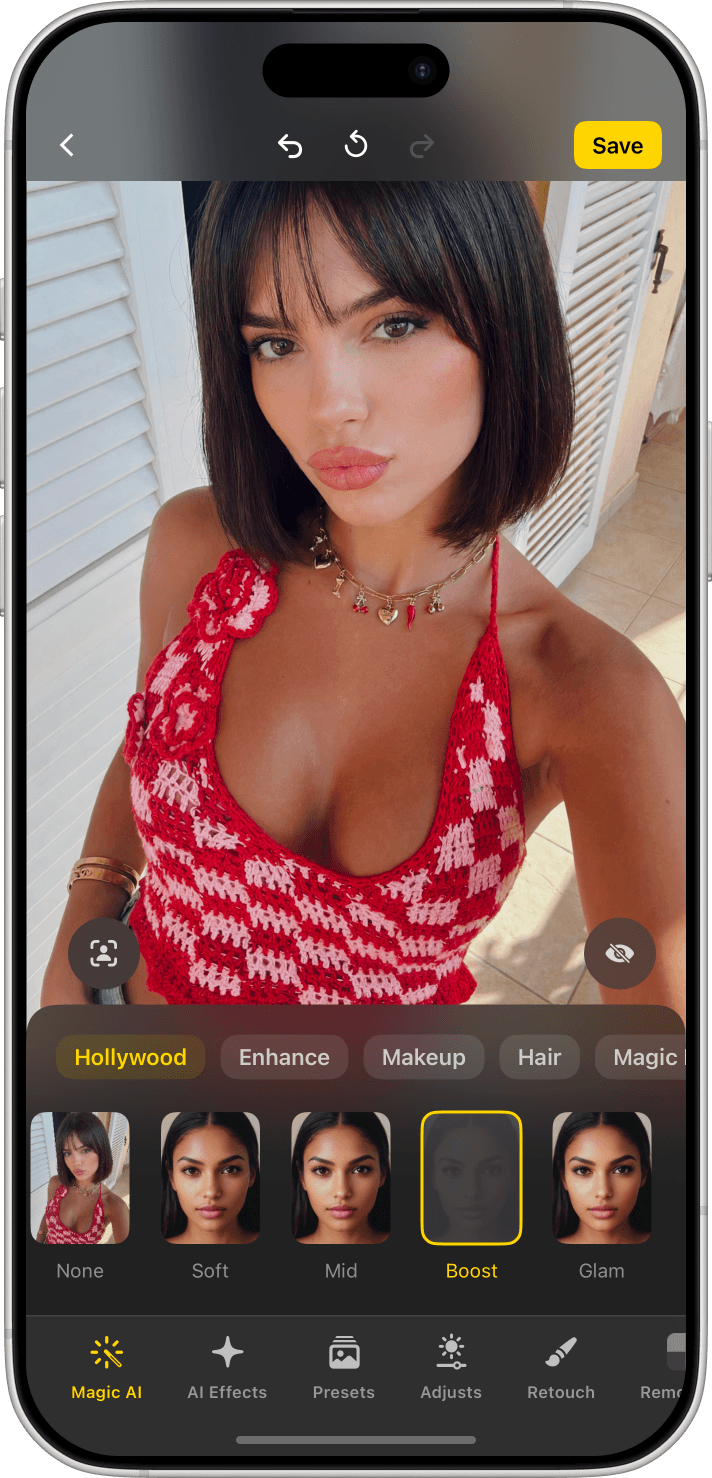
Lensa, launched in late 2018, made the portrait the center of the business. Its everyday tools address the low-grade disappointments of phone photography: a distracting object, a background that competes with the person, lighting that misses the mood, a selfie that needs a little care. The app offers quick adjustments, presets and retouching without requiring a professional editor's patience. Prisma changes what a picture resembles. Lensa works on how the person in it appears.
That shift also gave Prisma Labs a clearer way to charge. The apps use a freemium model with paid subscriptions and in-app purchases. When the company announced a $6 million Series A in 2019, Usoltsev described plans to expand the then 21-person team and market premium subscriptions. Moiseenkov had left the previous year. The funding did not buy a new viral event on command; it supported the quieter work of turning editing into something people might use repeatedly.
“Our mission is to democratize photo and video editing.”Prisma Labs, company about page
There was a commercial argument inside that mission. A filter can be tried once; an editor can become part of a person's weekly routine. Lensa's portrait tools positioned the company alongside Facetune, Picsart, Snapseed and the mobile products of Adobe and VSCO. Its distinguishing move was to compress complicated visual decisions into a few taps. That is a helpful feature for the user and a difficult one for competitors to make feel natural.
A portrait worth paying for
In late 2022, Lensa added Magic Avatars. A user supplied roughly 10 to 20 selfies, chose a package, and waited for a set of illustrated portraits. Prisma Labs says it used a personalized copy of Stable Diffusion, an open-source image model, for each user. The result was not merely another filter laid over an existing image. It offered versions of the same person in new visual worlds, ready to inspect and share.

The extra steps might seem hostile to a one-tap product. They turned out to serve the proposition. Uploading many pictures suggested the output would be personal; the wait suggested work was happening; payment made the result feel like a commissioned set rather than a disposable effect. Lensa had been available for years, but Magic Avatars pushed it up app-store charts. Sensor Tower estimated about 13.5 million worldwide installs in the first 12 days of December 2022, according to a report published at the time. The underlying app was established; the feature supplied the new reason to arrive.
The bill for effortless AI
Magic Avatars also brought questions that a good interface could not settle. Artists objected to the use of images in the training data behind Stable Diffusion. Users asked what happened to the selfies they uploaded. Reports documented unwanted sexualized outputs and differences in how the system depicted women and people of color. Prisma Labs responded with moderation changes and privacy-policy revisions, and its own FAQ describes options to delete avatars. These were not side issues for a portrait product. They concerned the material people had been asked to trust it with: their likeness.
The lesson for a small consumer-software company is more specific than “go viral.” Prisma Labs caught attention with one clear transformation, improved the engineering when that attention strained it, and used a second app to pursue more durable behavior. It then placed a timely, paid generative feature inside a product people already knew. That sequence is copyable in outline, but only when the underlying effect is compelling enough to share and the company can deliver it reliably at the moment demand arrives.
Today, Prisma Labs is still selling the modest luxury that launched it: the feeling that an ordinary photo has more possibilities than the phone camera first showed. The story's twist is that the most important button may not be the one that makes the image. It may be the one that makes a person trust the result enough to keep it.