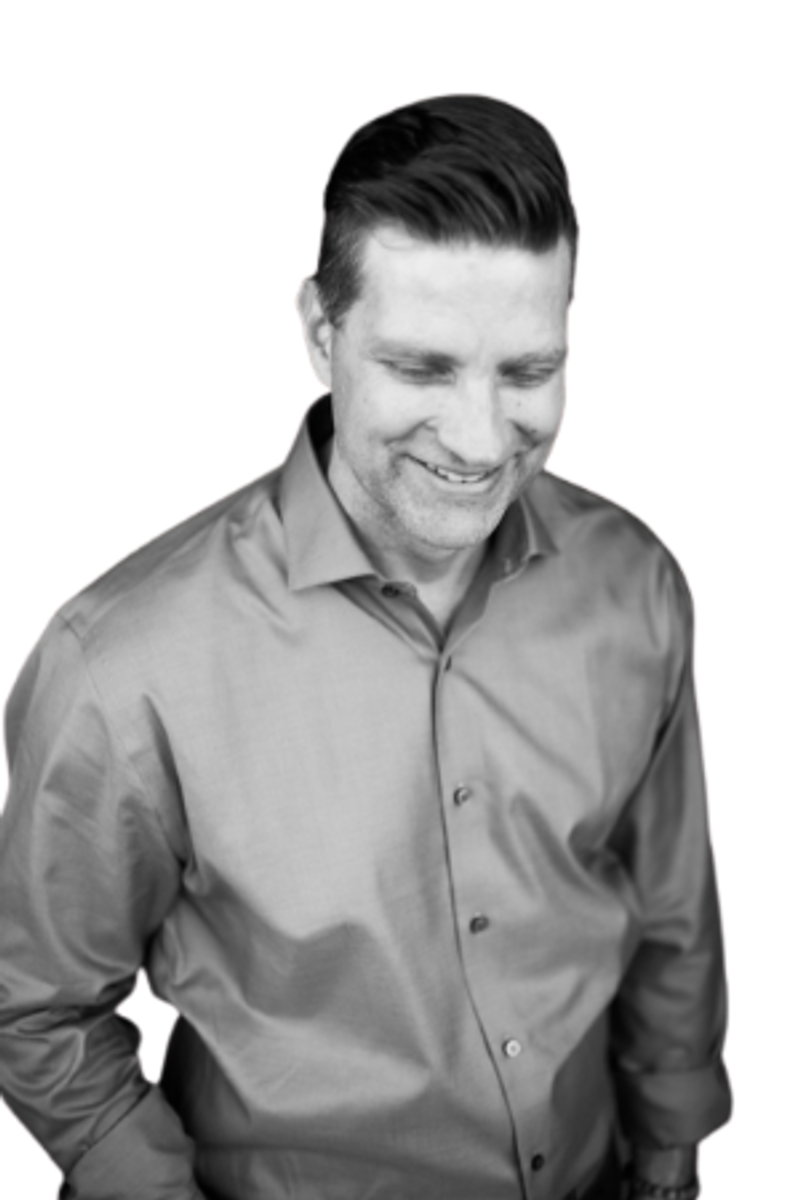
The Rebuilder
The turntable was the first business school. At 14, Brian Sharp was hauling speakers to school dances and weekend events under the name "Sharp Sounds" - reading rooms, moving crowds, learning to pay attention to what people actually wanted. It was a lesson in empathy dressed as entertainment. Two decades and dozens of companies later, it is still the discipline that defines him.
Sharp is the CEO of Time Doctor, a workforce analytics platform that measures how distributed teams actually work - not through surveillance, but through data that organizations use to make better decisions, reduce burnout, and manage at scale. He was appointed to the top role in February 2026, succeeding co-founder Robert Rawson. The promotion was not a surprise. As President, he had already rebuilt the company's internal alignment - unifying product, go-to-market, and customer experience around a single north star: transparency without fear.
"The future of workforce analytics isn't about watching people work - it's about understanding how work gets done."- Brian Sharp, CEO, Time Doctor
The Long Game
Twenty-seven years is a long time in technology. Sharp has been at it since the late 1990s, when the internet was still a novelty and a "startup" was something you explained to your parents at Thanksgiving. He started his first real company at 22 - just a few years after putting away the DJ equipment - and has been building ever since.
The record is not spotless, and he doesn't pretend it is. He has started companies that failed. He has closed businesses he loved. He has bought and sold and partnered and pivoted. In a 2024 podcast interview, he was asked to describe himself as a "builder" - and he pushed back. The more accurate word, he said, is "rebuilder."
"If you're doing anything right or pushing yourself, rebuilding is just part of the process of building. No matter how far you get, there will always be ways you can improve what you've already done." It is a philosophy shaped by evidence: Sharp has navigated four major economic crises - the dot-com bust in 2000, the aftermath of 9/11, the Great Recession of 2008, and COVID-19. Each one required a rebuild.
What Time Doctor Actually Does
Founded in 2012 by Rob Rawson and Liam Martin, Time Doctor began as a simple time-tracking tool for remote teams. By the time Sharp took over as President, it had grown into a full workforce analytics platform serving over 10,000 organizations across healthcare, financial services, technology, and outsourcing. The company operates with around 500 employees spread across 31 countries - which means Sharp is running a fully distributed operation while also selling distributed operations software. The irony is not lost on him.
The product tracks how work happens - time spent, applications used, focus patterns, attendance, and productivity trends - and surfaces that data in dashboards that managers and executives can actually use. Sharp's pitch is that the data should serve employees as much as employers. His explicit goal is to move the industry away from surveillance and toward something he calls trust-based analytics.
"Your income will always be directly proportional to the size of the problem you can solve."- Brian Sharp
Help & Hustle
Sharp runs a personal brand alongside his day job - an ecosystem of content built around what he calls "Help & Hustle" culture. There is a podcast, "High Performance Happiness," where he interviews executives and entrepreneurs about building companies without wrecking their lives. There is an online course, "Burnout to Balance," aimed at remote leaders navigating the specific strain of managing distributed teams. There is a blog. There is a Facebook community group.
The through-line is a conviction that grew from personal experience: that high performance and personal happiness do not have to be a tradeoff. "I want both high performance and happiness," he has said, "and have learned you don't have to compromise."
The message resonates because he has the receipts. He has mentored nearly 1,000 employees and contractors over his career, led companies from zero to nine figures, and built what he calls a "Help & Hustle" internal culture wherever he has gone - one that emphasizes hard work alongside mentorship, work-life balance, and celebrating the success of others.
Where He Lives
Sharp is a native Northern Californian, born in San Francisco and currently based in the foothills of the Sierra Nevada, about an hour from Lake Tahoe. He snowboards there. He also mountain bikes, hikes, and does board sports and water activities - the full catalog of someone who takes the outdoors seriously. He has been married for nearly 20 years and has three children.
He has avoided fast food for over two decades. He loves pizza and chocolate. He dislikes cooking. He has four cats and one dog. He is a San Francisco sports fan in a house near Tahoe, which may be the most Northern California sentence ever written.
He also co-founded the Tower of Niceness, a 501(c)(3) nonprofit providing assistance to people in need in his community. The name is characteristically disarming. The mission is not.
The Next Chapter
As CEO of Time Doctor, Sharp's immediate priority is scaling enterprise adoption without diluting the product's trust-first ethos. The company is positioning itself in a market that is increasingly crowded with surveillance-adjacent tools, and Sharp's competitive bet is that organizations will eventually prefer data that employees understand and accept over data that employees fear and resent.
It is a longer game than most investors prefer. But Sharp has been playing long games since he was hauling speakers to school dances in Northern California. He knows how rooms work. He knows how to read a crowd. The music has changed, but the discipline has not.