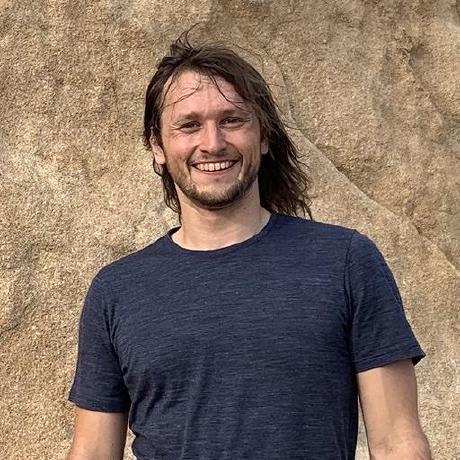
The company address is 548 Market Street, San Francisco - a WeWork-style building where a few hundred startups share elevator rides and espresso. Brian Rue has been there long enough to watch neighbors come and go. Rollbar, the error monitoring platform he co-founded in 2012 with Cory Virok, has outlasted most of them - not by being loud, but by being quietly essential.
Every time a developer ships code to production and something goes wrong - a Python exception, a JavaScript uncaught error, a broken API call in a microservice nobody remembers writing - Rollbar is the thing that catches it, groups it, and routes it to whoever needs to know. At 100,000 developers across 4,000+ companies, that is an enormous amount of broken code, caught and catalogued before customers ever notice it.
Rue came to this problem with firsthand wounds. Before Rollbar, he was CTO of Lolapps, a San Francisco gaming studio that built some of Facebook's most-played independent games. He hired Cory Virok as one of Lolapps's first engineers. They watched Lolapps merge with Hong Kong-based 6waves in 2011. By March 2012, both had moved on. By May 2012, they were building Ratchet.io - a small tool to track software errors with some sense of history. It became Rollbar. TechCrunch ran the story in February 2013: "Former Lolapps Engineers Launch Rollbar, An Error-Tracking Platform For Developers That Has A Sense Of History."
It's imperative to have a learning mindset. It's this concept of continuous improvement that has always been central to Rollbar and our vision of how the world should be.
- Brian Rue, Authority Magazine interview
What separates Rollbar from its competitors is what Rue and Virok spent years trying to name. They landed on "Continuous Code Improvement" - three words that describe not just error tracking, but the whole feedback loop between shipping code and making it better. It is a philosophy borrowed from manufacturing (Toyota's kaizen, Deming's cycles) and applied to software. The words took years to find. The underlying conviction was there from the beginning.
Rue studied Management Science and Engineering at Stanford, graduating in 2008 - a degree that sits precisely at the intersection of systems thinking and software. Minor in Computer Science. He knows how to read an org chart and how to read a stack trace. That combination - executive instinct plus engineering fluency - is exactly what the CEO seat at a technical SaaS company requires.
Notable Rollbar Customers
Salesforce
Twilio
Uber
Instacart
Twitch
Kayak
Duolingo
The Series B arrived in March 2020. Eleven million dollars, led by Runa Capital, with Long Light Capital, Blossom Street Ventures, Cota Capital, Bain Capital, and Patagonia Capital participating. The timing was either terrible or irrelevant, depending on how you look at it: COVID-19 arrived in the same month, shutting down offices worldwide and scrambling every sales pipeline in enterprise SaaS. Rue pivoted. Rollbar survived. Both the product and the business came out the other side intact.
That capital efficiency is the detail that stands out when you look at the numbers. Thirty-five employees. Twelve and a half million dollars in annual revenue. That is roughly $357,000 in revenue per employee - a ratio that most venture-backed SaaS companies only reach after they've hit $100M and started cutting. Rue runs a lean shop. The product does the heavy lifting.
In 2024, Rollbar was named a Leader in G2's Winter Grid Reports for both Bug Tracking and Exception Monitoring - two separate categories, which is a distinction that matters in a crowded market. The platform now integrates with dozens of frameworks and languages, uses machine learning to group similar errors, and offers session replay, automated alerting rules, and impact analysis that connects production errors to affected customers.
By 2025, Rue had set and hit a goal that most enterprise SaaS CEOs would have staged for a press release: deploying agentic AI systems into Rollbar's own production environment by mid-year. Not as a demo. Not as a beta. In production. The company that helps developers catch AI-generated code errors is now running its own AI agents in prod, watching itself for bugs it might create. That is either very confident or very courageous. Possibly both.
The co-founder relationship between Rue and Virok - now spanning more than 15 years if you count Lolapps - is the structural fact that underlies all of this. Virok remains CTO. Rue remains CEO. They have never publicly disagreed, which either means they genuinely agree or they've learned how to do it privately. Either way, the company hasn't pivoted its core product, changed its business model mid-stream, or made headlines for the wrong reasons. In the startup world, that kind of consistency is its own kind of achievement.
San Francisco's quietest error-tracking empire.
Brian Rue is not a person who generates a lot of noise. No TED talks found. No Twitter threads about the future of software. What he has instead is a software platform that 100,000 developers use when things break - which is to say, constantly. The product is the profile. Every uncaught exception routed to the right developer, every error grouped by root cause, every production incident caught before a customer calls - that is the work, and it is ongoing.