Before Jazz Pharmaceuticals had a product, it had a question about people. Bruce Cozadd wanted to build a company with a particular working culture. In 2003, he turned to two colleagues from ALZA Corporation: Sam Saks and Bob Myers. The order is worth pausing over. The team was taking shape before there was a specific development program to gather around. In the usual startup telling, the idea arrives first and the supporting cast follows. Here, several members of the cast already knew one another's work.
Myers would become Jazz's chief business officer, then its president. Years later, he would co-found Orbus Therapeutics with Jason Levin, another colleague from Jazz and ALZA. Investors who had backed Jazz would invest in Orbus. Ernest Mario, formerly ALZA's chairman and chief executive, would become Orbus's chairman. A career that looks like a sequence of company names begins to resemble a reunion with a finance department.
There is an appealing economy to this pattern. A new company demands hundreds of judgments about strangers. Previous experience can settle a few of them. Myers's career offers a way to think about that advantage: working relationships can travel when an organization cannot. The names change on the office door; knowledge of how a colleague makes a decision can remain useful for years.
By February 2025, Myers was preparing to step away from daily executive work at Orbus, where he had been president and CEO since 2012. Levin would become president. It was a change in leadership between founders who had worked together well before Orbus existed. To understand that handover, it helps to start with the earlier company that kept supplying the introductions.
- 1992-2001ALZACommercial development
- 2003-2011JazzCo-founder; president
- 2012-2025OrbusCo-founder; president & CEO
Exelixis, 2002-2003, connects the first two chapters. Dates for Orbus mark Myers’s executive tenure.
An education in the whole company
Myers earned a bachelor's degree and a master's degree at Stanford University, followed by an MBA from Stanford Graduate School of Business. Three degrees from one university make a compact education line. His subsequent job descriptions sprawl rather more. They concern the practical business of getting different parts of an organization to agree on what should happen next.
He worked at ALZA from 1992 to 2001, eventually becoming senior vice president of commercial development. His responsibilities included corporate development, acquisitions, new product planning and corporate planning. Those functions sit at the point where a company considers its future shape. Buying something, building something and budgeting for something are separate decisions until someone has to make them fit together.
In 2002, Myers became executive vice president, pharmaceuticals, at Exelixis. He stayed through 2003, when he joined Jazz at its inception. The move put an executive with experience inside established organizations into the business of helping assemble a new one. His first Jazz title, executive vice president and chief business officer, gave him a place close to its commercial decisions.
At Jazz, his eventual remit included sales, marketing, planning, development, supply chain, project management and business development. Read slowly, that list describes a good deal of the company. Each function has its own calendar and its own definition of an urgent problem. A supply chain does not become punctual because a marketing presentation was persuasive. The range of his responsibilities matters because founding would later require him to work across those boundaries again.
Jazz, with familiar players
Cozadd's account of Jazz's beginnings puts culture near the center of the founding decision. He sought partners who shared his view of how people should work together. Myers and Saks came from the same ALZA background. That makes the founding more specific than the familiar instruction to hire good people. These were people whose professional histories already overlapped.
Myers served as chief business officer from 2003 until 2007. In March 2007, he became president. He also sat on the board. The combination put him inside both management and governance: involved in running the business and participating in the body overseeing it. These roles carry different obligations even when the same person walks into both meetings.
Jazz's early management roster also included Levin as vice president of corporate development. He had joined in 2003 after working in business development at ALZA. The future Orbus partnership therefore had an earlier setting, with Myers and Levin working in the same young organization. Their next company would draw on a relationship that had already survived the less photogenic stages of company building.
Myers resigned as Jazz's president and a director effective January 14, 2011. His employment ended on February 1. The separation agreement provided for a consulting relationship of up to twelve months, capped at twenty-five hours a month. Even the departure had an operational detail: a finite allowance of time for the organization to keep calling. In 2012, Myers and Levin established Orbus. The next founding began with considerable shared history.
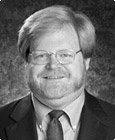
A new venture, a returning table
Orbus's 2015 Series A brought in $32.5 million. Longitude Capital, H.I.G. BioVentures and Adams Street Partners led the round; Mario also invested and became chairman. For Myers, the investor list contained familiar names. Longitude and Adams Street had invested in Jazz. The new company was making a fresh proposition to people who had some experience of the executive making it.
That distinction gives the financing a human dimension without turning it into a fairy tale about a contact list. Investors still had a new decision to make. Previous backing did not make Orbus a continuation of Jazz, and the money belonged to the company. It did, however, mean that introductions were only part of the work. Some of the participants already had a basis for assessing the people across the table.
Mario supplied another connection to ALZA. Myers had known him for roughly two decades by the time he described their relationship in 2016. By then the circle extended across several organizations and several kinds of responsibility: former colleagues, a co-founder, a chairman and returning investors. The continuity is striking precisely because Orbus itself was young.
Myers described Orbus as using a virtual business model in 2016. The description belongs to that period in the company's development. It suggests an organization designed to coordinate work without immediately putting every function under its own roof. For an executive whose earlier roles stretched across planning, business development and supply chain, the arrangement posed a familiar organizational question: which capabilities belong inside, and which can be brought together through other relationships?
“The nice thing is that we have options.”
Bob Myers, speaking about Orbus in 2016
The arithmetic of staying at work
In October 2020, Orbus announced an additional $38.5 million, expanding its Series A to $71 million in total. The distinction between the new money and the total matters. The company had not announced a separate $71 million on top of the original financing. The larger figure included the $32.5 million announced five years earlier. Even an interesting founder story benefits from keeping its addition straight.
The interval matters as much as the sum. A financing announcement takes a day on the calendar; the work it supports can take years. Between the 2015 round and its 2020 expansion, Myers remained the company's chief executive. Between the expansion and the 2025 leadership announcement, another substantial stretch elapsed. Orbus required an extended period of management after the invitations had been accepted and the company had been formed.
This is where a founder's biography can become misleadingly efficient. Put two funding dates next to each other and five years disappear into a line break. Put a founding date next to a departure date and more than a decade looks like a single appointment. Myers's Orbus tenure runs from 2012 to the transition announced in 2025. The calendar gives the role its proper scale.
The financing graphic records company capital, rather than a personal fortune or a verdict on the venture. Its useful point is narrower: Myers helped lead a company through successive commitments from investors over a period of years. Founding supplied a beginning. Raising money, coordinating work and remaining accountable supplied much of what came afterward. Those activities rarely lend themselves to a dramatic photograph, but they occupy a considerable amount of a chief executive's life.
$38.5 million added in 2020. Figures represent Orbus company financing, not personal wealth.
The second invitation, and the handover
The February 27, 2025 announcement gave a plain reason for Myers's departure from daily executive leadership: he intended to pursue other opportunities in the industry. Levin, until then chief operating officer, would become president. Orbus's leadership page now identifies Levin as its chief executive. The company that the two men founded together continued under the other founder's daily direction.
In announcing the transition, Levin credited Myers with helping build Orbus and secure its funding. He also described Myers's determination and leadership. Such remarks belong to a colleague's assessment, rather than a personality test administered from a distance. Their weight comes from the relationship: Levin had worked beside Myers at Jazz, co-founded Orbus with him and served as its COO.
There is a temptation to make every departure the final scene of a career. Myers's stated intention was to look for further industry opportunities. A more useful ending sits in the pattern already visible. ALZA colleagues helped establish Jazz. A Jazz colleague helped establish Orbus. Earlier investors returned for another venture. The repeated connection is an invitation to work together again, with the previous experience still in the room.
That is a modest, demanding kind of professional achievement. A first invitation may depend on credentials, timing or a persuasive conversation. A second arrives after people have seen something of the work. Across Myers's career, those returning colleagues and backers give the chronology its particular shape. The companies are separate ventures. The people carry part of the history between them.